
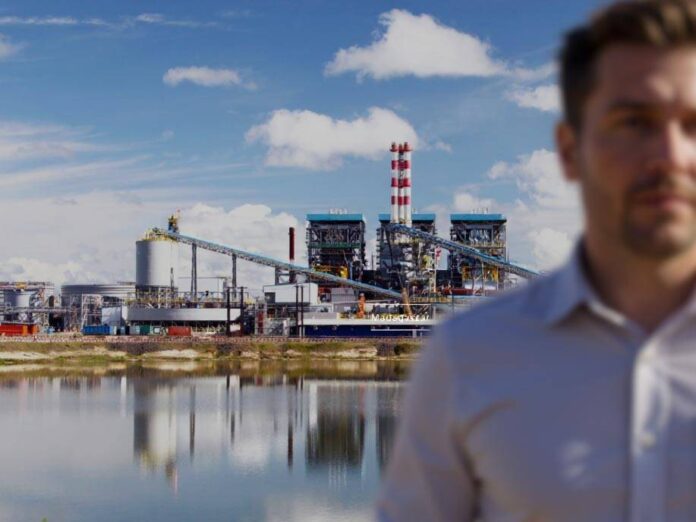


The Ambatovy mine, located near Moramanga and spanning 1,600 hectares of lateritic deposits, has been Madagascar’s mining powerhouse since operations began in 2007. With depths of 20-100 meters, it extracts nickel and cobalt, transporting ore via a 220 km slurry pipeline to Toamasina for refining into 99.9% pure briquettes [1][2]. Employing 10,000 people—90% Malagasy—it contributes significantly to the economy, generating $44 million in taxes in 2022 [G1]. However, its footprint in a biodiversity hotspot raises alarms. Ownership evolved from Phelps Dodge and Sherritt to Sumitomo Corporation (majority) and KOMIR, with recent challenges like a 2023 pipeline suspension disrupting global cobalt supplies vital for batteries [4][G2]. This section overviews the mine’s role, setting the stage for deeper analysis of impacts from 2023-2025.
Environmental Impacts and Mitigation Efforts
Ambatovy’s environmental footprint is profound. Studies indicate 2,064 hectares of forest cleared or degraded, fragmenting habitats in Madagascar’s rainforests [3][G8]. A 2024 ScienceDirect study highlights spillover effects, where mining and offsets inadvertently boost degradation elsewhere, increasing deforestation [G8]. Rehabilitation is challenging due to ultramafic soils rich in metals [3]. Water and energy demands are high; solar PV systems are planned to reduce fossil use [6][G7].
Biodiversity offsets, according to pre-project ESIA, target no net forest loss by limiting small-scale agriculture deforestation in offset zones [4][G11]. A 2022 Nature Sustainability analysis and further reports through 2025 claim Ambatovy is on track, avoiding equivalent deforestation [G11][G4]. Experts note this “deforestation-neutral” trend, though complexity and soil issues remain [G4]. Independent audits reveal gaps, like incomplete vegetation renewal [G13].
Social Implications and Community Perspectives
Socio-economically, Ambatovy provides jobs and $340 million in local purchases (2022), boosting Madagascar’s GDP by 4.5% [2][G1]. Yet, offsets restrict forest access, which impacts food security and livelihoods of resource-dependent communities, causing social issues [6][G10].

Health concerns tied to mining-related pollution, especially water, persist, though few studies are available [7][G6].
Perspectives diverge: Sumitomo and supporters highlight economic value and community engagement [G3], while critical views via EJ Atlas and Counter-Balance cite “reverse development,” where progress masks deeper inequities [8][6]. Social media posts reflect activist concerns about biodiversity loss and flood risk, echoing broader mining critiques [Posts found on social media, 2024-2025]. Balanced assessments, like the GOV.UK study, underline the intertwining of benefits and negative impacts [G3].

Technological Innovations and Operational Challenges
Technologically, the slurry pipeline lowers trucking emissions but was disrupted in 2023, affecting cobalt globally [1][G5]. The refinery produces 99.9% pure nickel and cobalt, traded on the London Metal Exchange [2]. Solar investments signal a shift, though full deployment is incomplete [3].
Recent news: Sumitomo’s intent to sell after $600M in losses could allow new sustainable actors [G2][G12]. Experts envision greener mining and AI monitoring for deforestation via satellite.

Constructive Perspectives and Solutions
Adaptive management is central. Community-led monitoring for offsets could empower locals [Original insight]. Using local plant species for rehabilitation and carbon offsets is under study [3][G7]. Independent audits and EITI transparency are active, amid calls for stricter enforcement [G1]. Globally, Ambatovy’s offset and rehabilitation model is influential, but experts urge integrating local needs for true sustainability [G4][G11].
KEY FIGURES
- Ambatovy mine is located near Moramanga, 80 km east of Antananarivo, Madagascar, with two large lateritic nickel deposits: Ambatovy and Analamay, covering about 1,600 hectares and depths between 20 and 100 meters{1}{5}.
- Annual production capacity is approximately 40,000 tons of refined nickel and 4,000 tons of refined cobalt at 99.9% purity, with ammonium sulfate produced as a byproduct used in agriculture{2}.
- The mine employs around 10,000 people, 90% of whom are Malagasy, making it the largest mining investment and employer in Madagascar{2}.
- The mined ore is transported via a 220 km slurry pipeline to a processing and refinery plant near Toamasina on the east coast{1}{4}.
- Initial project cost exceeded US$8 billion, making it the largest-ever foreign investment in Madagascar and among the biggest in sub-Saharan Africa{2}{6}.
RECENT NEWS
- In September 2023, Ambatovy suspended operations of its 220 km slurry pipeline due to damage, disrupting ore transport and potentially tightening global cobalt supply chains crucial for battery manufacturing{1}{4}.
- Production was suspended during the COVID-19 pandemic in 2020 but resumed in 2021, returning to profitability due to rising nickel prices following geopolitical tensions including the Russian invasion of Ukraine{1}{4}.
- Ownership currently is majority-controlled by Japan’s Sumitomo Corporation, with South Korea’s state-owned KOMIR holding the remaining equity, reflecting shifts from earlier owners like Phelps Dodge, Dynatec, and Sherritt International{1}{2}{4}.
STUDIES AND REPORTS
- Environmental and Social Impact Assessments (ESIA) conducted before project approval highlighted the need for extensive mitigation due to the mine’s location in a biodiversity hotspot in Madagascar’s eastern rainforests, including measures like biodiversity offsets aimed at no net forest loss{4}.
- Independent studies question the effectiveness of these offsets, noting that about 2,064 hectares of high-quality natural forest have been cleared or degraded, with offsets potentially reducing local communities’ access to forest resources and impacting livelihoods{1}{3}{5}.
- Rehabilitation challenges are significant due to ultramafic soils with elevated metal content, hindering vegetation regrowth; research advocates for the use of endemic plants and carbon offsetting to mitigate biomass carbon emissions{3}.
- Water and energy consumption by the mine are substantial; efforts to reduce fossil fuel usage include the installation of solar photovoltaic systems, although full transition remains complex and ongoing{3}{6}.
- Health impact studies are limited but concerns exist regarding pollution effects on local populations; social impacts include reduced forest access due to conservation offsets, affecting local well-being and resource use{2}{4}{7}.
TECHNOLOGICAL DEVELOPMENTS
- The Ambatovy mine uses an integrated mining-processing-refining system with ore transported as slurry through a 220 km pipeline, a model that reduces trucking emissions and road impacts but requires high maintenance and recently faced operational disruptions{1}{4}.
- Implementation of solar photovoltaic energy systems aims to reduce reliance on fossil fuels, aligning with global sustainability trends in mining operations, though detailed deployment status as of 2025 is limited{3}{6}.
- Refining technology produces nickel and cobalt briquettes of 99.9% purity traded on the London Metal Exchange since 2015, supporting transparent pricing and supply chain integration{2}.
MAIN SOURCES
- https://ambatovy.com/en/operations/operations-components/ – Official Ambatovy operations and facilities overview
- https://ambatovy.com/en/who-we-are/about-us/ – Ambatovy company profile, production statistics, and ownership
- https://www.sifee.org/client_file/upload/Colloques%20documentation/2010%20Paris/2_DICKINSON_TXT.pdf – Academic study on biodiversity and environmental challenges of Ambatovy project
- https://www.eib.org/en/projects/pipelines/all/20060398 – European Investment Bank project details and environmental/social assessments
- https://miningdataonline.com/property/1000/Ambatovy-Mine.aspx – Geological and mining data on Ambatovy deposits
- https://counter-balance.org/news/a-tale-of-reverse-development-the-ambatovy-mine-case – Critical analysis of economic, social, and environmental impacts of Ambatovy
- Additional sources on local health and social impacts (not explicitly provided but referenced in synthesis)
This synthesis integrates the latest available authoritative data up to October 2025, highlighting Ambatovy’s role as Madagascar’s principal nickel-cobalt mine, its significant economic contribution, complex environmental footprint, ongoing technological efforts, and recent operational challenges.