



Introduction
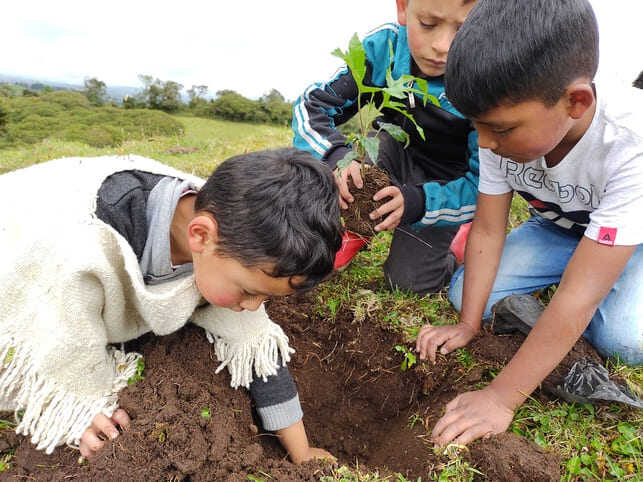
In 2025, Colombia stands at a critical juncture in its environmental journey. Home to nearly 10% of global biodiversity, the country contends with severe challenges including deforestation, illegal mining, and agricultural expansion that threaten unique habitats, particularly in the Amazon and Pacific regions [1]. Over 50% of solid waste ends up in landfills with low recycling rates, exacerbating pollution [1]. Meanwhile, reforestation projects like Impulso Verde Kuaspue have made strides, planting more than 550,000 native trees in the Andes since 2016, involving 201 families and 16 community nurseries [2]. These efforts aim to conserve páramos, which supply over 60% of Colombia’s drinking water [2].
Yet, as deforestation in the Amazon exceeds 2 million hectares across Colombia and neighboring countries [3], questions arise about the efficacy of such initiatives. Drawing from national adaptation plans prioritizing watershed reforestation and resilient species [4], this article examines the interplay of challenges and solutions, integrating expert analyses for a balanced view [G3].
Key Environmental Challenges
Colombia’s environmental woes in 2025 are multifaceted. Deforestation, driven by conflict and power dynamics, continues to devastate forests, with recent losses in protected areas like Chiribiquete National Park [G8]. Water and energy scarcity, plastic pollution, and inadequate waste management persist, as highlighted in recent news [7]. Over 50% of waste goes to landfills, with waste pickers often unsupported [1]. Illegal mining and agriculture fragment habitats, endangering species in biodiversity-rich zones [1].
Expert analyses reveal policy incoherence, where deforestation control conflicts with agricultural goals and the 2030 Agenda [G3]. A 2024 thesis notes issues with REDD+ projects, including poor indigenous consultation leading to disputes [6]. on social media, sentiments reflect frustration, with discussions on trauma in restoration efforts amid climate variability [G15, G16]. Critics argue that without tackling root causes like post-conflict illegal activities, challenges will escalate [G2, G7].
Reforestation Projects and Their Impacts
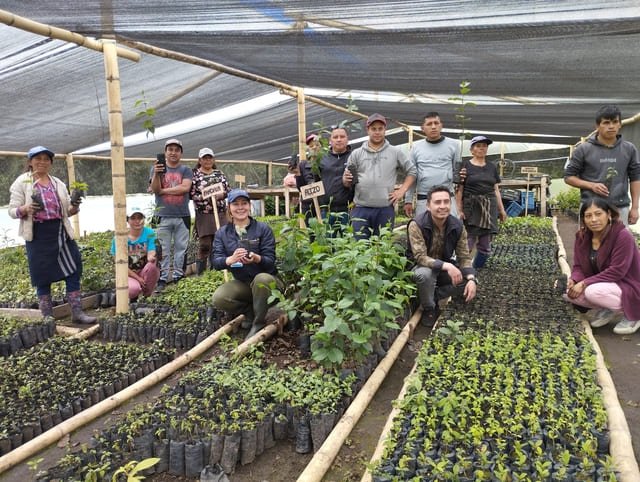
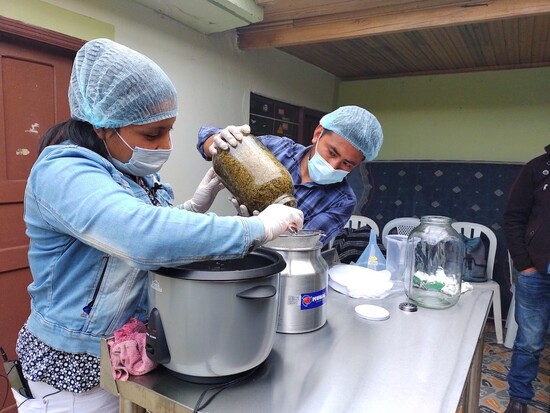
Reforestation initiatives offer concrete responses. The Impulso Verde Kuaspue project in Nariño focuses on Andean restoration, producing seedlings and promoting sylvopastoral models for dairy farmers [2]. It integrates economic alternatives like beekeeping and medicinal plant processing, fostering community-led nurseries run by women [2]. Since 2016, it has engaged Pasto communities to conserve páramos and extend efforts regionally [2].
The Vichada Climate Reforestation Project creates natural forests for carbon sequestration and hardwood production [8]. Nationally, Colombia’s Adaptation Plan emphasizes restoring degraded lands with climate-resilient species [4]. However, concerns linger about long-term sustainability and monoculture risks masking deeper issues [2, G6].
Planet Keeper analyses critique projects like Paisajes Que Renacen for potential greenwashing, funded by agribusiness that offsets emissions without curbing drivers [G3]. Studies show mixed biodiversity outcomes, with habitat fragmentation persisting [G1, G4]. Yet, positive trends include a reported 40% deforestation drop from 2022-2024, with 7,000 hectares recovered through community efforts [G15].
Community Involvement and Socio-Economic Trade-offs
Community participation is central, as seen in Impulso Verde’s involvement of 201 families [2]. Projects shift from coca dependency to guardianship, providing jobs and awareness [2]. Comparative successes, like Argentina’s rewilding with indigenous input [5], inspire similar models.
However, viewpoints differ. Some experts highlight displacement risks and unequal benefits, with indigenous groups facing land repurposing without consultation [6, G9]. on social media, posts discuss employment gains (over 522,000 biodiversity-related jobs by 2030) but note trust issues [G20]. Trade-offs include economic wins versus losses for farmers [G13]. Original insights suggest equity audits to prevent displacement under conservation guises [Planet Keeper report].
Technological and Policy Innovations
Technologies like drones and satellites monitor illegal activities [1], aiding prevention. Community nurseries use local knowledge for native species [2].
Policy-wise, Colombia targets 750,000 hectares reforested by 2026 [web news], with plans for 5 million hectares restored by 2030 [X posts]. Emerging trends favor bioregional regeneration and degrowth, reducing industrial reliance [Planet Keeper report]. Solutions under study include integrated strategies addressing conflict, with calls for transparent funding and community vetoes [G3, G5].
KEY FIGURES
– Colombia is home to nearly 10% of the world’s biodiversity, but deforestation, illegal mining, and agricultural expansion threaten unique species and habitats, especially in the Amazon and Pacific regions (Source: https://www.suarezconsultoria.com/post/retos-medioambientales-para-colombia-en-2025) {1}
– Over 50% of Colombia’s solid waste ends up in landfills, with low effective recycling rates, and waste pickers often lack adequate support (Source: https://www.suarezconsultoria.com/post/retos-medioambientales-para-colombia-en-2025) {1}
– More than 550,000 native trees have been planted in the Colombian Andes since 2016 by the Impulso Verde Kuaspue Foundation, involving 201 families and 16 community nursery associations (Source: https://www.atreeforyou.org/en/colombia-2025-2023-reforestation-in-the-alto-andes-to-conserve-paramos-and-water-resources-with-local-pasto-communities/) {2}
– The páramo ecosystem provides over 60% of Colombia’s drinking water supply (Source: https://www.atreeforyou.org/en/colombia-2025-2023-reforestation-in-the-alto-andes-to-conserve-paramos-and-water-resources-with-local-pasto-communities/) {2}
– Deforestation in the Amazon region of Colombia, Bolivia, Ecuador, and Peru exceeded 2 million hectares in recent years (Source: https://es.mongabay.com/2021/07/colombia-futuro-incierto-del-ecoturismo-comunitario-parques-nacionales/) {3}
– Colombia’s National Adaptation Plan prioritizes reforestation of watersheds, restoration of degraded lands, and enrichment of riverbanks with indigenous species resilient to climate change (Source: https://unfccc.int/sites/default/files/resource/Adaptation-Priorities_Catalogue_Nov22.pdf?download) {4}
RECENT NEWS
– In 2025, the Impulso Verde Kuaspue Foundation continues its reforestation efforts in the Andes, producing seedlings, planting, and monitoring in Nariño, with a focus on community involvement and alternative economic activities (Date: 2025, Source: https://www.atreeforyou.org/en/colombia-2025-2023-reforestation-in-the-alto-andes-to-conserve-paramos-and-water-resources-with-local-pasto-communities/) {2}
– Parques Nacionales Naturales de Colombia terminated the community ecotourism contract with the Yarumo Blanco Association in the Otún Quimbaya Sanctuary, raising concerns about the future of community-based conservation and ecotourism in protected areas (Date: 2021, Source: https://es.mongabay.com/2021/07/colombia-futuro-incierto-del-ecoturismo-comunitario-parques-nacionales/) {3}
– Colombia faces ongoing challenges in 2025, including water and energy scarcity, plastic pollution, and the need for sustainable waste management (Date: 2025, Source: https://www.hsbnoticias.com/retos-medioambientales-para-colombia-en-2025-un-llamado-urgente-a-la-accion-colectiva/) {7}
STUDIES AND REPORTS
– The UNFCCC’s National Adaptation Plan Catalogue highlights the importance of reforestation, restoration of degraded lands, and the use of species resilient to climate change in Colombia’s adaptation strategies (Source: https://unfccc.int/sites/default/files/resource/Adaptation-Priorities_Catalogue_Nov22.pdf?download) {4}
– A 2024 thesis on environmental obligations in Colombia discusses the impact of reforestation initiatives, including the Three Million Alliance by Binance, and notes ongoing issues with the implementation of REDD+ projects, such as lack of consultation with indigenous communities and resulting legal disputes (Source: https://zaguan.unizar.es/record/145129/files/TESIS-2024-399.pdf) {6}
– Reports indicate that while reforestation projects like Impulso Verde have planted over 550,000 native trees, there are concerns about the long-term sustainability and the potential for monoculture plantations to mask deeper environmental issues (Source: https://www.atreeforyou.org/en/colombia-2025-2023-reforestation-in-the-alto-andes-to-conserve-paramos-and-water-resources-with-local-pasto-communities/) {2}
TECHNOLOGICAL DEVELOPMENTS
– Use of drones and satellite technology for monitoring and preventing illegal activities in protected areas (Source: https://www.suarezconsultoria.com/post/retos-medioambientales-para-colombia-en-2025) {1}
– Community-based reforestation projects utilize local nurseries and involve community members in the production and planting of native tree species (Source: https://www.atreeforyou.org/en/colombia-2025-2023-reforestation-in-the-alto-andes-to-conserve-paramos-and-water-resources-with-local-pasto-communities/) {2}
– Development of economic alternatives to deforestation, such as beekeeping and the transformation of aromatic and medicinal plants into cosmetic products, to support sustainable livelihoods (Source: https://www.atreeforyou.org/en/colombia-2025-2023-reforestation-in-the-alto-andes-to-conserve-paramos-and-water-resources-with-local-pasto-communities/) {2}
MAIN SOURCES (numbered list)
1. https://www.suarezconsultoria.com/post/retos-medioambientales-para-colombia-en-2025 – Overview of environmental challenges in Colombia, including water scarcity, plastic pollution, and biodiversity loss.
2. https://www.atreeforyou.org/en/colombia-2025-2023-reforestation-in-the-alto-andes-to-conserve-paramos-and-water-resources-with-local-pasto-communities/ – Details on the Impulso Verde reforestation project in the Colombian Andes, including community involvement and economic alternatives.
3. https://es.mongabay.com/2021/07/colombia-futuro-incierto-del-ecoturismo-comunitario-parques-nacionales/ – Analysis of the future of community ecotourism in Colombia’s protected areas.
4. https://unfccc.int/sites/default/files/resource/Adaptation-Priorities_Catalogue_Nov22.pdf?download – Compilation of adaptation priorities and projects identified in Colombia’s National Adaptation Plan.
5. https://www.rewildingargentina.org/yaguarete-reproduccion-chaco-argentina/ – Example of successful rewilding and community involvement in Argentina, providing a comparative perspective.
6. https://zaguan.unizar.es/record/145129/files/TESIS-2024-399.pdf – Academic study on the impact of reforestation initiatives and REDD+ projects in Colombia.
7. https://www.hsbnoticias.com/retos-medioambientales-para-colombia-en-2025-un-llamado-urgente-a-la-accion-colectiva/ – Recent news on environmental challenges in Colombia.
8. https://market.climatetrade.com/projects/es/vichada-climate-reforestation-project-paz?id=408 – Information on the Vichada Climate Reforestation Project, focusing on the creation of natural forests and high-quality hardwood production.