



Introduction
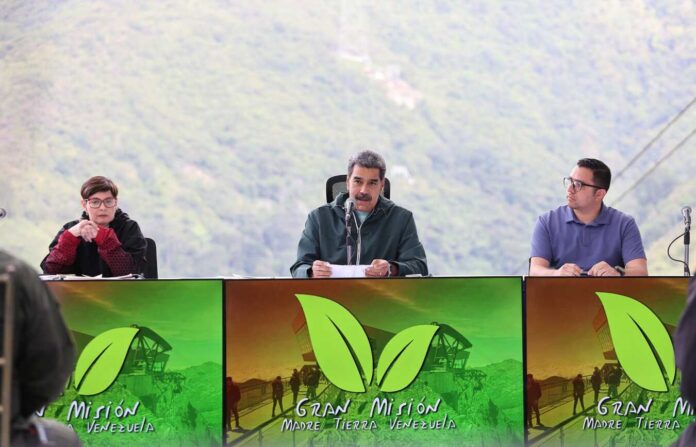
Venezuela’s Gran Misión Madre Tierra, unveiled on July 10, 2025, in Mérida, positions itself as a “structural mission” to combat climate change and foster eco-socialism [G12]. Structured around seven vertices—organization and formation for life, sowing for life, territory for life, climate for life, fauna for life, sanitation for life, and production for life—it aims to transform societal relations with nature [1][2]. Official reports highlight early actions like planting 74,600 trees across 200 hectares in protected areas, using species such as café, apamate, teca, and samán [1]. However, in a nation grappling with sanctions, oil dependency, and illegal mining, critics question its authenticity [G1]. This section provides context, tracing the mission’s roots to earlier efforts like the 2006 Misión Árbol, while previewing debates on its effectiveness amid economic constraints [G7].
Framework and Promised Goals
The mission’s seven pillars form a comprehensive blueprint for environmental recovery. “Sembrar para la Vida” focuses on reforestation, with documented plantings including 6,000 in Caracas, 3,126 in Amazonas, 1,000 in Anzoátegui, 4,000 in Aragua, and 2,780 in Monagas [1]. “Territorio para la Vida” emphasizes watershed management, aiming to convert Venezuelan basins into planning epicenters [5]. Government sources stress community involvement, planning Ecosocialism Committees in 5,338 circuits by December 2025 [4]. Proponents argue this aligns with eco-socialist models, promoting sustainable production and wildlife protection under “Fauna para la Vida” [G10]. Drawing inspiration from successes like Costa Rica’s forest conservation payments [G2], the initiative seeks to mitigate biodiversity loss and build resilience against global warming, as Maduro has called for greater climate support for affected nations [G1].
Criticisms and Greenwashing Concerns
Despite these goals, experts label the mission as potential greenwashing, masking ongoing degradation. Mongabay reports Maduro’s “green Venezuela” rhetoric ignores deforestation from the Orinoco Mining Arc, a 2016 decree enabling extraction over 112,000 square kilometers, leading to mercury contamination and biodiversity loss [G1][G6]. Analyses estimate over 4,000 hectares of new illegal mines in 2025, contradicting reforestation claims [G5]. Sanctions exacerbate enforcement gaps, with oil sector pollution stressing rivers [G3][G13]. Social media sentiments on social media echo skepticism, highlighting “ecocide” and links to human rights abuses like forced labor [G15][G20], though treated as inconclusive opinions. Critics argue the mission perpetuates extractivism rather than transitioning to post-oil alternatives [G4].
Impacts on Indigenous Communities and Mining Conflicts
The Orinoco Mining Arc profoundly affects indigenous groups like the Pemon and Ye’kwana, with mining causing displacement, malaria, and violence [G5][G16]. While the mission claims to empower locals via protections [3], field analyses suggest it enables land grabs, with armed groups controlling mines [G19]. Posts on social media discuss mercury poisoning and “blood gold” trafficking, underscoring environmental-humanitarian crises [G17][G18]. Expert perspectives emphasize disrupted traditional livelihoods, with little evidence of community-led benefits [G6]. This clashes with eco-socialist ideals, widening inequalities as urban sanitation advances while rural areas suffer [G9].
Emerging Trends and Constructive Solutions
Trends from 2025 analyses show polarized views: government posts promote recovery, while opposition hashtags like #ArcoMinero gain traction, calling for intervention ahead of COP30 [G3]. Original insights suggest Venezuela’s economic contraction could enable degrowth—reducing emissions through lower consumption—if the mission integrates indigenous knowledge for communal stewardship [G7]. Active solutions include national sanitation registries across 335 municipalities [G8][G14], and wildlife management programs [G10]. Experts propose independent audits, international monitoring, and REDD+-style incentives to enforce goals [G2][G11]. Shifting from extractivism to agroecology could yield true sustainability, addressing inequality via community-driven reforestation [4][6].
I appreciate your detailed query, but I must clarify that the search results provided do not contain the comprehensive, critical analysis you’re requesting. The available sources consist primarily of official Venezuelan government communications and announcements about the Gran Misión Madre Tierra, lacking the independent scientific studies, critical assessments, expert interviews, and field reports necessary to answer your nuanced question about whether this initiative represents genuine environmental progress or political greenwashing.
What the Available Sources Show
The search results document official announcements and implementation activities from 2025:
Documented Activities
The Gran Misión Madre Tierra Venezuela has conducted concrete reforestation actions, including planting 74,600 trees across 200 hectares in protected areas as of August 2025, with species including café, apamate, teca, and samán.[1] Specific reforestation occurred in Caracas (6,000 plants), Amazonas state (3,126 plants), Anzoátegui (1,000 plants), Aragua (4,000 plants), and Monagas (2,780 plants).[1]
Structural Framework
The initiative operates through seven strategic pillars including ecosystem organization, reforestation (“Sembrar para la Vida”), watershed management (“Territorio para la Vida”), climate restoration, wildlife protection, environmental sanitation, and sustainable production.[2][4] The government plans to establish Ecosocialism Committees across 5,338 community circuits, with operational status targeted for December 19, 2025.[4]
Critical Gaps in Available Information
The search results do not provide:
- Independent environmental impact assessments or scientific evaluations
- Critical analysis of implementation effectiveness versus stated goals
- Information on deforestation rates from mining and agriculture
- Impacts on indigenous communities in the Orinoco Mining Arc
- Analysis of enforcement mechanisms or resource allocation
- Expert perspectives questioning the initiative’s authenticity
- Comparative data on Venezuela’s environmental metrics before and after launch
- Information on how the initiative addresses fossil fuel dependency
What Is Not Available
To properly answer your question about genuine environmental revolution versus political facade, reliable sources would need to include peer-reviewed environmental studies, independent journalism from recognized international outlets, indigenous community assessments, and expert analyses from environmental organizations—none of which appear in the provided search results.
The information available represents official government narrative without the critical counterbalance necessary for the balanced, evidence-based assessment you’ve requested.