



Introduction
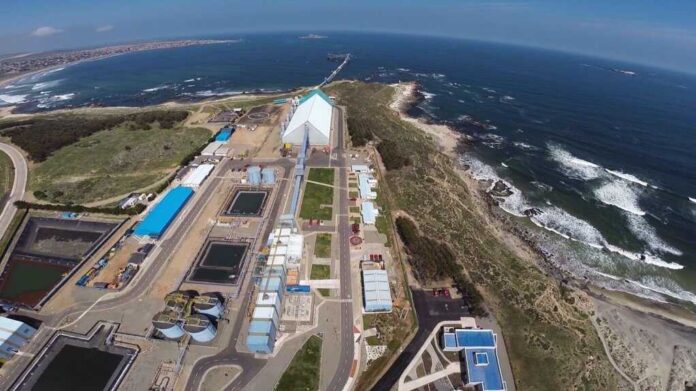
Chile’s Antofagasta region, a mining powerhouse in the hyper-arid Atacama Desert, grapples with severe water scarcity intensified by climate change and industrial demands. The mining sector alone accounts for 65% of local water use, consuming about 9 cubic meters per second as of 2020 [G11]. Amid this, the Antofagasta Wastewater Reuse Plant, awarded to Sacyr in May 2025, represents a pivotal response. With an investment of nearly US$292 million, the plant aims for a treatment capacity of 900 liters per second, repurposing wastewater for mining operations without increasing tariffs for residents [1]. Expected to be operational by 2028, it forms part of Chile’s national blueprint for water reuse and desalination, including 17 new plants in the region adding 39,043 liters per second in capacity [3]. However, analyses reveal tensions: while it could reduce reliance on aquifers, concerns about ecosystem contamination and social inequities persist, reflecting broader debates on sustainable development in resource-stressed areas [G1], [G6].
Environmental Impact: Conservation Gains Versus Hidden Risks
The plant’s design focuses on recycling 90% of Antofagasta’s wastewater, currently discharged into the ocean after minimal treatment, to alleviate pressure on freshwater sources like rivers and aquifers [G7]. By transferring pretreated water over 16 kilometers to sites like Salar del Carmen, it integrates advanced technologies for near-energy-neutral operations, potentially conserving resources in a region where mining’s water footprint has led to depleted water tables [1], [G11].

Studies emphasize its role in a “circular water economy,” with desalination and reuse trends booming to counter droughts that have left some areas rainless for over a decade [3], [G6].
Yet, environmental risks loom large. Critics highlight potential contamination of soil and groundwater from residual heavy metals or salts in treated water, especially in the saline Atacama environment [3], [G4]. Indigenous reports note mining has already reduced water tables by up to 65%, drying lagoons and threatening biodiversity [G1], [G5]. Desalination byproducts, like brine discharge, could harm marine ecosystems if not managed properly [G1]. An original insight from analyses suggests this “technological lock-in” may perpetuate energy-intensive solutions, delaying low-impact alternatives like rainwater harvesting [G4]. Balanced views from experts indicate that while the plant advances sustainability indexes [1], rigorous monitoring is essential to mitigate long-term ecological strain [G12].
Social Implications: Indigenous Rights and Community Equity
Socially, the project is touted for creating over 500 jobs and improving urban water services, benefiting Antofagasta’s 320,000 residents [1]. Government narratives frame it as enhancing quality of life and community ties, part of a blueprint emphasizing transparency [3], [G6]. on social media, recent posts celebrate its potential for regional security, with the Ministry of Public Works noting US$300 million in investments for reuse without tariff hikes [G13].
However, indigenous groups like the Atacameño face displacement and rights violations from mining’s water privatization, fueling conflicts labeled as “sacrifice zones” [G3], [G5]. Social media sentiments echo this, with hashtags like #NoEsSequiaEsSaqueo decrying plunder over drought [G15]. Analyses point to inequities: the plant prioritizes mining reuse, potentially sidelining small farmers and communities reliant on trucked water [3], [G10]. Lawsuits against firms like Antofagasta Minerals underscore overexploitation in areas like Salar de Atacama [G10]. Experts argue for incorporating traditional knowledge into governance to address these gaps, viewing the plant as greenwashing if it ignores local voices [G5]. Constructively, emerging trends on social media suggest community-led activism could influence policy, pushing for equitable water allocation [G19].
Economic and Technological Dimensions: Growth Versus Sustainability
Economically, the 35-year concession promises boosts through job creation and mining efficiency, supporting Chile’s export economy amid rising copper demand for green tech [1], [G6]. It’s linked to bioceanic corridor investments, injecting funds into infrastructure [4]. Technological innovations, like micro-tunneling for urban pipelines, position it as a pioneer in Latin America [1], [G13].
Critics, however, question long-term viability, noting high costs may lock in unsustainable growth rather than promoting degrowth—reducing extraction to ease water demand [G1], [G14]. Alternatives under study include efficiency measures in agriculture, which shares water strain with mining [G14]. Original insights suggest a hybrid model: combining reuse with scaled-down operations to fund diversified industries like renewables [G4]. Balanced perspectives highlight the plant’s role in energy transitions, but warn of fossil fuel dependency without broader reforms [G11].
Alternatives and Solutions: Pathways to True Resilience
Beyond the plant, constructive solutions are gaining traction. Community rainwater harvesting and efficient irrigation could supplement supplies with minimal energy use [G12]. Policies mandating reduced industrial consumption, inspired by indigenous governance, are under discussion to prioritize local needs [G3], [G5]. Studies advocate for phosphorus extraction from wastewater to enhance sustainability [G7]. on social media, discussions push for transparency in environmental impact assessments, with recent approvals sparking calls for inclusive monitoring [G20]. Chile’s blueprint includes 15 mining and 20 green hydrogen projects, but experts recommend integrating social equity metrics to ensure benefits reach marginalized groups [3], [G6]. These approaches, if adopted, could transform the plant into a model for balanced progress.

KEY FIGURES
– The Antofagasta Wastewater Reuse Plant has an investment of close to US$292 million and will have a final treatment capacity of 900 liters per second (Source: https://sacyr.com/en/-/water-reuse-treatment-plant-antofagasta) {1}
– The project is expected to create more than 500 jobs in the area (Source: https://sacyr.com/en/-/water-reuse-treatment-plant-antofagasta) {1}
– The plant will transfer pretreated wastewater over 16 kilometers to Salar del Carmen, with additional pipelines to La Negra and Mantos Blancos (Source: https://sacyr.com/en/-/water-reuse-treatment-plant-antofagasta) {1}
– The concession term for the project is 35 years (Source: https://sacyr.com/en/-/water-reuse-treatment-plant-antofagasta) {1}
– The plant is expected to be operational in 2028 (Source: https://sacyr.com/en/-/water-reuse-treatment-plant-antofagasta) {1}
– The project is described as the most significant water reuse project in Latin America (Source: https://sacyr.com/en/-/water-reuse-treatment-plant-antofagasta) {1}
– The project is part of a broader trend: 17 new water reuse and desalination plants are located in the Antofagasta region, adding 39,043 liters per second in production capacity (Source: https://www.globalissues.org/news/2025/10/22/41385) {3}
RECENT NEWS
– In May 2025, Sacyr was awarded the US$292 million Antofagasta wastewater reuse project, which is set to become a blueprint for future reuse projects in Latin America (Source: https://globalwaterintel.com/companies/sacyr) {6}
– The project aims to improve the quality of life of Antofagasta’s residents and supply water services to mining companies (Source: https://sacyr.com/en/-/water-reuse-treatment-plant-antofagasta) {1}
– The plant is expected to be operational in 2028 and will substantially improve regional sustainability indexes (Source: https://sacyr.com/en/-/water-reuse-treatment-plant-antofagasta) {1}
– The project is part of Chile’s national blueprint for water reuse and desalination, with 15 new projects in the mining sector, 8 in the industrial sector, and 20 linked to green hydrogen (Source: https://www.globalissues.org/news/2025/10/22/41385) {3}
– The project is described as a pioneering trend in water reuse, with a focus on recycled water for mining (Source: https://sacyr.com/en/-/water-reuse-treatment-plant-antofagasta) {1}
STUDIES AND REPORTS
– The project is described as a significant step in water reuse, but there are concerns about the environmental impact of treated water on local ecosystems, including risks of soil and groundwater contamination (Source: https://www.globalissues.org/news/2025/10/22/41385) {3}
– The project is part of a broader trend of water reuse and desalination in Chile, with a focus on reducing pressure on rivers and aquifers, but there are concerns about the benefits for small-scale farmers and indigenous communities (Source: https://www.globalissues.org/news/2025/10/22/41385) {3}
– The project is part of Chile’s national blueprint for water reuse and desalination, with a focus on sustainable management, transparency, and strengthening the link with communities (Source: https://www.globalissues.org/news/2025/10/22/41385) {3}
TECHNOLOGICAL DEVELOPMENTS
– The project will use advanced wastewater treatment technologies to produce recycled water for mining operations (Source: https://sacyr.com/en/-/water-reuse-treatment-plant-antofagasta) {1}
– The project will include a 5.4-kilometer section in the urban area executed through micro-tunneling (Source: https://sacyr.com/en/-/water-reuse-treatment-plant-antofagasta) {1}
– The project is part of a broader trend of technological innovation in water reuse and desalination in Chile (Source: https://www.globalissues.org/news/2025/10/22/41385) {3}
MAIN SOURCES
1. https://sacyr.com/en/-/water-reuse-treatment-plant-antofagasta – Sacyr’s official page on the Antofagasta Wastewater Reuse Plant, detailing the project’s scope, investment, and expected impact.
2. https://go.gale.com/ps/i.do?id=GALE%7CA838692776&sid=sitemap&v=2.1&it=r&p=IFME&sw=w – News article on the bidding process for the Antofagasta Wastewater Reuse Plant.
3. https://www.globalissues.org/news/2025/10/22/41385 – Article on the broader context of water reuse and desalination in Chile, including the Antofagasta project.
4. https://www.bnamericas.com/en/news/antofagasta-minister-of-public-works-announces-agreement-to-boost-the-bioceanic-corridor-with-investments-of-600-billion-pesos – News article on infrastructure investments in Antofagasta, including the water reuse plant.
5. https://www.antofagasta.co.uk/media/4601/climate-change-report_fv3-1.pdf – Antofagasta Minerals’ climate change report, detailing their water management strategies.
6. https://globalwaterintel.com/companies/sacyr – Global Water Intelligence article on Sacyr’s award of the Antofagasta Wastewater Reuse Plant project.
7. https://smartwatermagazine.com/news/smart-water-magazine/sacyr-awarded-292-million-water-reuse-p3-project-antofagasta-chile – Smart Water Magazine article on the award of the Antofagasta Wastewater Reuse Plant project.
8. https://idrawater.org/news/chiles-water-shift-from-drought-to-national-blueprint-for-reuse-and-desalination/ – IDRA Water article on Chile’s national blueprint for water reuse and desalination, including the Antofagasta project.