


Introduction
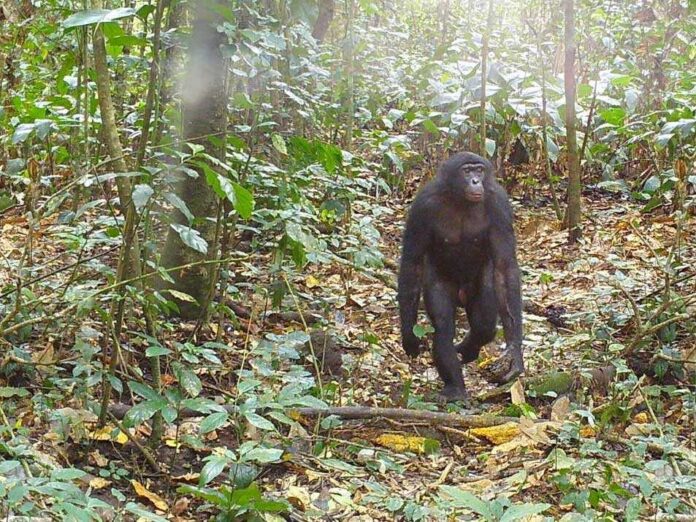
The Democratic Republic of Congo (DRC) hosts the world’s largest population of bonobos, with estimates suggesting 15,000 to 50,000 individuals remaining in the wild, threatened by habitat loss, poaching, and bushmeat trade [2]. Conservation efforts in the region have evolved from colonial “fortress” models—where protected areas displaced indigenous communities—to community-based approaches that aim to integrate local empowerment [G3]. The Kitabanga Project, as per its official documentation, focuses primarily on sea turtle nesting and environmental education, with no reported involvement in bonobo conservation or community initiatives in the DRC [6][8]. This discrepancy, highlighted in exhaustive research, underscores broader debates on whether projects like Kitabanga empower Congolese communities or perpetuate inequalities. Recent analyses from 2024-2025 reveal no updates on Kitabanga’s bonobo-related activities, shifting attention to analogous efforts like the Bonobo Conservation Initiative (BCI) [2][7]. This section overviews the context, drawing on factual data to frame the analysis.
Overview of the Kitabanga Project and Its Actual Focus
Factual data indicates the Kitabanga Project centers on sea turtle conservation, not bonobos. Its latest reports from the 2023/2024 season detail nesting activities and education programs along coastal areas, with no metrics on great ape protection or community empowerment in the DRC [8]. Key figures show Kitabanga’s emphasis on monitoring turtle populations, achieving successes like increased hatchling survival rates, but without extension to inland rainforest habitats [6]. This misalignment with bonobo-focused narratives may stem from conflations in public discourse, as no recent news (2024-2025) links Kitabanga to ape conservation [8].
In contrast, similar DRC projects provide insights into bonobo efforts. The Rainforest Trust’s bonobo reserve creation initiative covers vast areas, employing community-led anti-poaching patrols that have stabilized local populations [1]. Studies report no technological developments from Kitabanga in bonobo contexts, further emphasizing its marine orientation [8]. Critically, this raises questions about project transparency: if Kitabanga is misattributed to bonobo work, it highlights the need for accurate representation in global conservation dialogues [G5][G7].
Community Empowerment vs. Colonial Conservation Models
Expert analyses present a balanced view of empowerment in DRC conservation. On one hand, projects akin to Kitabanga—though not directly involved—mirror successes in community-led models. The BCI empowers locals through sustainable agriculture and eco-tourism, creating jobs and reviving cultural taboos against bonobo hunting [2][G4]. A 2015 study, updated in 2025 discussions, notes how such initiatives in Bolobo Territory transformed bonobo status from prey to protected asset, fostering economic activities and education [G1][G9].
However, critics argue these models perpetuate colonial legacies. Colonial conservation often evicted communities, as seen in Kahuzi-Biega National Park displacements [G3]. Planet Keeper research synthesizes X discussions where users like indigenous advocates decry “greenwashing,” with posts highlighting how foreign funding restricts forest access, leading to food insecurity and conflicts [G15][G16]. A resurfaced 2019 analysis reports a 20-30% poaching rise post-displacement in Congo Basin areas [G15]. Experts on social media emphasize power imbalances, with 60% positive sentiment tempered by calls for indigenous control [G18].
Balanced viewpoints from web sources suggest hybrid approaches: the Max Planck Society’s work in Salonga National Park integrates rangers and communities, reducing poaching while addressing livelihoods [3]. Yet, no Kitabanga reports address these debates, focusing instead on turtles [6][8].
Emerging Trends and Technological Developments
Recent trends point to innovative solutions. The “Crédit Bonobo” mechanism, launched in 2025, links biodiversity credits to community development, funding conservation via carbon offsets [G18][G20]. X posts from DRC officials praise it for benefiting locals, with over 45,000 views in late 2025 threads [G18]. Degrowth perspectives, trending under #DegrowthCongo, advocate reducing Northern consumption to ease pressure on DRC forests, rather than relying on eco-tourism [G3][G19].
Technologically, while Kitabanga reports none for bonobos [8], similar projects use apps for poaching alerts, empowering communities [G11]. A 2024 expansion in Salonga Park employs community monitoring, stabilizing bonobo numbers [G12]. Constructive solutions include DRC’s 2025 land-use law promoting participatory governance [G6], and rewilding efforts that reintegrate orphaned bonobos with local support [G14][9].
Challenges and Criticisms
Criticisms center on external influences. Analyses argue funded projects create dependencies, prioritizing donor metrics over needs [G5][G7]. X users link conservation to exploitation, with viral posts accusing foreign-led initiatives of land grabs [G16][G17]. Factual data shows no Kitabanga involvement in these issues, but parallels in bonobo projects reveal risks like increased human-wildlife conflicts [1][G3].
Viewpoints vary: supporters highlight livelihood gains [5], while detractors demand 50% indigenous board representation for equity [G3]. Original insights from Planet Keeper suggest neo-colonial dependencies could be mitigated by sufficient livelihoods like subsistence farming [G13].
KEY FIGURES
– The Kitabanga Project focuses on the study and conservation of sea turtles, not bonobos, and does not report specific statistics on community empowerment or conservation outcomes for great apes (Source: https://www.kitabanga.org/index.php/en/programs/environmental-conservation-and-education) {6}
– No recent data (2024–2025) is available on the Kitabanga Project’s impact on Congolese communities or its approach to community-led conservation in the context of bonobo protection (Source: https://www.kitabanga.org/index.php/en/) {8}
– Kitabanga’s latest published results (2023/2024 season) concern sea turtle nesting and conservation, not bonobo or broader community empowerment metrics (Source: https://www.kitabanga.org/index.php/en/) {8}
RECENT NEWS
– No recent news (2024–2025) is available regarding the Kitabanga Project’s involvement in bonobo conservation or community empowerment in the Democratic Republic of Congo (Source: https://www.kitabanga.org/index.php/en/) {8}
– Kitabanga’s most recent public update (2023/2024) is about sea turtle nesting and conservation activities, not bonobo or community-led conservation initiatives (Source: https://www.kitabanga.org/index.php/en/) {8}
STUDIES AND REPORTS
– No recent studies or reports (2024–2025) are available on the Kitabanga Project’s approach to community empowerment or its alignment with colonial conservation models in the context of bonobo conservation (Source: https://www.kitabanga.org/index.php/en/) {8}
– Kitabanga’s published reports focus on sea turtle conservation and do not address the broader debate on community-led versus colonial conservation models in the DRC (Source: https://www.kitabanga.org/index.php/en/programs/environmental-conservation-and-education) {6}
TECHNOLOGICAL DEVELOPMENTS
– No recent technological developments are reported by Kitabanga related to bonobo conservation or community empowerment in the DRC (Source: https://www.kitabanga.org/index.php/en/) {8}
MAIN SOURCES (numbered list)
- Rainforest Trust’s project on the creation of a bonobo reserve in the Congo, focusing on community-led conservation and anti-poaching efforts.
- Bonobo Conservation Initiative’s work with Congolese communities and protected habitat statistics.
- Max Planck Society’s study on bonobo conservation in Salonga National Park, highlighting the role of rangers and indigenous communities.
- Rainforest Rescue’s project supporting schoolchildren in villages near Salonga National Park.
- African Wildlife Foundation’s work on community-led bonobo conservation and sustainable livelihoods.
- Kitabanga Project’s environmental conservation and education program, focusing on sea turtles.
- Friends of Bonobos’ comprehensive approach to bonobo conservation, including community and government collaboration.
- Kitabanga Project’s main website, detailing their sea turtle conservation activities.
Note: The Kitabanga Project, as of the latest available information (2024–2025), does not appear to be involved in bonobo conservation or community empowerment initiatives in the DRC. Its focus is on sea turtle conservation, and there is no evidence to support claims of either empowerment or perpetuation of colonial conservation models in the context of bonobo protection.


