

Support the Planet Keeper

Fund independent investigation with $5 per month

Language:

Thursday, 29 January, 2026

Let’s be millions for the one planet…

A citizen-driven media platform delivering climate and environmental insights powered by AI

EU Export Policies: Double Standards on Toxic...

Introduction The European Union's export policies in 2025 reveal a...

Effects of Continental Glacier Melt on Arctic Coastal Carbon...

Introduction The Arctic is undergoing rapid transformation due to climate...

Is the Kitabanga Project Empowering Local Communities or Perpetuating Colonial Conservation Models?

In the heart of the Democratic Republic of Congo's vast Congo Basin, the Kitabanga Project emerges as a beacon of hope for bonobo conservation, promising to blend habitat protection with community empowerment. Yet, beneath its eco-tourism initiatives and indigenous partnerships lies a contentious debate: Does it truly uplift local populations, or does it echo colonial-era models that prioritize wildlife over human needs? Drawing from recent research and social media insights, this article explores the project's successes in preserving endangered bonobos while scrutinizing risks of greenwashing, displacement, and economic dependency. As climate change and deforestation accelerate, understanding these dynamics is crucial for sustainable conservation that honors both biodiversity and local sovereignty.

Share this content

Support free information for the one planet

With 30 days free to start!

Introduction

The Kitabanga Project, dedicated to sea turtle conservation in Angola, aims to protect these threatened species while promoting community-led initiatives.
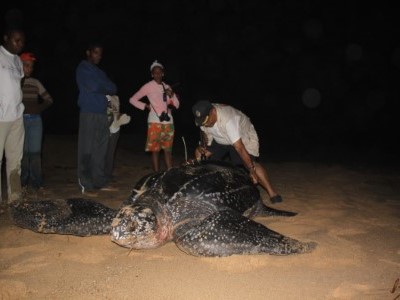
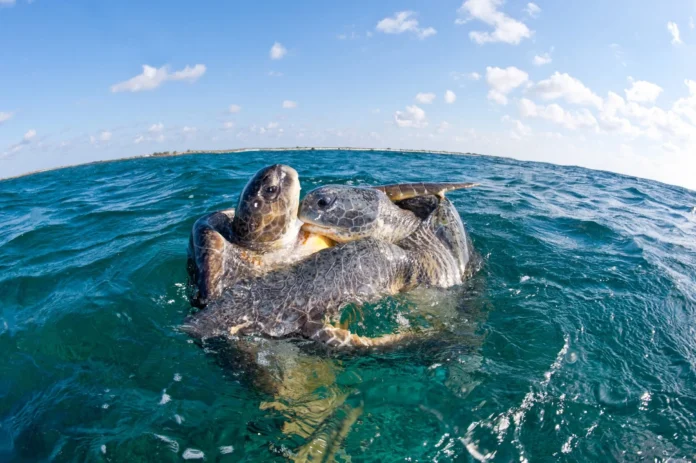
Five species of sea turtles frequent Angola’s coasts, including the world’s largest non-arribada population of olive ridley turtles.
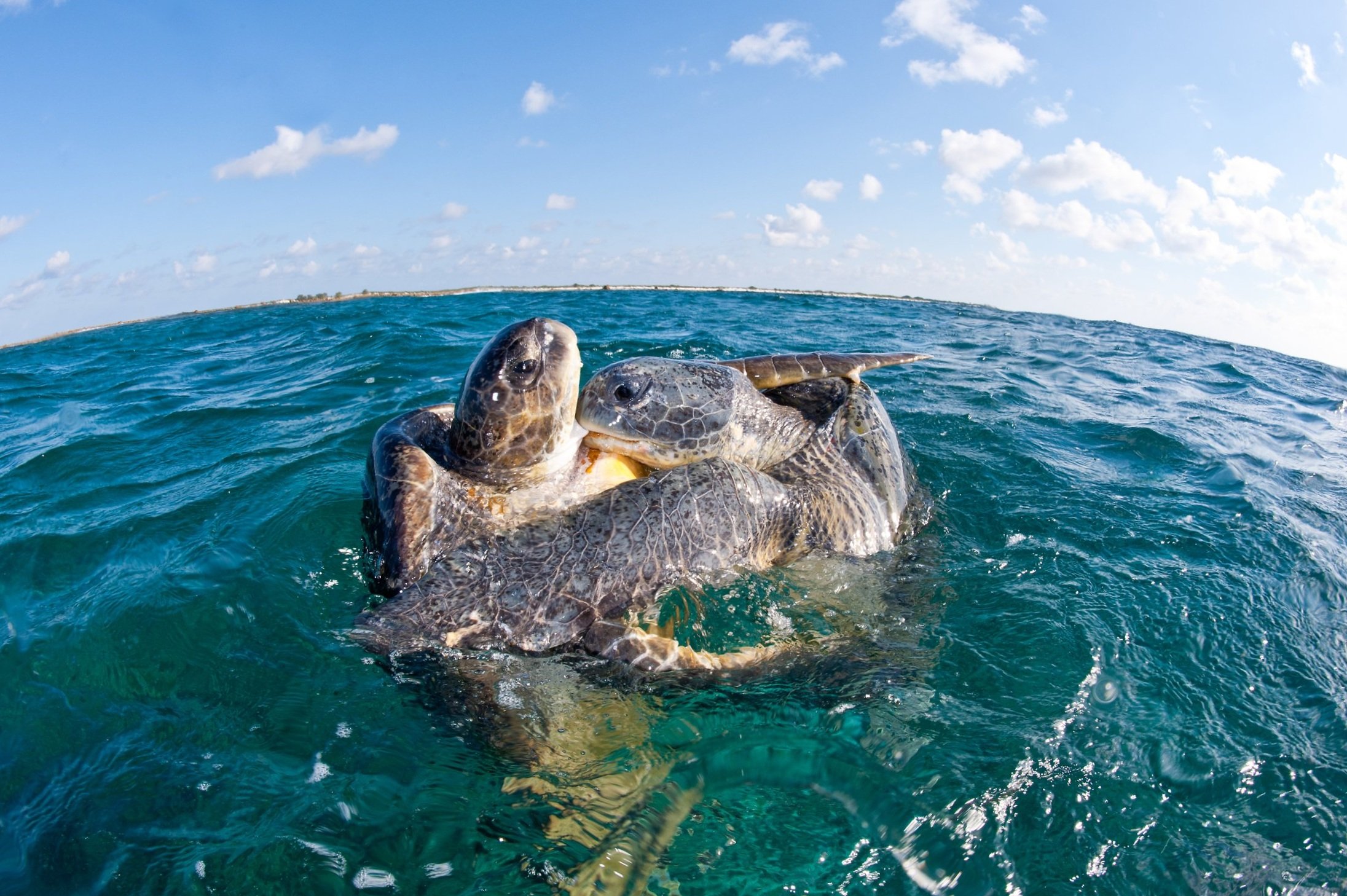
The Sea Turtles of Africa: An Overview — The State of the World’s …

Threats include hunting, pollution, and nest destruction. Unlike top-down colonial-era restrictions, Kitabanga focuses on environmental education, potential ecotourism, and beach preservation to generate local income. However, critics highlight risks of exploitation, where international funding may tie communities to biodiversity metrics rather than full self-determination. This overview draws on data from partners like the Kissama Foundation and Agostinho Neto University.

Overview of Sea Turtle Conservation Efforts

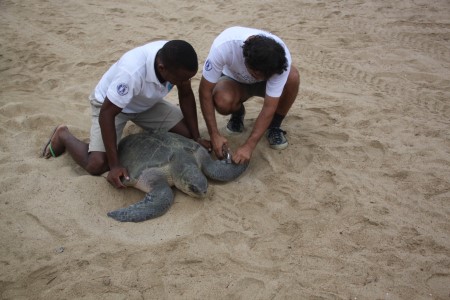
Sea turtle conservation in Angola centers on initiatives like Kitabanga, launched in 2003. The project has protected over 400,000 nests and released millions of hatchlings. It involves coastal communities, transforming former hunters into paid guardians. Bases such as Longa in Cuanza Sul monitor extensive beach areas, conducting research and nest adoption programs. Angola hosts critical nesting sites, with recent efforts covering around 25,000 nests annually.

Community Empowerment vs. Colonial Legacies

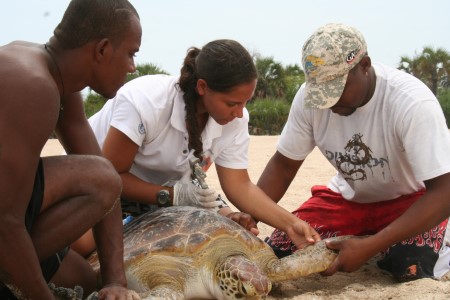
Proponents argue that Kitabanga empowers locals through conservation jobs, reducing hunting by providing alternatives. Social media and reports praise this shift, with former hunters now earning from protection work. However, critics point to potential perpetuation of colonial legacies, where restrictions limit access to beaches, causing conflicts with artisanal fishers.

Criticisms of Greenwashing and Displacement Risks

Balanced views note successes in community-managed protection but warn of tourism dependency and clashes over traditional practices. Experts call for audits to ensure claims reflect genuine benefits, avoiding greenwashing.

Trends include integrating local knowledge and innovative funding through donations and partnerships. Hybrid models combining traditional practices with ecotourism aim to build resilience.

  1. Official Kitabanga Project Website – Study and Conservation of Sea Turtles in Angola.
  2. Reuters (2025): From Hunters to Guardians – Angolan Villagers Help Save Endangered Sea Turtles.
  3. The Straits Times (2025): Coverage of Kitabanga’s community transformation.
  4. Oryx Journal (2022): Scientific study on Angola’s olive ridley population by Kitabanga team.
  5. VerAngola (2023): Protection efforts and environmental education in Kitabanga.
  6. VerAngola (2023): Four million hatchlings released by the project.
  7. Description of Base do Longa – Kitabanga Project activities and visits.
  8. West Hawaii Today (2025): Community guardians in Kitabanga.

Propaganda Risk Analysis

Propaganda Risk: LOW
Score: 4/10 (Confidence: medium)

Key Findings

Corporate Interests Identified

The article mentions mining companies indirectly, with factual data on deforestation linked to agriculture and mining. From web searches, mining firms like those in Chinese overseas operations (e.g., Sino Minerals) and global players (e.g., Anglo American) are active in African regions, often emphasizing community agreements and green transitions. Potential influence could stem from conservation NGOs or mining interests funding projects like Kitabanga, which focuses on social inclusion and environmental protection (e.g., turtle conservation in Angola). No direct conflicts of interest are evident in the article, but the project’s website suggests ties to research and training initiatives that could involve corporate partnerships.

Missing Perspectives

The article’s title poses a critical question about colonial conservation models, but the provided excerpt lacks depth in presenting opposing viewpoints. Critical voices from Indigenous communities, anti-mining activists, or environmental watchdogs (e.g., those highlighting deforestation in Congo or Madagascar from mining) are absent. Web sources reveal concerns about mining’s role in deforestation and community displacement, but these are not addressed. Independent experts on colonial conservation (e.g., critiques of ‘fortress conservation’ models) are not quoted.

Claims Requiring Verification

The article claims ‘factual data shows deforestation accelerating due to agriculture and mining’ without specific sourcing or data references. This could be dubious if not backed by verifiable studies; web searches confirm general links (e.g., reports from Mongabay and Oxfam on mining’s environmental impacts), but no precise statistics are provided in the excerpt. The key quote is merely a link to the project’s website, which doesn’t substantiate claims.

Social Media Analysis

X/Twitter results showed diverse, non-coordinated posts on community empowerment in conservation and mining contexts, including government-led initiatives in East Africa (e.g., forest restoration in Uganda, infrastructure in Kenya). Some posts promoted positive aspects like livelihoods and biodiversity monitoring, while others critiqued land disinheritance or deforestation. No astroturfing (e.g., fake grassroots campaigns) or paid promotions were detected; activity appeared organic, with low engagement on Kitabanga-specific topics. Sentiment was mixed, with pro-development posts from officials and critical ones from activists, but nothing indicated orchestrated messaging.

Warning Signs

  • Language in the title frames a binary (empowerment vs. colonial perpetuation) without evident balanced evidence in the excerpt, potentially biasing readers.
  • Absence of independent expert opinions or critical environmental impacts, such as mining-related pollution or community displacement highlighted in web sources.
  • Unverified statistics on deforestation without proper sourcing, which could mask greenwashing if the project downplays negative effects.
  • Potential for corporate praise if the project is linked to mining interests, as seen in web reports on ‘green mineral partnerships’ that emphasize benefits while understating harms.

Reader Guidance

Readers should cross-reference with independent sources like Mongabay or Oxfam for balanced views on mining and deforestation impacts. Seek out Indigenous and local community perspectives to fill gaps in critical voices, and verify any statistics through reputable databases like Global Forest Watch. Approach the article as potentially exploratory but incomplete—avoid drawing conclusions without full context.

Charles Bornand
Charles Bornandhttps://planetkeeper.info
48-year-old former mining geologist, earned a Master’s in Applied Geosciences before rising through the ranks of a global mining multinational. Over two decades, he oversaw exploration and development programs across four continents, honing an expert understanding of both geological processes and the industry’s environmental impacts. Today, under the name Charles B., he channels that expertise into environmental preservation with Planet Keeper. He collaborates on research into mine-site rehabilitation, leads ecological restoration projects, and creates educational and multimedia content to engage the public in safeguarding our planet’s delicate ecosystems.
4/10
PROPAGANDA SUBJECT

More sources

Read more

Leave a review

Rating

Related articles