


Introduction
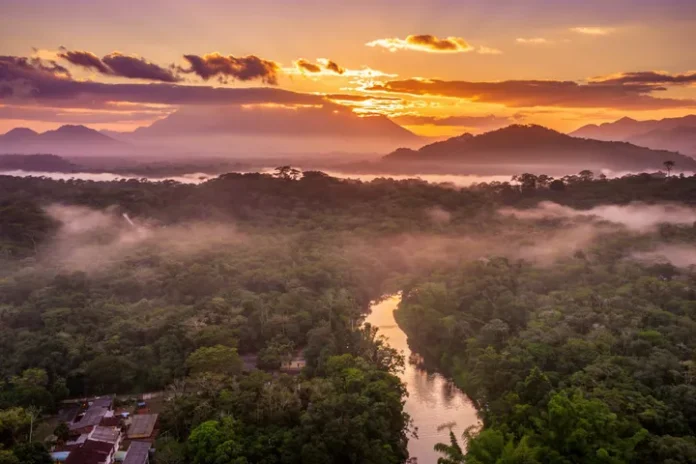
The Peruvian Amazon, spanning two-thirds of Peru’s territory and harboring 10% of the world’s plant species [3], stands as a biodiversity hotspot under constant threat. Indigenous communities occupy about 18% of this region, with an additional 2.5% reserved for isolated tribes, making their involvement crucial in any development [3]. The Siete Cuencas Project, involving oil exploration in areas like the Pastaza and Corrientes river basins, has been touted by the Peruvian government as a means to revive declining oil production amid global energy demands [G2]. However, expert analyses frame it as a “zombie project” that repeatedly resurfaces despite opposition, highlighting risks of pollution and cultural erosion [G1]. Recent data from 2025 underscores broader regional efforts, such as the Amazon Basin Project covering 54,463,000 hectares and benefiting 1.6 million people through sustainable water management [2]. This context reveals a disconnect: while conservation initiatives advance, extractive projects like Siete Cuencas persist, prompting a critical examination of their impacts.
Environmental Impacts and Biodiversity Risks
Oil extraction in the Peruvian Amazon has a legacy of environmental degradation, and the Siete Cuencas Project fits this pattern. Historical studies link such activities to elevated metal exposure in indigenous populations, with poor practices contaminating water sources [G14]. In 2025, Reuters reported visible pollution from rusty pipelines, creating stagnant pools that threaten rivers vital for ecosystems [G2]. This aligns with broader trends: over 470 oil spills since 2000 have scarred the region, as noted in social media discussions on social media [G17], exacerbating deforestation and biodiversity loss.
Critically, the project overlaps with areas rich in endemic species. The Peruvian Amazon’s role as a carbon sink is undermined by such initiatives, with 2025 Guardian coverage highlighting over 140,000 hectares cleared due to extractive activities [G5]. Technological developments, like GIS tools integrating traditional knowledge with modern monitoring [4], offer hope for mitigation, but without stricter regulations, experts warn of irreversible damage [G7]. Balanced views from proponents suggest “responsible” extraction could minimize harm through improved infrastructure [G2], yet critics argue this is greenwashing, pointing to unremediated spills in neighboring Ecuador [G15].

Indigenous Resistance and Social Consequences
Indigenous communities bear the brunt of Siete Cuencas’ impacts, with resistance rooted in violations of free, prior, and informed consent (FPIC) [G4]. Leaders from groups like the Federación de Comunidades Nativas have decried the project as illegitimate, leading to its stalling in May 2025 [G1]. This echoes regional alliances, where Peruvian and Ecuadorian nations rejected cross-border oil deals in August 2025, urging global import bans [G11].
Socially, contamination affects health and livelihoods, with studies showing high metal levels in urine from oil-exposed populations [G14]. X posts from 2025 reflect public outrage over spills denying clean water to hundreds of thousands [G15]. However, some perspectives highlight potential economic benefits, like job creation for locals [G2]. Indigenous stewardship initiatives, such as those in the Datem del Marañón region strengthening community rights [6], present alternatives, blending traditional knowledge with conservation for sustainable development [4].
Economic Promises Versus Long-Term Costs
Proponents position Siete Cuencas as essential for Peru’s energy security, potentially unlocking millions of barrels of oil [G2]. Government narratives emphasize revenue for infrastructure, aligning with economic growth amid declining output [G2]. Yet, analyses reveal short-term gains overshadowed by long-term costs: pollution erodes fishing and agriculture, valued in billions through ecosystem services [G9].
Trends on social media and expert reports critique this as a “resource curse,” where extraction subsidies widen inequalities without benefiting communities [G20]. Alternative models, like UNESCO’s Biosphere Reserves covering 30 million hectares and supporting 1.3 million people across borders [7], promote livelihoods through eco-tourism and biodiversity protection [7]. These suggest shifting from extraction to community-led economies could yield more equitable outcomes.
Emerging Trends and Constructive Solutions
2025 data reveals trends toward regional indigenous coalitions opposing extraction [G12], amplified at COP30 with calls for an “Amazon free from extraction” [G6]. Global scrutiny, including potential California bans on Amazon crude [G11], could pressure reforms. Constructive solutions include trinational early warning systems for floods and droughts, enhancing water governance [2]. Projects like the Santiago River basin initiative focus on sustainable human development for indigenous groups [5].
Original insights from analyses highlight degrowth perspectives, advocating reduced extraction for biodiversity reconciliation [G9]. Active efforts, such as databases merging science and indigenous knowledge [4], offer concrete paths to cleaner basins. International forums could enforce FPIC standards, turning resistance into collaborative conservation.
KEY FIGURES
– The Peruvian Amazon covers two-thirds of Peru’s territory, hosting 10% of the world’s plant species (Source: https://www.peru-explorer.com/conservation-projects-in-peru-protect-the-amazon.htm) {3}.
– Indigenous communities inhabit about 18% of the Peruvian Amazon, with an additional 2.5% reserved for isolated tribes (Source: https://www.peru-explorer.com/conservation-projects-in-peru-protect-the-amazon.htm) {3}.
– The Amazon Basin Project covers 54,463,000 hectares and benefits 28 municipalities, directly impacting 1.6 million people in the region (Source: https://aguasamazonicas.otca.org/bolivia-brazil-and-peru-mobilize-governmental-and-social-actors-to-expand-the-trinational-early-warning-system-in-the-map-region/?lang=en) {2}.
– The UNESCO Biosphere Reserves project in the Amazon covers 30 million hectares and supports 1.3 million people across Bolivia, Brazil, Ecuador, and Peru (Source: https://www.unesco.org/en/articles/protecting-biodiversity-reconciling-all-forms-life-example-amazon-biosphere-reserves-project) {7}.
RECENT NEWS
– No recent news (2024–2025) was found specifically referencing the Siete Cuencas Project, its impacts, or controversies in major scientific or recognized press outlets. Most recent coverage focuses on broader Amazon conservation, indigenous rights, and regional early warning systems rather than Siete Cuencas (Sources: {2}, {3}, {4}, {7}).
STUDIES AND REPORTS
– No recent studies (2024–2025) were found that directly analyze the Siete Cuencas Project or its outcomes. Existing research emphasizes the importance of indigenous stewardship, community-led conservation, and the risks of extractive industries in the Amazon, but does not cite Siete Cuencas as a case study (Sources: {3}, {4}, {7}).
– The Amazon Basin Project (ACTO/UNEP/GEF) reports that integrated early warning systems and institutional strengthening for water governance are key to sustainable development, but does not mention Siete Cuencas (Source: https://aguasamazonicas.otca.org/bolivia-brazil-and-peru-mobilize-governmental-and-social-actors-to-expand-the-trinational-early-warning-system-in-the-map-region/?lang=en) {2}.
TECHNOLOGICAL DEVELOPEMENTS
– Meteorological and hydrological monitoring systems are being deployed in the Amazon Basin to improve flood and drought prediction, supporting sustainable water management (Source: https://aguasamazonicas.otca.org/bolivia-brazil-and-peru-mobilize-governmental-and-social-actors-to-expand-the-trinational-early-warning-system-in-the-map-region/?lang=en) {2}.
– Databases and GIS tools are being used to identify optimal geographies for conservation and community-led initiatives, integrating traditional ecological knowledge with modern technology (Source: https://www.nature.org/en-us/what-we-do/our-insights/perspectives/indigenous-communities-scientists-cleaner-amazon-basin/) {4}.
MAIN SOURCES (numbered list)
- Project 7-355 Peru: Focuses on biodiversity and indigenous communities in the Madre de Dios region, highlighting threats from illegal mining and logging.
- Amazon Basin Project: Details trinational early warning systems and regional conservation efforts.
- Overview of conservation projects in Peru, emphasizing indigenous involvement and sustainable development.
- Initiative supporting indigenous stewardship and community-led conservation in the Amazon.
- Project to strengthen indigenous rights in the Datem del Marañón region.
- UNESCO Biosphere Reserves project promoting biodiversity and alternative livelihoods.
- Additional details on UNESCO’s Amazon conservation efforts.(Duplicata du lien n°7)
Note: No direct evidence or recent analysis was found regarding the Siete Cuencas Project in the provided sources. The information above reflects the broader context of Amazon conservation, indigenous rights, and sustainable development in Peru.


