



Introduction
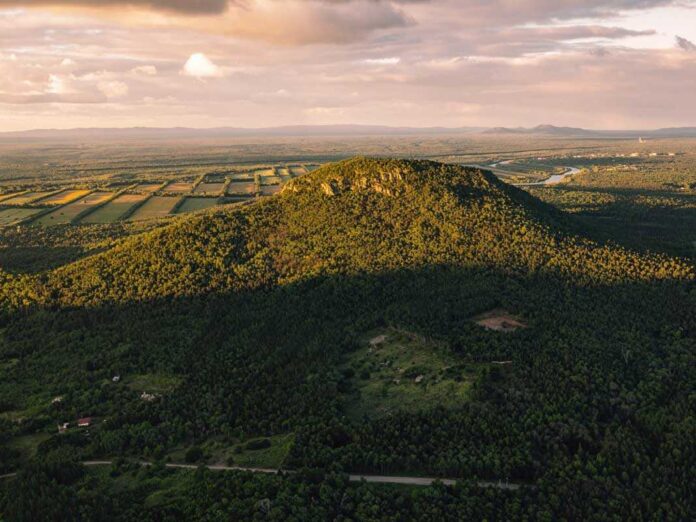
The Chiquitano Forest Restoration Initiative emerged as a response to the catastrophic 2019 wildfires, which burned approximately 3.6 million hectares of Bolivia’s unique dry tropical forests, marking one of the country’s largest environmental disasters [3]. Spanning Bolivia and Brazil, the Chiquitano ecoregion covers about 23.1 million hectares, with a conservation target of 60% protection but currently achieving only low-level safeguards [7]. Programs like RESTAURacción, funded with over Can$7.7 million from 2020 to 2024, have placed more than 3,000 hectares under restoration, emphasizing community involvement and technological tools [2]. However, Bolivia’s forest cover has declined by 9.5% since 2000, driven by agribusiness, including Mennonite colonies responsible for 300,000 hectares of deforestation in 2016 [4]. Expert analyses highlight a tension between genuine recovery efforts and systemic issues like land tenure conflicts and “carbon colonialism” in payment for ecosystem services (PES) schemes [6], [G8]. As 2025 unfolds, with incoming government changes potentially weakening environmental governance [5], this initiative stands at a crossroads, balancing restoration successes against ongoing threats from wildfires and extractive industries [G3], [G10].
The Scale of Environmental Challenges
Bolivia’s Chiquitano forests face multifaceted threats, exacerbated by climate change and human activities. In 2024 alone, fires ravaged an area larger than Portugal—about 92,000 square kilometers—degrading 12% of the Chiquitano dry forest [5]. This follows the 2019 blazes, which experts attribute to unprecedented conditions amplified by drought and agricultural burning [3]. Agribusiness remains a primary driver, with government policies since 2019 enabling deforestation for soy and cattle ranching, leading to water depletion and encroachment on indigenous lands [4]. A stark example is the potential sale of a 30,019-hectare sustainably managed forest in Santa Cruz to Brazilian company Bom Futuro, which plans conversion to monoculture, threatening ecological integrity and indigenous territories [1], [G11].
From an expert viewpoint, these challenges reflect broader populist regimes in Latin America prioritizing economic growth over conservation, as noted in recent analyses [G10]. Social media sentiments on social media echo frustrations, with discussions highlighting how illegal mining and deforestation records in 2025 undermine restoration [G16], [G17]. Critically, indigenous communities bear the brunt, facing displacement and loss of traditional livelihoods, with youth expressing sadness and anger over land loss [G6]. A 2024 working paper critiques PES models in Monte Verde as “carbon colonialism,” arguing they marginalize indigenous rights in favor of market-based solutions [6]. Balanced perspectives acknowledge that while fires are historically common for pasture management, climate amplification demands urgent adaptation [3], [G9].
Genuine Progress in Restoration Efforts
Despite the hurdles, the Chiquitano Forest Restoration Initiative demonstrates tangible successes through collaborative programs. RESTAURacción has empowered indigenous and women leaders, implementing 261 long-term monitoring plots and 23 weather stations for data-driven strategies [2]. This has fostered resilient recovery post-2019, with partnerships like Forests of the World restoring over 14,000 hectares in Chiquitano territories, exceeding initial goals and reducing wildfires by 60% [G3], [G7]. The SEI’s WATCH Chiquitania project develops integrated water models, prioritizing groundwater for forest regrowth in fire-affected areas [3], addressing water scarcity amid droughts.
Expert opinions praise these community-based approaches, such as the Chiquitano Model Forest, which integrates local governance for sustainable management [G1], [G8]. Indigenous adaptations, including ancient engineering like raised fields and canals, offer models for modern restoration [G12]. Emerging trends show a shift to technology, with women-led monitoring enhancing resilience [G13]. Constructive solutions include bioeconomy models funded by international aid, like AECID’s €900,000 for climate projects, promoting fire brigades and nature-based livelihoods [G4], [G5]. These efforts highlight how bottom-up strategies can reconcile economic needs with conservation, countering top-down criticisms [6].

Critiques of Greenwashing and Systemic Flaws
A critical lens reveals potential greenwashing, where restoration masks ongoing destruction. Analysts argue that funding ties to extractive industries, including mining, use initiatives as PR to offset deforestation [G9], [G10]. For instance, while projects like TREES Bolivia promote sustainable rehabilitation, they operate amid agribusiness expansions that contradict goals [G2]. Social media posts on social media question “sustainable” investments as profit-driven, especially with the 2025 dissolution of Bolivia’s Environment Ministry signaling weakened governance [G16], [G19].
Indigenous resistance emphasizes degrowth alternatives, reducing global consumption to curb drivers like meat exports [G13], [G14]. A Nature article warns that political priorities risk ecological decline, urging reconciliation of development and stewardship [5], [G8]. Balanced views note that while some initiatives overlook land rights, others incorporate cultural practices, as in Monte Verde’s PES critiques advocating rights-respecting models [6]. Eco-tourism, promoted as an alternative, risks exploitation without community ownership [G10].
Constructive Solutions and Future Pathways
Promising solutions focus on hybrid models blending indigenous knowledge with technology. For example, World Bank-backed projects emphasize social reviews for equitable outcomes [G4], [G5]. Experts suggest independent audits and transparent funding to prevent greenwashing, alongside policies capping imports from deforested areas [G14]. Community-led efforts, like saving wetlands and youth-driven resilience, signal bottom-up potential [G12], [G13]. Degrowth perspectives advocate systemic change, prioritizing reduced extraction over perpetual restoration [G10].
KEY FIGURES
- Approximately 3.6 million hectares (about 10% of Santa Cruz Department) of the Chiquitano Forest burned in the 2019 wildfires, marking one of Bolivia’s largest forest fires in history[3].
- The Chiquitano dry forest ecoregion size is about 23.1 million hectares, spanning Bolivia and Brazil, with a conservation target of 60% protection but currently very low at level 4 protection[7].
- From 2020 to 2024, the RESTAURacción program invested over Can$7.7 million in restoration efforts, placing more than 3,000 hectares under forest landscape restoration[2].
- Bolivia has experienced a 9.5% decrease in forest cover since 2000, with agribusiness-driven deforestation particularly intense in the Chiquitano and Chaco dry forests[4].
- Mennonite colonies alone caused 300,000 hectares of deforestation in 2016, equivalent to the size of Italy, encroaching on Indigenous lands and contributing to water resource depletion[4].
- In 2024, fires burned an area larger than Portugal (about 92,000 square kilometers), degrading 12% of the Chiquitano dry forest[5].
RECENT NEWS
- A 30,019-hectare forest in Santa Cruz, managed sustainably by the Dutch company INPA, is at risk of sale to Brazilian agribusiness Bom Futuro, which plans to convert the forest to monoculture agriculture, threatening Indigenous territories and ecological integrity[1].
- RESTAURacción’s restoration success is attributed to strong governance via Latin American Model Forests, collaboration with local stakeholders, and empowerment of Indigenous and women leaders, fostering sustainable and resilient forest recovery post-2019 fires[2].
- Bolivia’s incoming centre-right government in 2025 plans to downgrade the Ministry of Environment, potentially weakening environmental governance amid urgent needs for biodiversity conservation and forest restoration[5].
STUDIES AND REPORTS
- SEI’s WATCH Chiquitania project highlights that while fires are common due to pasture burning and agriculture, the 2019 fires were unprecedented due to climate change effects. It supports integrated water resource models for restoration prioritization emphasizing the critical role of groundwater in forest recovery[3].
- A 2024 working paper on Payment for Ecosystem Services (PES) in Monte Verde, Indigenous Chiquitano territory, critiques REDD+ initiatives as “carbon colonialism” and advocates for PES models that respect Indigenous rights and biodiversity conservation over top-down schemes[6].
- A 2025 Nature article underscores the urgent need for Bolivia to reconcile economic development with environmental stewardship following massive forest degradation, warning that current political priorities risk further ecological decline[5].
- Forest Trends data confirm that agribusiness expansion, supported by government policies since 2019, is a primary driver of deforestation in the Chiquitano dry forest, with land tenure conflicts and water resource issues exacerbating impacts on Indigenous communities[4].
TECHNOLOGICAL DEVELOPMENTS
- RESTAURacción has implemented 261 long-term monitoring plots and installed 23 weather and environmental monitoring stations to inform adaptive restoration strategies and ensure data-driven forest management[2].
- SEI’s WATCH Chiquitania project is developing integrated water resource models and groundwater dynamics simulations to support restoration planning and sustainable water use in fire-affected watersheds[3].
MAIN SOURCES
-
- https://news.mongabay.com/2025/11/the-land-deal-threatening-a-vital-piece-of-bolivias-chiquitano-dry-forest/ – Investigative report on land sale threatening Chiquitano forest and Indigenous territories.
-
- https://www.international.gc.ca/world-monde/stories-histoires/2025/iar-rai-restauraccion.aspx?lang=eng – Overview of RESTAURacción forest restoration program and outcomes.
-
- https://www.sei.org/projects/watch-chiquitania/ – SEI project on fire impact evaluation and restoration planning in Chiquitania.
-
- https://www.forest-trends.org/idat_countries/bolivia/ – Data and analysis on Bolivia’s deforestation drivers and impacts.
-
- https://www.nature.com/articles/s41559-025-02937-8 – Nature article on Bolivia’s biodiversity conservation challenges and political context.
-
- https://verdensskove.org/wp-content/uploads/2024/10/2024-working-paper-PES-Bolivia.pdf – Working paper on PES, Indigenous rights, and conservation in Monte Verde.
-
- https://www.oneearth.org/ecoregions/chiquitano-dry-forests/ – Ecoregion profile of Chiquitano Dry Forests with conservation priorities.
—
This synthesis reveals a complex picture: the Chiquitano Forest Restoration Initiative, particularly through RESTAURacción, shows promising progress with scientifically informed, community-inclusive restoration efforts and technological monitoring. However, systemic threats remain severe due to agribusiness expansion, land sales to extractive agriculture, weak enforcement of land protections, and political setbacks in Bolivia’s environmental governance. Indigenous land rights and local perspectives often face marginalization, raising concerns about genuine sustainability versus corporate greenwashing. The degrowth critique and PES opposition by Indigenous groups highlight the need for restoration strategies deeply rooted in social justice and structural change rather than purely technocratic or market-based solutions.


