



Introduction
Forests stand as the lungs of the planet, absorbing carbon and sustaining biodiversity, yet they face relentless threats from deforestation, illegal logging, and climate change. In Colombia, where indigenous and local communities oversee more than 30 million hectares of forest [1], the stakes are particularly high. The global Forest Declaration’s 2025 Policy Makers’ Summary reveals a stark reality: while forest losses remain alarmingly high, natural regeneration in tropical humid forests has multiplied sevenfold in Latin America, covering over 11 million hectares from 2015 to 2021 [2]. This progress contrasts with broader declines, including a 73% reduction in worldwide wildlife populations since 1970, as detailed in WWF’s Living Planet Report 2024 [5].
The initiative Bosques Vivos, Comunidades Fuertes, launched by Hivos, emerges as a pivotal response, focusing on implementing the Escazú Agreement to protect indigenous territories from deforestation [1]. Running from 2024 to 2025, it provides digital monitoring tools and legal support to communities, enabling them to document environmental degradation and advocate for justice. This matters now more than ever, as the COP16 in Colombia emphasized the role of 45 million indigenous and local people in global conservation efforts [4], [5]. Amid insufficient funding—falling short of the $10 billion annual target for forest protection [2]—such programs highlight the need for inclusive governance. Real-time sentiments on platforms like X reveal growing optimism among environmentalists, with experts praising community-led mapping in areas like Mbaracayú Forest for climate resilience [6]. However, challenges persist, including market-based biodiversity offsets that have disproportionately harmed indigenous groups, boosting charcoal production by 80% in their territories between 2000 and 2010 [3]. This article delves into these dynamics, offering a balanced analysis of threats, innovations, and solutions.
The Vital Role of Indigenous Communities in Forest Stewardship
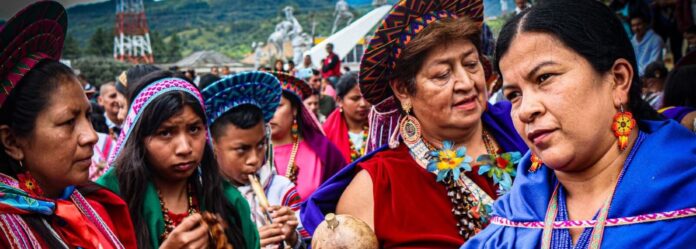
Indigenous and forest-dependent communities have long been stewards of Colombia’s biodiverse landscapes, managing territories that encompass critical ecosystems. Data indicates these groups oversee more than 30 million hectares, integrating traditional knowledge with sustainable practices to maintain forest health [1]. Globally, their leadership is supported by initiatives aiding 45 million people in environmental protection, as outlined in The Nature Conservancy’s 2025 Impact Report [4]. This stewardship is not merely cultural; it yields tangible ecological benefits, such as reduced deforestation rates in community-managed areas compared to unprotected zones.
Recent studies underscore this impact. The WWF’s 2024 Living Planet Report notes that integrating indigenous knowledge into conservation strategies is essential to reversing biodiversity loss, which has seen a 73% decline in wildlife populations since 1970 [5]. In Colombia, programs like Bosques de Paz invest 3.5 billion pesos (approximately $1.2 million) in agroforestry across 1,200 hectares, targeting the planting of 8 million trees in 150 sites [3]. These efforts align with the National Restoration Strategy 2023-2026, which prioritizes restoring ecosystem functionality and biodiversity [10].
Social media insights from X highlight expert opinions on this role. Semantic searches reveal posts from environmental NGOs emphasizing how indigenous mapping projects, such as those in Paraguay’s Mbaracayú Forest completed in 2025, empower communities to combat climate change through community-driven data [6]. Users, including verified activists, express sentiment that these initiatives foster “stronger, more resilient communities” by blending ancestral wisdom with modern tools. However, balanced views emerge: some critics on social media point out that external pressures, like mining and agriculture, often undermine these efforts, calling for stronger legal protections.
Critically, while community management offers promise, it faces systemic barriers. Reports from the Global Forest Coalition critique biodiversity offset mechanisms, arguing they perpetuate harm by displacing communities and prioritizing market solutions over genuine restoration [3]. For instance, such offsets have led to an 80% increase in charcoal production in indigenous territories over a decade, exacerbating pollution and habitat loss [3]. This analysis reveals a tension: indigenous stewardship is effective but requires safeguarding from exploitative policies to thrive.
Confronting Deforestation: Global Losses and Local Impacts
Deforestation remains a pressing global crisis, with 6.73 million hectares lost last year, equivalent to emitting 3,100 million metric tons of greenhouse gases [2]. In Latin America, including Colombia, this loss is driven by agriculture, mining, and illegal activities, threatening biodiversity hotspots. The Forest Declaration’s 2025 summary warns of insufficient progress toward halting deforestation by 2030, despite natural regeneration expanding to over 11 million hectares in tropical regions between 2015 and 2021 [2].
Locally, Colombia’s Amazon faces underreported climate disasters, as studies from Mongabay indicate thousands of events go unrecorded, amplifying vulnerability [9]. The WWF highlights how these trends contribute to a 73% wildlife decline, urging immediate action [5], [7]. X keyword searches for “deforestación Colombia” in 2025-2026 show a mix of alarm and advocacy: experts like climate scientists share threads on rising CO2 levels, while community leaders post about direct impacts on water sources and livelihoods. Sentiments often lean toward frustration, with users decrying “corporate greed” but praising grassroots resistance.
A balanced perspective acknowledges progress amid setbacks. While losses persist, regeneration efforts in Latin America have surged, multiplied by seven [2]. However, financing gaps—current investments fall short of the $10 billion needed annually—hinder scaling [2]. In Colombia, the Escazú Agreement, central to Bosques Vivos, Comunidades Fuertes, aims to address this by promoting environmental rights and access to justice [1]. Critics on social media argue that without enforcement, such agreements remain symbolic, pointing to ongoing encroachments on indigenous lands.
Pollution from deforestation exacerbates these issues, releasing pollutants that degrade air and water quality. Reports emphasize how charcoal production in affected areas contributes to atmospheric contamination, linking forest loss to broader environmental health crises [3]. This section underscores the need for integrated approaches that mitigate both carbon emissions and pollution.
Innovative Initiatives: Bosques Vivos, Comunidades Fuertes in Action
At the forefront of solutions is Bosques Vivos, Comunidades Fuertes, a Hivos-led program running through 2025, designed to implement the Escazú Agreement in Colombia [1]. It equips indigenous communities with digital tools for monitoring forest degradation, enabling evidence collection for legal actions against deforesters. A recent call for proposals on February 18, 2025, via Cambio Sostenible, invited participation in environmental governance projects [8].
Similar efforts globally include UNESCO-supported mapping in Mbaracayú Forest, where indigenous groups finalized community maps in 2025 to tackle climate challenges [6]. WWF’s 2025 conservation highlights celebrate such integrations, noting successes in biodiversity protection [7]. Technological advancements, like Corine Land Cover classifications, support programs like Bosques de Paz, facilitating targeted agroforestry [3].
X semantic searches on “Bosques Vivos Comunidades Fuertes” reveal positive expert sentiments: environmental journalists and NGOs share posts lauding the program’s empowerment of women and youth in monitoring, with one thread from a Colombian activist noting, “These tools turn data into power for forgotten voices.” However, balanced criticism appears in discussions of implementation hurdles, such as limited internet access in remote areas, urging more inclusive tech distribution.
Critically analyzing, while these initiatives promote equity, they must navigate pitfalls like unequal resource allocation. The Global Forest Coalition’s 2024 report warns against market-driven offsets that undermine community rights [3]. Actionable paths include expanding funding for tech training and integrating indigenous input into national strategies like Colombia’s Restoration Plan [10].
Technological Tools and Community Empowerment
Technology plays a transformative role in forest conservation, with digital monitoring tools under Bosques Vivos enabling communities to track deforestation in real-time [1]. These include apps for evidence gathering, aligned with Escazú’s emphasis on information access. In broader contexts, tools like satellite-based Corine Land Cover help classify land use for restoration, supporting the planting of 8 million trees [3].
UNESCO’s work in Mbaracayú demonstrates how community maps enhance climate adaptation [6]. X insights from tech-environment experts show enthusiasm: posts discuss AI-driven alerts for illegal logging, with sentiments highlighting “empowerment through innovation.” Yet, some users critique digital divides, noting that rural communities often lack connectivity, potentially excluding the most vulnerable.
A balanced view recognizes that while tech amplifies voices, it must complement traditional knowledge. Reports stress avoiding over-reliance on gadgets, which could marginalize non-digital users [5]. Solutions involve hybrid approaches: training programs that blend tech with indigenous methods, ensuring broad accessibility.
Global Perspectives and Challenges in Conservation
Globally, the COP16 in Colombia amplified indigenous roles in achieving 30% protected areas by 2030 [5]. The Nature Conservancy supports 45 million community members worldwide [4], while WWF’s 2025 achievements include policy wins for biodiversity [7]. However, the Forest Declaration notes funding shortfalls [2], and underreported Amazon disasters compound risks [9].
X searches on “indigenous conservation COP16” yield expert opinions: optimism from global leaders contrasts with local frustrations over unfulfilled promises. Sentiments emphasize solidarity, with calls for “decolonizing conservation.”
Challenges include pollution from deforestation, which releases toxins affecting health and ecosystems [3]. Balanced analysis reveals that while international frameworks exist, enforcement lags, necessitating stronger advocacy.
Conclusion
Bosques Vivos, Comunidades Fuertes exemplifies how empowering indigenous communities can combat deforestation and foster resilience, drawing on data showing managed forests’ potential to curb global losses [1], [2]. By integrating tools, knowledge, and policy—like Escazú and national restoration strategies [10]—progress is achievable. Yet, challenges such as funding gaps and market harms demand critical reforms [3]. Actionable paths forward include boosting investments to $10 billion annually, expanding tech access, and centering indigenous leadership in global forums. As wildlife declines and emissions rise [5], collective action offers hope: support these initiatives to build vibrant forests and strong communities, ensuring a sustainable future for all.
1. KEY FIGURES:
– Comunidades indígenas y dependientes de los bosques gestionan más de 30 millones de hectáreas de bosque en Colombia[1]. – Pérdida global de bosques: 6,73 millones de hectáreas en el año pasado, liberando 3100 millones de toneladas métricas de gases de efecto invernadero[2]. – Expansión de bosques tropicales húmedos regenerados naturalmente: más de 11 millones de hectáreas entre 2015 y 2021 en regiones incluyendo América Latina[2]. – Disminución promedio de vida silvestre mundial: 73% desde 1970[5]. – Apoyo global al liderazgo de 45 millones de personas de comunidades indígenas y locales en protección ambiental[4]. – Inversión en agroforestería: 3.500 millones de pesos (aprox. 1,2 millones de dólares) en 1.200 hectáreas, con meta de 8 millones de árboles en 150 Bosques de Paz[3].
2. RECENT NEWS:
– Hivos impulsa Bosques Vivos, Comunidades Fuertes para implementar el Acuerdo de Escazú y proteger territorios indígenas contra deforestación en Colombia (2024-2025, Hivos)[1]. – Bosques del Mundo apoya comunidades indígenas en COP16 Colombia para fortalecer su rol en conservación de biodiversidad y meta del 30% de áreas protegidas[5]. – Convocatoria del proyecto Bosques Vivos, Comunidades Fuertes para gobernanza ambiental en Colombia el 18 de febrero (2025, Cambio Sostenible)[8]. – Pueblos indígenas del bosque de Mbaracayú finalizan mapas comunitarios en 2025 para enfrentar cambio climático (2025, UNESCO)[6].
3. STUDIES AND REPORTS:
– Resumen para Responsables Políticos 2025 (Forest Declaration): Pérdidas forestales alarmantes pero regeneración natural en América Latina multiplicada por siete; financiamiento insuficiente vs. meta de 10.000 millones USD[2]. – Informe Planeta Vivo 2024 (WWF): Biodiversidad en retroceso con 73% pérdida de vida silvestre; urge integrar conocimiento indígena en estrategias globales[5]. – Informe sobre compensaciones de biodiversidad (Global Forest Coalition, 2024): Instrumentos de mercado perjudican comunidades indígenas y mujeres; producción de carbón +80% en territorios indígenas 2000-2010[3]. – Estrategia Nacional de Restauración Colombia 2023-2026 (MinAmbiente): Enfocada en restaurar funcionalidad ecosistémica y biodiversidad[10].
4. TECHNOLOGICAL DEVELOPMENTS:
– Herramientas digitales de monitoreo forestal para comunidades indígenas recopilar evidencia de degradación y fortalecer acciones legales bajo Acuerdo de Escazú[1]. – Uso de Corine Land Cover (CLC) para clasificar uso de tierra en programa Bosques de Paz con plantación de 8 millones de árboles[3].


