


Introduction
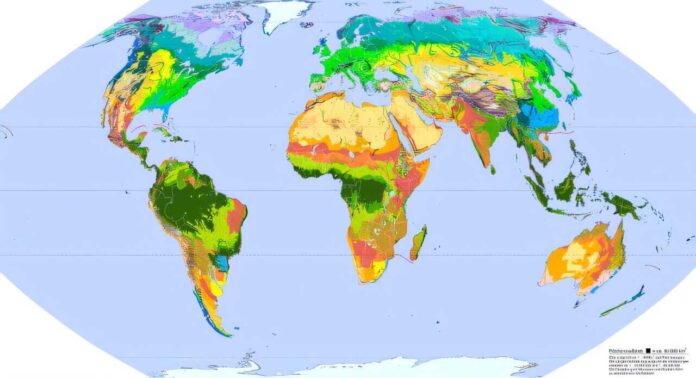
Drylands cover over 40% of Earth’s land surface, supporting more than two billion people, yet they are increasingly threatened by climate warming and human activities. Desertification, land degradation, and drought (DLDD) not only erode soil fertility but also amplify pollution through dust storms and carbon emissions, undermining global efforts to combat environmental decline [3]. Recent reports underscore the stakes: over 75% of global land has dried out in the past 30 years, with projections indicating significant risks by mid-century [2][4]. The Dryland Restoration Initiative, encompassing projects like TRI and the Great Green Wall, represents a concerted push to reverse this trend. Backed by international bodies such as the IUCN, FAO, and UNEP, these efforts integrate restoration with sustainable management, aiming to reduce degraded land by 50% by 2040 as per G20 ambitions [5]. This article examines the progress, challenges, and innovations in dryland restoration, drawing on factual data and social media sentiments to highlight actionable paths forward.
The Expanding Threat of Dryland Degradation
The scale of dryland degradation is staggering, driven by climate change and unsustainable practices. A 2025 study reveals that Earth’s drylands are expanding rapidly, affecting billions as warmer temperatures intensify aridity [2]. This expansion is not uniform; in regions like Africa and Asia, over three-fourths of land has become drier, leading to reduced agricultural yields and heightened vulnerability to pollution from eroded soils [2]. Economically, DLDD inflicts annual losses of US$878 billion, encompassing diminished crop production, biodiversity loss, and health impacts from airborne pollutants [3].
Social media reflects growing concern among experts and communities. Recent X posts highlight debates on resilience, with one expert cautioning that the myth of nature’s automatic recovery ignores irreversible soil damage from overgrazing and hydrologic alterations . Another post emphasizes how greening can mask underlying soil drying, where increased vegetation exacerbates water loss in already arid areas . These insights underscore a balanced view: while some greening occurs, it often comes at the cost of deeper droughts, particularly in Africa and Australia.
Critically, projections from a 2025 AGU study indicate that by 2050, 1.8% of dryland areas will face high degradation risks, escalating to 11.1% under potential scenarios like SSP2-4.5 [4]. This ties directly to pollution concerns, as degraded lands release stored carbon and generate dust that contaminates air and water sources. Without intervention, these trends could displace millions, amplifying humanitarian crises in vulnerable regions.
Key Initiatives Driving Restoration
Amid these challenges, major initiatives are making tangible progress. The Restoration Initiative (TRI), a collaboration involving nine countries and organizations like IUCN, FAO, and UNEP, has achieved remarkable outcomes. As of June 2024, TRI has restored 354,744 hectares, improved sustainable management across 715,164 hectares, and reduced 27.4 million tons of CO2 equivalent through mitigation and sequestration [1]. These efforts focus on nature-based solutions (NbS), such as reforestation and soil rehabilitation, which not only combat degradation but also address pollution by enhancing carbon sinks and reducing erosion [3].
Africa’s Great Green Wall stands as a flagship project, having restored 30 million hectares toward its 2030 goal of 100 million [2]. Initially conceived as linear tree barriers, it has evolved into mosaic restoration, incorporating community-sustained, multi-purpose plantings that better suit local ecologies [2]. Social media buzzes with optimism around such projects; X users praise China’s analogous Great Green Wall for transforming deserts into carbon sinks through sustained irrigation and planting since 1978 . Similarly, posts highlight Nigeria’s contributions, including over 978,000 hectares restored and renewable energy deployments .
The G20’s Global Land Initiative, with its Restoration Information Hub launched in July 2024, compiles data to support these efforts, fostering global collaboration [5]. A 2026 T20 framework advocates for sustainable dryland development, emphasizing finance and community involvement [6]. These initiatives demonstrate that restoration can yield co-benefits, from biodiversity gains to pollution reduction, but require ongoing funding to scale.
Challenges and Critical Perspectives
Despite successes, dryland restoration faces significant hurdles. Funding shortfalls plague projects like the Great Green Wall, where inadequate resources, poor species selection, and monitoring gaps have led to uneven progress [2]. A UN 2024 report notes that while 75% of land has dried, restoration efforts often overlook water budget constraints, risking further degradation [2][4]. Social media sentiments echo this critique; one post questions the UN’s contradictory messaging on water scarcity while funding reversal projects , and another debates whether greening stems more from CO2 fertilization or human engineering like the Great Green Wall .
Critically analyzing these views reveals a balanced narrative: CO2-driven greening contributes, but active intervention is essential, as passive recovery fails in overgrazed areas . Pollution exacerbates challenges; degraded soils release contaminants, and dust from expanding deserts pollutes distant regions [3]. Moreover, climate projections warn of increased risks, demanding adaptive strategies [4]. Experts on social media stress that restoration must go beyond aesthetics, addressing microbial health and hydrology to avoid cascading failures . These insights highlight the need for inclusive policies that mitigate risks without over-relying on unproven resilience myths.
Innovations and Technological Advancements
Technological developments are pivotal in advancing dryland restoration. The G20’s Global Restoration Information Hub, launched in July 2024, aggregates credible data to inform policies and track progress [5]. This tool supports evidence-based decisions, such as shifting to mosaic approaches in the Great Green Wall, which prioritize community needs and resilient species [2].
Studies emphasize water budgets as key to resilience; a 2025 analysis links ecological stability to hydrological balance, advocating for targeted interventions in high-risk areas [4]. on social media, experts discuss regenerative practices like soil organic matter enhancement and green manure, backed by peer-reviewed research showing improved carbon sequestration and biodiversity . Innovations such as half-moon trenches for water capture and rewetting techniques—blocking drains and planting shade trees—are proposed as solutions .
Community-driven models, as seen in TRI’s projects, integrate local knowledge, reducing pollution through sustainable land use [1]. A 2026 framework calls for financing mechanisms to deploy over 100 available technologies, ensuring equitable access [6]. These advancements offer actionable paths, blending tech with grassroots efforts to build resilient drylands.
Community Involvement and Social Media Insights
Restoration succeeds when communities lead. In the Great Green Wall, mosaic planting empowers locals, fostering multi-purpose landscapes that provide food, fuel, and income [2]. X posts reflect positive sentiment, with users sharing stories of shoreline remediation and shelterbelts in Africa . However, sentiments also reveal frustrations over reliance on aid, advocating for self-sustaining systems .
Expert opinions on social media emphasize active regeneration over passive hope, noting that ecosystems require deliberate actions like canopy trees and microbial restoration . This aligns with IUCN’s push for NbS, promoting policies that address DLDD costs [3]. Balancing views, some posts credit CO2 effects but stress human ingenuity . These insights underscore the importance of inclusive, funded approaches to combat pollution and degradation.
Future Outlook and Actionable Solutions
Looking ahead, dryland restoration must scale to meet G20 goals of halving degraded land by 2040 [5]. Projections indicate rising risks, but solutions like enhanced monitoring and adaptive planting can mitigate them [4]. Actionable paths include investing in the Restoration Information Hub for data-driven strategies and adopting T20 frameworks for finance [5][6].
Communities should prioritize water-efficient NbS, such as mosaic restoration and regenerative agriculture, to reduce pollution and build resilience [2][3]. Policymakers must address funding gaps, ensuring projects like TRI expand [1]. Global cooperation, informed by social media’s real-time feedback, can drive these efforts, turning drylands into thriving ecosystems.
Conclusion
Dryland restoration stands as a beacon of hope against escalating degradation, with initiatives like TRI and the Great Green Wall demonstrating measurable impacts in land recovery and CO2 reduction [1][2]. Yet, challenges from funding shortfalls and climate risks demand critical, balanced approaches [4]. By integrating innovations, community involvement, and expert insights from platforms like X, stakeholders can forge sustainable paths forward. The call to action is clear: governments, organizations, and individuals must prioritize funding, policy reforms, and active interventions to combat pollution, enhance resilience, and secure a greener future. Failure to act risks irreversible losses, but concerted efforts can restore balance to our planet’s fragile drylands.
1. KEY FIGURES:
– TRI has brought 354,744 hectares of land under restoration[1] – Improved sustainable land management across 715,164 hectares[1] – Reduction of 27.4 million tons of CO2 equivalent through mitigation and sequestration[1] – US $878 billion lost annually to desertification, land degradation and drought (DLDD)[3] – Over three-fourths of world’s land became drier in last three decades[2] – Africa’s Great Green Wall restored 30 million hectares so far (target 100 million by 2030)[2] – By 2050, 1.8% of dryland area projected to face degradation risks (11.1% at potential risk under SSP2-4.5)[4] – G20 ambition to reduce degraded land by 50% by 2040[5]
2. RECENT NEWS:
– Earth’s drylands expanding, affecting billions due to climate warming (2025-03)[2] – IUCN Global Drylands Initiative promotes sustainable management policies (2024 UN report context)[2] – G20 Global Restoration Information Hub launched July 2024[5]
3. STUDIES AND REPORTS:
– TRI Impact Brief 1 (2024): TRI united 9 countries and IUCN/FAO/UNEP for 10 projects; restored 354,744 ha, improved 715,164 ha management, 27.4M tons CO2e reduced (as of June 2024)[1] – Water Budgets Control Resilience study (2025): Dryland ecological resilience tied to water budgets; 1.8% area at degradation risk by 2050[4] – UN 2024 report: 75%+ of global land drier over past 30 years; Great Green Wall shortfalls due to funding, species choice, monitoring[2]
4. TECHNOLOGICAL DEVELOPMENTS:
– Global Restoration Information Hub (launched July 2024): Compiles global land restoration data from credible sources[5] – Mosaic restoration in Great Green Wall: Shift to community-sustained, multi-purpose saplings over top-down tree rows[2]


