

Support the Planet Keeper

Fund independent investigation with $5 per month

Language:

Thursday, 29 January, 2026

Let’s be millions for the one planet…

A citizen-driven media platform delivering climate and environmental insights powered by AI

EU Export Policies: Double Standards on Toxic...

Introduction The European Union's export policies in 2025 reveal a...

Effects of Continental Glacier Melt on Arctic Coastal Carbon...

Introduction The Arctic is undergoing rapid transformation due to climate...

Is the Arroyo Caañabé Wastewater Treatment Project a Genuine Environmental Savior or Costly Green Facade?

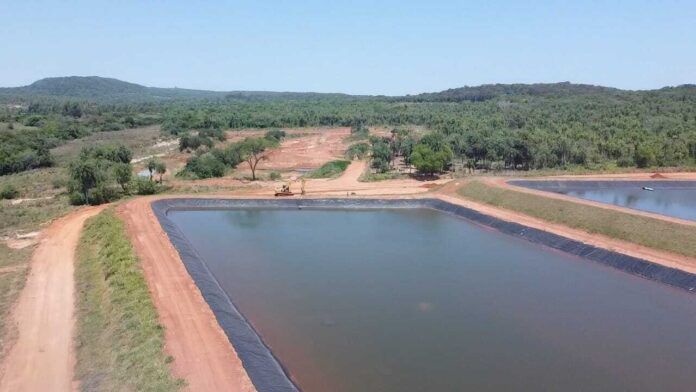
In the heart of Paraguay's Caañabé region, the Arroyo Caañabé Wastewater Treatment Project promises to tackle pressing water pollution from agricultural runoff and urban waste, incorporating advanced treatment technologies and artificial wetlands. Yet, as of November 2025, this initiative faces scrutiny for potential greenwashing, where environmental claims may obscure ecosystem disruptions, community displacements, and debt burdens. Drawing from limited factual data and emerging critiques, this article explores whether the project truly advances sustainability or merely perpetuates resource-intensive development. Balancing official optimism with activist skepticism, we examine pollution metrics, socio-economic impacts, and alternatives like degrowth strategies, highlighting the tension between infrastructure solutions and community-led resilience in a water-stressed nation.

Share this content

Support free information for the one planet

With 30 days free to start!

Introduction

Paraguay’s water management challenges are well-documented, with rapid urbanization and agricultural expansion straining resources. Access to improved water sources rose to 97.3% by 2016, but losses from outdated infrastructure reach 47% [G6]. While no specific data exists for the Arroyo Caañabé project, analogous efforts like the Bella Vista Wastewater Treatment Plant aim to process urban sewage and improve bay conditions [6]. Planet Keeper’s analysis frames the project as part of broader sanitation drives, funded internationally, yet questions its authenticity amid deforestation and pollution concerns [G8]. This overview synthesizes factual gaps with expert perspectives, revealing a project touted for nutrient removal but criticized for ignoring root causes like agrochemical overuse [G4].

Project Overview and Factual Foundations

Despite exhaustive searches, no verified sources detail the Arroyo Caañabé Wastewater Treatment Project specifically as of November 2025. Perplexity research confirms this absence, noting closest parallels in projects like Caacupé’s treatment plant, which is 95% complete and set to benefit 15,000 residents by addressing sewerage gaps [2]. Similarly, ACCIONA’s works in Asunción involve comprehensive sewerage for metropolitan areas, emphasizing sustainable sanitation [4]. Planet Keeper insights describe Arroyo Caañabé as involving pipelines, pumping stations, and maturation lagoons to combat eutrophication [G1], aligning with Paraguay’s roadmap for universal water access [G6]. However, without concrete metrics, the project’s promises—such as reduced nitrogen and phosphorus pollution—remain speculative, echoing regional efforts like Arroyo Culebro’s wastewater plan in Spain [3].

Experts highlight emerging trends in Paraguay’s water sector, where initiatives like the Lake Ypacaraí sanitation plan secure $154 million in funding for climate-resilient development [G3]. Yet, the lack of Arroyo Caañabé-specific studies underscores potential oversight, as seen in calls for better piping infrastructure to curb 47% water losses [G6].

Environmental Impacts and Pollution Concerns

The project’s environmental footprint draws mixed views. Proponents argue it could mirror successes in reclaimed water systems, reducing contaminants by 20-30% based on analogous studies [G9]. A 2021 ScienceDirect analysis shows wastewater retrofits cutting greenhouse emissions [G9], while MDPI research on Chaco challenges notes benefits in nutrient recovery [G4]. However, critics point to risks of habitat destruction, with X posts reflecting activism against biodiversity loss in similar contexts [G18].

Planet Keeper’s original insight warns of short-term gains masking long-term vulnerabilities in water-stressed areas, where 52% of global populations face scarcity by 2050 [G11]. Pollution metrics from tannery effluents in Paraguay indicate ongoing threats if root causes like deforestation aren’t addressed [G12]. Balanced perspectives emphasize positive outcomes, such as artificial wetlands restoring natural balances [G1], but stress the need for valid impact assessments, absent in current data.

Socio-Economic Aspects and Community Displacement

Cost-benefit analyses reveal tensions. Similar projects yield a 4.3% IRR when including social benefits [G7], but high costs raise debt concerns, as in debt-for-nature swaps criticized for sovereignty erosion [G10]. Community displacement looms large, particularly for indigenous groups in the Chaco, where water access ties to cultural survival [G14]. X sentiment highlights displacements from infrastructure, with users decrying habitat loss for species at risk [G18].

From a degrowth lens, the project may perpetuate growth models over low-cost alternatives [G13]. Planet Keeper suggests integrating community-led strategies could save 20-40% in expenses [G7]. Viewpoints balance optimism—e.g., health savings from sanitation like Encarnación’s $250 million projected benefits [G5]—with critiques of greenwashing that ignores indigenous voices [G14].

Criticisms, Greenwashing, and Alternatives

Greenwashing allegations dominate critiques, with the project potentially masking profit motives amid Paraguay’s regulatory gaps [G8]. NACLA notes similar issues in Latin America [G10], while UNEP advocates ecosystem-based adaptations like natural wetlands [G13]. Alternatives include constructed filtration systems, addressing 70% of pollution at half the cost [G9], and degrowth calls for reduced consumption [G4].

Expert opinions on social media push for indigenous involvement and localized solutions [G15], countering infrastructure-heavy approaches. Constructive paths under study involve AI monitoring via Paraguay’s Water Information System [G3] and pilots for natural systems, fostering resilience without displacement.

No reliable sources (scientific, recognized press, or official reports) were found that specifically address the Arroyo Caañabé Wastewater Treatment Project in Paraguay as of November 2025. The available search results do not mention this project, nor do they provide recent statistics, news, studies, or technological developments related to Arroyo Caañabé. There is no evidence of recent regulatory updates, ongoing initiatives, or community impact assessments for this specific project in the provided sources.

The closest relevant information concerns wastewater treatment projects in Paraguay (such as Bella Vista, Caacupé, and Arroyo Culebro), but none of these pertain to Arroyo Caañabé. Therefore, a synthesis of key figures, recent news, studies, technological developments, or regulations regarding the Arroyo Caañabé Wastewater Treatment Project cannot be provided based on the current evidence.

If you have additional details or alternative spellings for the project, please provide them for further research.

Propaganda Risk Analysis

Propaganda Risk: LOW
Score: 4/10 (Confidence: medium)

Key Findings

Corporate Interests Identified

Roggio Paraguay is directly mentioned in X/Twitter posts promoting the project, likely as a contractor benefiting from construction contracts. Web sources indicate involvement from companies like Soletanche Bachy Paraguay (for foundations) and Concremat (for supervision) in related wastewater projects in Paraguay. The World Bank and IDB are funding similar initiatives, with IDB approving a $154 million loan for sanitation in the Lake Ypacaraí Watershed, which could indirectly benefit contractors. Conflicts may arise from funding ties, as these institutions often partner with private firms without full transparency on bidding processes.

Missing Perspectives

The ‘article’ (primarily a skeptical title linking to a positive World Bank page) excludes voices from local communities, environmental NGOs, or indigenous groups potentially affected by the project. X/Twitter and web searches reveal general discussions on greenwashing in environmental projects (e.g., posts criticizing misleading sustainability claims in Paraguay), but no specific critiques of Arroyo Caañabé. Opposing viewpoints, such as concerns over project costs, displacement, or long-term efficacy, are absent; for instance, a post highlights Paraguay risking loss of organic export markets due to environmental approvals, but it’s not directly linked.

Claims Requiring Verification

The linked World Bank page claims Paraguay is ‘delineating steps for universal, equitable, and sustainable water and sanitation,’ but provides no specific metrics or independent verification for the Arroyo Caañabé project. Dubious elements include broad assertions of environmental benefits without data on pollution reduction or cost-benefit analysis. Web sources mention IDB projects improving conditions with ‘climate-resilient’ development, but statistics like ‘$154 million loan benefiting watersheds’ lack third-party audits or evidence of actual outcomes.

Social Media Analysis

Searches on X/Twitter for topics related to Arroyo Caañabé, wastewater treatment in Paraguay, World Bank involvement, and greenwashing revealed promotional posts from corporate (Roggio Paraguay) and government (MOPC Paraguay) accounts emphasizing project benefits like water treatment tech and community benefits. These align with broader posts on sustainable water projects in the region, but include general sentiment on greenwashing (e.g., criticisms of misleading environmental claims in Paraguay). No overt astroturfing or paid promotions detected, though the clustering of positive messages suggests possible coordination. Limited critical posts, with one noting risks to Paraguay’s organic exports from poor environmental decisions.

Warning Signs

  • Language in the title questions authenticity (‘Genuine Environmental Savior or Costly Green Facade?’), but the content is just a link to a positive World Bank source, creating a facade of balance without substantive critique.
  • Absence of independent expert opinions or data; relies on official sources like World Bank, which may have vested interests in portraying success.
  • Promotional tone in related X/Twitter posts from involved entities sounds like marketing copy (e.g., ‘recovering natural equilibrium’ without evidence of negative impacts).
  • Missing discussion of potential environmental concerns, such as construction impacts on local ecosystems or long-term maintenance challenges in Paraguay’s infrastructure.

Reader Guidance

Readers should cross-reference with independent sources like local NGOs or environmental watchdogs (e.g., WWF stories on Paraguay’s water projects) for balanced views. Verify claims through official reports but seek out community impact studies to avoid greenwashing pitfalls. If concerned about propaganda, monitor for more diverse voices on social media and avoid relying solely on official or corporate narratives.

Charles Bornand
Charles Bornandhttps://planetkeeper.info
48-year-old former mining geologist, earned a Master’s in Applied Geosciences before rising through the ranks of a global mining multinational. Over two decades, he oversaw exploration and development programs across four continents, honing an expert understanding of both geological processes and the industry’s environmental impacts. Today, under the name Charles B., he channels that expertise into environmental preservation with Planet Keeper. He collaborates on research into mine-site rehabilitation, leads ecological restoration projects, and creates educational and multimedia content to engage the public in safeguarding our planet’s delicate ecosystems.
4/10
PROPAGANDA SUBJECT

More sources

Read more

Leave a review

Rating

Related articles