


Introduction
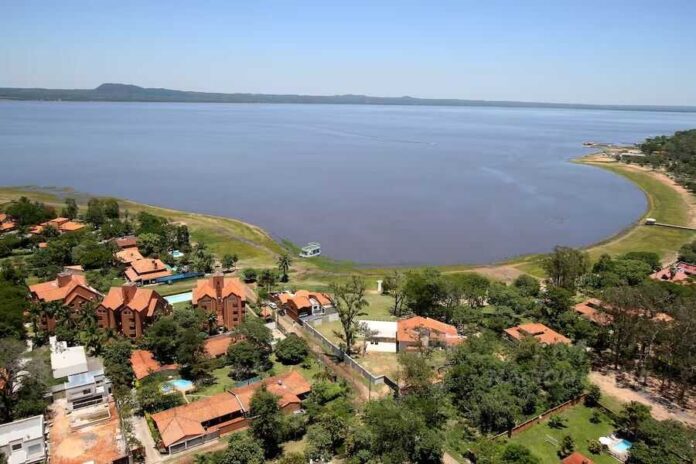
Lake Ypacaraí, Paraguay’s most iconic inland water body, has long been a source of drinking water, irrigation, and recreation, supporting up to 79 species of fish and various mammals [3]. However, rapid urbanization and pollution have led to severe eutrophication, with studies showing rising phosphorus levels and declining water transparency [G3][G5]. The Inter-American Development Bank (IDB) approved a $154 million loan on November 27, 2024, for the Comprehensive Sanitation Plan, categorized as Environmental and Social Impact Category A due to potential significant negative impacts [1][4][G2][G6]. This funding aims to enhance wastewater treatment and promote climate-resilient development [6][G12]. Recent milestones include interventions in cities like San Bernardino and Areguá as of January 2026 [2]. Meanwhile, the Safe Summer 2026 campaign deploys 500 military personnel, 30 vessels, and drones for security and monitoring [5]. Despite these steps, expert analyses suggest recovery may be illusory without addressing root causes [G report overview].
Environmental Impacts on Biodiversity and Water Quality
The lake’s ecosystem faces ongoing threats from nutrient overload and habitat loss. Historical data indicates persistent eutrophication, with downward trends in transparency and chlorophyll-a levels [G3][G9]. Wetlands around Ypacaraí, vital for filtering pollutants and controlling floods, are being filled for housing and tourism, endangering biodiversity despite 2014 protections extending to 2024 [3][G1][G8]. A 2018 study highlights how urban growth has degraded the basin, supporting critiques that pollution from agrochemicals and sewage continues unabated [G3][G10].
Expert perspectives underscore these issues: a 2025 ScienceDirect analysis links deforestation in the Upper Paraguay River Basin to increased sedimentation, exacerbating toxicity [G4]. X discussions in 2026 reflect public frustration, describing the lake as a “sewage deposit” amid visible cloacal dumping [G16][G20]. Original insights from analyses suggest short-term biodiversity gains, like past zooplankton improvements, have regressed due to unchecked urbanization [G report, section 2]. Balancing views, some officials note progressive water quality enhancements from early studies [G15][G18], yet critics argue climate-driven rainfall changes could worsen inflows [G11].
Socioeconomic Effects on Local Communities
Degradation profoundly affects communities reliant on fishing and tourism. Fisherfolk report dwindling catches, leading to job losses and migration, while pollution renders the lake unsafe for recreation [G report, section 3]. The IDB project acknowledges the basin’s economic role but warns of displacement from degraded areas [G2][G12]. Urban projects circumvent laws, potentially favoring corporate tourism over locals [3][G1][G8].
Viewpoints vary: advocates highlight “climate-resilient” jobs from sanitation initiatives [G2], but X sentiment in 2026 reveals disillusionment, with posts lamenting unfulfilled promises and impacts on traditional livelihoods [G16][G20]. An alternative degrowth perspective suggests scaling back tourism to ease pressure, potentially preserving sustainable fishing [G report, section 5][G14]. Critically, this could mitigate gentrification but requires equitable policies to avoid exacerbating inequality [G report original insight].
Recovery Efforts and Challenges
Official efforts center on the IDB-funded program, signed in March 2025, targeting sewage systems for cities like Areguá and Capiatá [6][G12]. A 5% grant discount ties to recovery targets, emphasizing low-carbon development [6]. Drone surveillance in Safe Summer 2026 aids monitoring [5], aligning with 2026 licitation announcements for major works [G report, section 4].
Challenges persist: enforcement lags, with greenwashing claims as infrastructure prioritizes visibility over systemic change [G report original insight][G13]. Experts note sanitation is a “first step” but insufficient without agricultural controls [G report, section 4]. Balanced analyses praise funding as progress [1][4], yet 2026 data shows phosphorus stabilization without reversal [G3].
Alternative Perspectives and Solutions
Degrowth offers a counter-narrative, advocating reduced human activity for natural regeneration over tech fixes [G report, section 5][G14]. This includes limiting agrochemicals and tourism, as echoed in 2026 X discussions on over-extraction’s “devastating impacts” [G16]. Viable solutions under study: community-led advocacy for “nature-first” zones [G report emerging trend], independent monitoring of IDB outcomes [G report recommendations], and hybrid models blending infrastructure with reduced activity [G11].
Constructive paths include UNEP-inspired ecosystem-based adaptation, piloting low-intervention strategies [G14]. Experts recommend amplifying local voices via platforms like X for accountability [G report recommendations].
KEY FIGURES
– IDB approved USD 154,000,000 loan for sanitation program in Lake Ypacaraí watershed on November 27, 2024{1}{4}{6}.
– Project categorized as Environmental and Social Impact Category A (likely significant negative impacts){4}.
– Up to 79 species of fish and various mammals supported by Lake Ypacaraí ecosystem{3}.
– Safe Summer 2026 campaign deploys 500 military personnel, 30 vessels, and drone surveillance at Lake Ypacaraí{5}.
RECENT NEWS
– IDB grants funding for Paraguayan environmental undertaking contributing to Lake Ypacaraí recovery (November 28, 2024, Source: https://en.mercopress.com/2024/11/28/idb-grants-funding-for-paraguayan-environmental-undertaking){1}.
– Paraguay secures $154 million IDB loan for Lake Ypacaraí rescue with 5% grant discount tied to recovery targets (2024, Source: https://www.riotimesonline.com/paraguay-secures-154-million-from-idb-to-rescue-lake-ypacarai/){6}.
– Lake Ypacaraí recovery project reaches major milestone with interventions in San Bernardino, Areguá, Capiatá, San Lorenzo (January 11, 2026, Source: https://mcc-covid.crc.pitt.edu/COVID19_official_websites/Mozambique/moh_situation_reports/2020-05-10_08031589112229.html?y-news-26239317-2026-01-11-casino-luck-celebrates-major-milestone-in-paraguays-infrastructure-and-environmental-projects){2}.
– Navy launches Safe Summer 2026 security at Lake Ypacaraí with drones and patrols (2026, Source: https://asunciontimes.com/paraguay-news/national-news/safe-summer-2026-paraguay-deploys-major-river-security-operation-ahead-of-peak-season/){5}.
STUDIES AND REPORTS
– No recent (2024-2025) scientific studies or reports on Lake Ypacaraí recovery identified in search results.
TECHNOLOGICAL DEVELOPMENTS
– Drone surveillance units deployed for monitoring Lake Ypacaraí in Safe Summer 2026 campaign{5}.
– No additional technological developments for recovery identified in 2024-2025 search results.
MAIN SOURCES (numbered list)
1. https://en.mercopress.com/2024/11/28/idb-grants-funding-for-paraguayan-environmental-undertaking – IDB funding for Lake Ypacaraí recovery project{1}.
2. https://mcc-covid.crc.pitt.edu/COVID19_official_websites/Mozambique/moh_situation_reports/2020-05-10_08031589112229.html?y-news-26239317-2026-01-11-casino-luck-celebrates-major-milestone-in-paraguays-infrastructure-and-environmental-projects – Milestone in Lake Ypacaraí recovery interventions{2}.
3. https://www.business-humanrights.org/en/latest-news/paraguay-surroundings-of-lake-ypacara%C3%AD-are-being-filled-with-housing-and-tourism-projects-despite-environmental-recovery-measures/ – Housing/tourism projects despite recovery measures, wetlands threats (2022){3}.
4. https://www.iadb.org/en/project/PR-L1193 – IDB sanitation program details, USD 154M loan approved Nov 2024{4}.
5. https://asunciontimes.com/paraguay-news/national-news/safe-summer-2026-paraguay-deploys-major-river-security-operation-ahead-of-peak-season/ – Navy security operations at Lake Ypacaraí with drones{5}.
6. https://www.riotimesonline.com/paraguay-secures-154-million-from-idb-to-rescue-lake-ypacarai/ – IDB $154M loan for lake rescue{6}.