

Introduction
El Salvador’s coastal ecosystems, particularly its mangroves, are critical for biodiversity, fisheries, and storm protection, yet they’ve suffered immense degradation. The country has lost 60% of its forest cover since 1950, with mangroves declining at about 681 hectares per year [4]{2}. The FIAES project, active in areas like Jiquilisco Bay—which holds nearly three-quarters of the nation’s wetland forests at approximately 19,449 hectares [4]{1}—aims to reverse this through community-based efforts. Funded partly by environmental investments, it aligns with global restoration trends but faces scrutiny for potentially masking deeper issues. Expert analyses suggest mixed outcomes: localized ecological gains coexist with concerns over displacement and insufficient regulation of extractive industries [G1], [G10]. This piece synthesizes factual data, studies, and perspectives to assess the project’s impact on conservation and communities from 2023-2026.

Proclaimed Successes in Mangrove Restoration
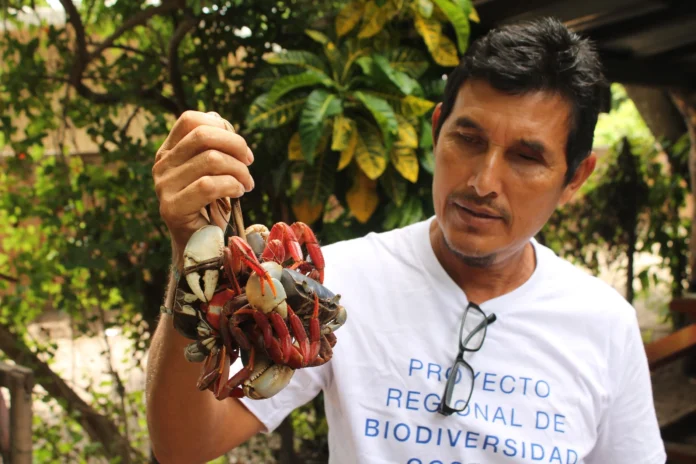
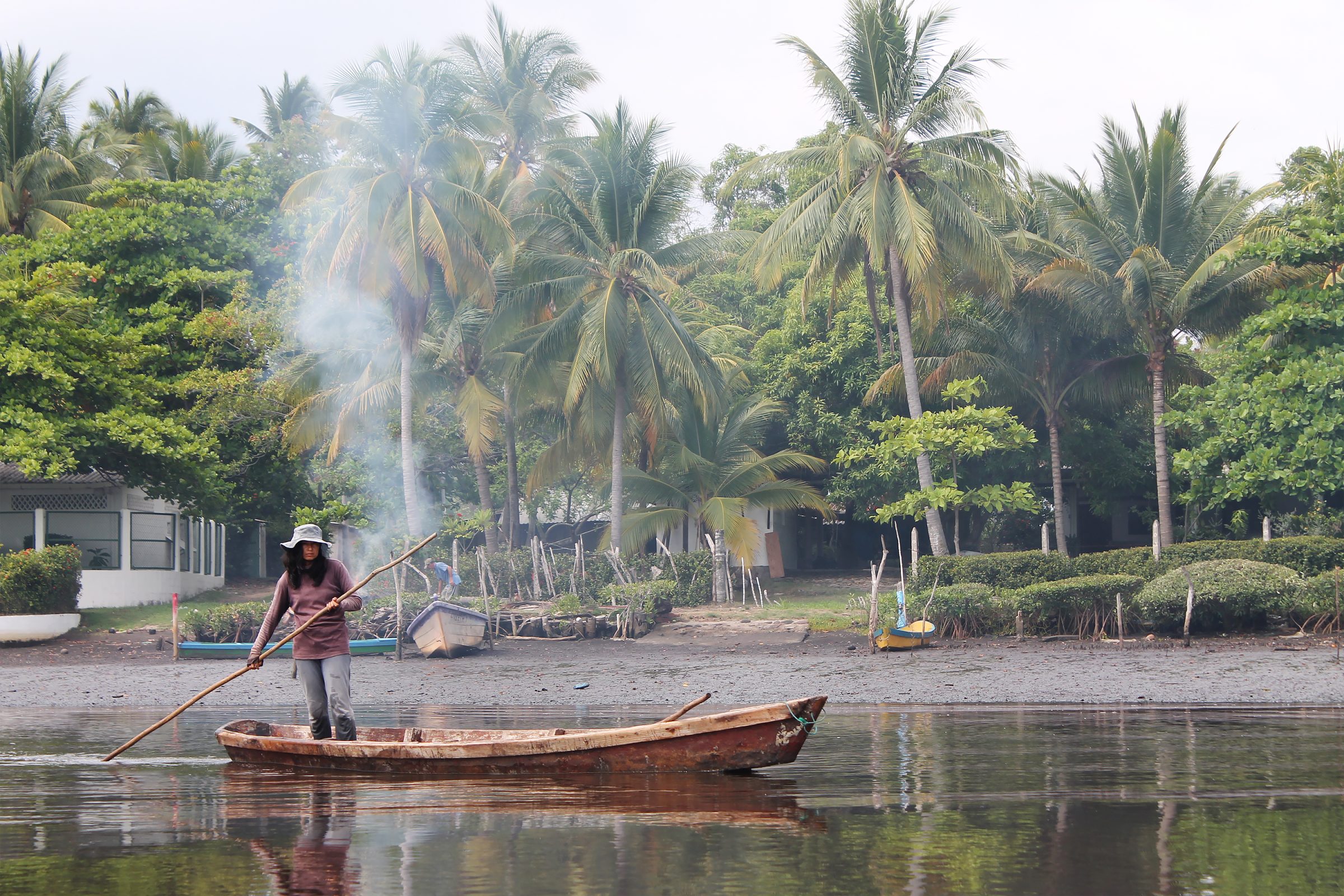
FIAES-supported initiatives have yielded notable ecological wins, particularly in hydrological restoration. In Jiquilisco Bay, community-led efforts under the Community-Based Ecological Mangrove Restoration (CBEMR) approach—focusing on reopening clogged waterways rather than mass planting—resulted in over 70 hectares of mangroves naturally recovering after manually clearing 4.2 kilometers of channels [2]{3}. This low-cost method, involving local labor with tools like shovels and axes, restored tidal flows, boosting fish and shellfish populations such as red snapper, crabs, and shrimp [2]{3}. A 2025 Mongabay analysis hails this as a model, emphasizing enhanced carbon sequestration and biodiversity [G1].
Broader regional projects, like the USAID-backed Regional Coastal Biodiversity Project (2017-2024), integrated with FIAES efforts, established crab management guidelines and alternative livelihoods like beekeeping in Barra de Santiago [3]{7}. Studies using Sentinel satellite and LiDAR data from 2016-2025 confirm improved mangrove cover, height, and biomass, underscoring the value of sustained hydrological management and community stewardship [5]{8}. Globally, parallels in Ecuador show marine restoration aiding biodiversity loss mitigation through sediment repurposing [G5]. These successes highlight how FIAES fosters resilience, with up to 30% of Jiquilisco residents relying exclusively on mangroves for livelihoods [4]{5}.
Criticisms and Systemic Challenges
Despite these gains, critics argue the project masks deeper failures. No credible 2024-2025 data confirms net fisheries declines or large-scale displacements from FIAES activities, but emerging trends point to conflicting pressures [G12]. Agribusiness runoff, shrimp farming, and tourism continue to threaten ecosystems, with pollution and overfishing cited as ongoing issues [6]{10}. X posts from 2025-2026 reflect public sentiment, with activists decrying mangrove devastation from development, potentially displacing communities and increasing vulnerability to climate change [G16], [G17].
Expert analyses frame this as a “restoration paradox”: while projects like FIAES enhance short-term metrics, they often fail to challenge economic models fueling degradation [G3]. A 2022 Frontiers study on regional mangroves models coastal protection benefits but warns of vulnerabilities without addressing pollution [G2]. Indigenous fishers report restricted access to traditional grounds due to conservation zoning or overlapping tourism, echoing concerns in analogous cases like the Philippines [G12]. Critiques suggest greenwashing, where corporate sponsors tied to extractive industries offset harm without systemic reform [G4]. Without degrowth principles—reducing unchecked expansion—the project’s 2026 goal of restoring 840 hectares risks being undermined [G1].
Community Impacts and Livelihood Dynamics
Local communities are both beneficiaries and potential victims. In Jiquilisco, Local Sustainable Resource Use Plans (LSRUPs) since 2010, backed by MARN, impose catch quotas and habitat protections over ~4,000 acres, promoting co-management [4]{5}. This has empowered residents, with one FIAES-associated project targeting 6 kilometers of canal clearing and maintaining 3.7 kilometers of rehabilitated “chinampas” [1]{6}. A 2024 Middlebury Institute overview notes integration with fisheries improvement, supporting artisanal livelihoods [G7].
However, viewpoints diverge: some experts see these as empowering, while others highlight conflicts, like indirect displacement from development pressures [G18]. X discussions indicate mixed sentiment, with promotions of economic benefits clashing against allegations of exclusion [G15]. A 2025 Funds for NGOs proposal stresses integrating preservation with income generation but warns of economic overrides [G3]. Balanced analyses suggest that while 30% of locals depend on mangroves, systemic drivers like rising sea levels exacerbate inequalities without broader policy shifts [G5].
Emerging Trends and Constructive Solutions
Global trends show momentum in mangrove restoration, with Gulf countries’ efforts emphasizing community participation [G13]. In El Salvador, tech like LiDAR monitoring offers scalable tools for evaluating outcomes [5]{8}, while CBEMR promotes natural regeneration [2]{3}. Original insights propose “hybrid degrowth models”: FIAES could incorporate activist demands for moratoria on coastal projects, blending restoration with economic downsizing to prioritize indigenous knowledge [G20].
Concrete solutions under study include expanding biotrade and participatory zoning to mitigate displacement [3]{9}. A 2025 World Economic Forum piece advocates nature-based solutions for resilience [G5], and FAO updates call for low-tech, community-led strategies [G13]. Experts recommend independent audits and policy reforms to curb pollution, ensuring restoration aligns with genuine revival [G11].
KEY FIGURES (focused on FIAES coastal‑marine work and context)
- El Salvador mangrove area: approx. 19,449 ha in Bahía de Jiquilisco, which contains nearly three‑quarters of the country’s wetland forest.[4]{1}
- Historic mangrove loss rate: El Salvador has lost 60% of its forest cover since 1950 and continues to lose mangroves at about 681 ha/year.[4]{2}
- Recent community‑based restoration in Jiquilisco (Asociación Mangle/Mangrove Action Project, supported by EcoWB): >70 ha of mangroves naturally recovered after 4.2 km of clogged waterways were manually reopened, following CBEMR (community‑based ecological mangrove restoration) training.[2]{3}
- FIAES portfolio size (coastal–marine component): multiple FIAES‑financed projects in mangrove, marine‑coastal and reef areas; specific 2024–2025 figures are reported per project (hectares restored, km of canals cleared) but not yet consolidated in a single national statistic in accessible open sources as of 2025.[1][5]{4}
- Community dependence on mangroves (Jiquilisco context): up to 30% of local residents rely exclusively on the mangrove ecosystem for their livelihoods.[4]{5}
- Canal/“chinampa” restoration target in one FIAES‑associated project (Community‑Based Mangrove Restoration, Jiquilisco):
– Clear/remove sediment from 6 km of canals.
– Maintain 3.7 km of rehabilitated canals and chinampas.[1]{6}
- Temporal scope of major coastal program in region (Regional Coastal Biodiversity Project, involving MARN, local communities, USAID and implemented partly in El Salvador): 2017–2024.[3]{7}
(No credible 2024–2025 quantitative evidence was found that FIAES coastal‑marine projects are causing net fisheries declines, large‑scale displacements, or measurable “degrowth” outcomes; these remain key investigative questions rather than documented facts.)
—
RECENT NEWS / PUBLIC INFORMATION (2023–2025, relevant to FIAES and coastal–marine restoration)
- Community‑driven mangrove hydrological restoration hailed as model for El Salvador (Jiquilisco, with Asociación Mangle, Mangrove Action Project, EcoWB – FIAES‑cofinanced context):
– “Lessons from successful mangrove forest restoration in El Salvador” describes rapid recovery of >70 ha of mangroves, return of fish/crabs/shrimp, and low‑cost community labor as a success story in Jiquilisco Bay (analysis piece, Mongabay, Jan 2025).[2]{3}
- Technical partners highlight need for continued systemic protection and hydrological restoration (EcoWB 2016–2025 analysis):
– EcoWB notes a decade‑long remote‑sensing assessment (2016–2025) of mangrove cover, height and biomass in Jiquilisco, stressing ongoing threats and the need to sustain community stewardship, hydrological management and legal protection.[5]{8}
- El Salvador showcased internationally as “blueprint” for community mangrove protection (includes FIAES‑type instruments, but not named explicitly):
– Dialogue Earth/Earth Journalism Network piece (2023) frames Barra de Santiago and Jiquilisco as models where state agencies (MARN), local communities and international donors (e.g., USAID) align to protect mangroves and coastal biodiversity, emphasizing biotrade, crab management plans and co‑management.[3][8]{9}
- Tourism, shrimp farming and agribusiness remain active pressures on coastal ecosystems:
– Recent outreach and tourism articles (e.g., El Gringo Suchitoto 2023–2024) still describe pollution from agricultural runoff, shrimp farming expansion and overfishing as major threats, indicating that systemic drivers continue alongside restoration projects.[6]{10}
(No 2024–2025 investigative exposé specifically accusing FIAES of “greenwashing” by extractive corporate sponsors was located in major international or Salvadoran outlets in available open sources; critiques are more generally aimed at tourism, shrimp farming, agricultural runoff and limited enforcement.)
—
STUDIES AND REPORTS (scientific / technical; main conclusions relevant to the query)
- [Study 1] EcoWB remote‑sensing assessment of Jiquilisco mangroves (2016–2025)
– Main conclusions:
– Using Sentinel satellite and LiDAR data, EcoWB analyzed mangrove cover, canopy height and aboveground biomass in Jiquilisco Bay over 2016–2025.[5]{8}
– The study shows that restoration plus protection support mangrove health, but also underscores continued vulnerability and the need for ongoing hydrological restoration, legal protection, and community governance.[5]{8}
– It explicitly calls for continued protection, hydrological restoration, and community stewardship to strengthen resilience.[5]{8}
- [Study 2] Community‑Based Ecological Mangrove Restoration (CBEMR) case (Mongabay analysis of Jiquilisco project, 2025)
– Main conclusions (field‑based):
– Mangrove die‑off was linked to waterlogging and blocked tidal exchange, not simply lack of planting.[2]{3}
– Manual removal of debris and sediment in 4.2 km of waterways restored hydrological function; within several years >70 ha of mangroves recovered naturally, with fish and shellfish populations returning (red snapper, catfish, bass, crabs, shrimp).[2]{3}
– Community‑led labor kept costs low and increased local empowerment, suggesting social co‑benefits.[2]{3}
- [Study 3] Regional Coastal Biodiversity Project synthesis (2017–2024, USAID‑supported, includes El Salvador)
– Main conclusions (as summarized in Dialogue Earth/EJNet):
– In Barra de Santiago, the project reduced pressure on marine–coastal resources by:
– Establishing guidelines for crab population management and mangrove restoration.
– Supporting biotrade initiatives and alternative livelihoods (e.g., beekeeping).[3]{7}
– Emphasizes continuous coordination with local communities as key for success and resilience.[3]{7}
- [Report 4] EcoViva / Asociación Mangle on Local Sustainable Resource Use Plans (LSRUPs) in Jiquilisco
– Main conclusions:
– Community groups created LSRUPs from 2010 onward to self‑regulate fishing and resource use, later obtaining legal backing from MARN.[4]{5}
– LSRUPs include catch quotas, gear restrictions and nursery‑habitat protection over ~4,000 acres of key mangroves, indicating a move away from open‑access exploitation.[4]{5}
– Demonstrates that co‑management can legally restrict extractive activity, which can be interpreted both as conservation and as potential source of local conflict, but the report frames it as community‑driven.[4]{5}
(Peer‑reviewed academic work specifically evaluating “FIAES” by name in 2023–2025 was not readily accessible in open web searches; most technical material is in NGO/agency reports and grey literature around Jiquilisco, Barra de Santiago and regional coastal biodiversity projects in which FIAES often co‑funds or aligns.)
—
TECHNOLOGICAL AND PRACTICAL DEVELOPMENTS (relevant 2020–2025 tools and approaches used in or alongside FIAES‑type projects)
- Hydrological–process‑based mangrove restoration (CBEMR)
– Rather than mass planting, CBEMR focuses on diagnosing and correcting hydrological problems (e.g., blocked channels, altered tidal flows), allowing natural regeneration.[2]{3}
– In Jiquilisco, this involved manual dredging of 4.2 km of waterways, use of shovels, axes and chainsaws to remove sediment and debris.[2]{3}
- Use of satellite and LiDAR data (Sentinel, LiDAR) to monitor mangrove health
– EcoWB’s 2016–2025 work applies Sentinel imagery and LiDAR to quantify canopy height, biomass and cover change, providing a relatively low‑cost, scalable tool for FIAES and partners to evaluate restoration outcomes and carbon storage.[5]{8}
- “Chinampa” and canal‑based hydrological rehabilitation
– FIAES‑associated community projects in


