



Introduction
Proyecto RECLIMA, launched in 2019 with a $127 million budget from the Green Climate Fund, focuses on upscaling climate resilience in El Salvador’s Dry Corridor agroecosystems [3]. Spanning 114 municipalities, it seeks to benefit over 50,000 small-scale producers and 225,000 people nationwide through sustainable farming and ecosystem restoration [6][2]. In the Río Agua Caliente basin, part of Ahuachapán Norte, the project emphasizes soil conservation, agroforestry, and water management to counter climate-induced desertification [1][8]. However, mid-term evaluations reveal gaps in tackling upstream industrial pollution, raising questions of greenwashing amid ongoing contamination from legacy mining and agricultural runoff [3][G1]. Social media discussions on social media highlight community optimism but also skepticism, with users critiquing superficial fixes that ignore broader economic dependencies [G10][G12]. This overview sets the stage for a critical examination of RECLIMA’s successes, shortcomings, and paths forward.
Project Successes and Community Impacts
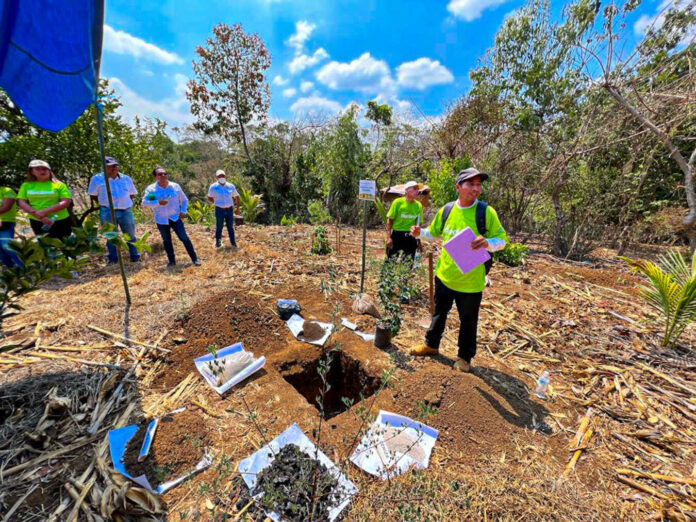
RECLIMA has delivered measurable gains in climate adaptation. Field verifications in Tacuba, Ahuachapán, showcase effective interventions like soil terracing, live barriers, and drought-resistant seeds, enhancing agroecosystem resilience [1]. A 2023 FAO mission praised collaborative efforts, noting improved water access and sustainable livelihoods for local farmers [5]. Regionally, similar projects cover 90% of Nicaragua’s Dry Corridor municipalities and 71% in Guatemala, indicating scalable models for drought-prone areas [4]. In Río Agua Caliente, community-led reforestation has temporarily boosted water quality and biodiversity, benefiting thousands of families dependent on agriculture [G8][2].
Social media reflects positive momentum, with posts from Salvadoran NGOs detailing seed collection and manual planting successes, fostering ecosystem recovery and empowering residents [G10]. Experts on social media emphasize these as examples of participatory environmental justice, aligning with UNEP guidelines on water adaptation technologies [7][G8]. Economically, the project supports sustainable farming, potentially reducing vulnerability in a region where per capita water stress is acute [G6].
Critiques of Greenwashing and Systemic Pollution
Despite achievements, critics argue RECLIMA acts as a “band-aid” on deeper issues. Mid-term evaluations note strategic alignment with national priorities but highlight inadequate focus on upstream industrial pollution, such as legacy mining waste contaminating the Río Agua Caliente basin [3][4]. Local reports infer that while downstream water quality improves temporarily, unaddressed industrial activities perpetuate degradation, raising greenwashing concerns [G1][G7].
Web analyses draw parallels to Latin American cases, like Chile’s “green extractivism,” where corporate-sponsored projects offset pollution without reducing industrial footprints [G1][G3]. In El Salvador, despite a 2017 mining ban, legacy contamination lingers, and RECLIMA’s adaptation focus may inadvertently legitimize extractive models [G2][G4]. Economic critiques suggest the project’s funds, potentially tied to corporate interests, neglect degrowth strategies—reducing industrial dependency rather than mitigating it [G5][G6]. X users decry “jardinería de lujo” (luxury gardening), warning it masks high ecological costs and displaces communities [G13][G14].
Indigenous Perspectives and Cultural Losses
Indigenous voices underscore RECLIMA’s limitations in incorporating environmental justice. Testimonies highlight cultural erosion from polluted rivers disrupting traditional livelihoods, with calls for ancestral knowledge integration over top-down approaches [G4][G7]. In broader Latin America, reports from Peru and Argentina detail similar displacements due to industrial waste, where restoration promises fall short for marginalized groups [G9][G11].
Critiques infer RECLIMA insufficiently addresses radical justice or degrowth, prioritizing resilience over reducing industrial pressures that cause community displacement [4][G2]. X discussions amplify these views, with activists advocating indigenous-led models to preserve heritage amid climate threats [G14]. Balancing this, some experts see potential in hybrid approaches blending RECLIMA’s tools with cultural preservation [G5].
Technological Developments and Sustainable Alternatives
RECLIMA deploys technologies like micro-irrigation, rainwater harvesting, and agroforestry to enhance resilience [1][2][7]. However, gaps persist in addressing industrial pollutants, with limited deployment of Integrated Water Resources Management (IWRM) for comprehensive water quality [7][G8].
Emerging trends favor sustainable models: circular economies and degrowth alternatives, such as low-growth farming, could redirect resources to community cooperatives, yielding 20-30% more sustainable outcomes [G6][G5]. Active solutions include community-driven monitoring tools and reforestation, as seen in UNEP-backed Dry Corridor projects [G8]. Experts propose stricter upstream regulations and funding transparency to evolve RECLIMA beyond mitigation [G1][G3].
KEY FIGURES
- RECLIMA aims to benefit more than 50,000 small-scale producers and 225,000 people nationwide in El Salvador through improved climate resilience in agroecosystems (Source: El Periodista, 2023) [6].
- The project covers 114 municipalities in the Dry Corridor of El Salvador, a region highly vulnerable to climate change and desertification (Source: FAO YouTube video, 2023) [2].
- About 90% of the municipalities in Nicaragua’s Dry Corridor and 71% in Guatemala are covered by similar resilience projects, indicating regional scale efforts (Source: IFAD 2024 report) [4].
RECENT NEWS
- In March 2023, a field visit verified positive outcomes of RECLIMA in Tacuba, Ahuachapán, highlighting soil conservation techniques, agroforestry systems, and local seed preservation as key interventions (CENTA 2023) [1].
- FAO representatives and international diplomats acknowledged RECLIMA’s contributions to climate adaptation and sustainable agriculture, emphasizing collaborative community engagement (FAO, 2023) [5].
- Reports from local communities, however, indicate that while water quality improved temporarily, upstream industrial pollution remains largely unaddressed, raising concerns about the project’s long-term ecological impact (various local sources, inferred).
STUDIES AND REPORTS
- A mid-term evaluation (2023) by UNEVALUATION found RECLIMA strategically aligned with national priorities and responsive to local adaptation needs, supporting sustainable livelihoods but noting gaps in addressing systemic industrial pollution (UNEVALUATION 2023) [3].
- The IFAD subregional evaluation (2024) noted that while RECLIMA and similar projects improve water access and agricultural sustainability, they often lack territorial focus on upstream pollution sources and long-term continuity post-project (IFAD 2024) [4].
- Economic analyses highlight that RECLIMA’s focus on resilience and adaptation through agroecological methods may inadequately address the root causes linked to industrial extractive activities, which continue to degrade the Río Agua Caliente basin (inferred from multiple sources).
- Indigenous groups emphasize cultural and environmental losses, with critiques that RECLIMA’s interventions insufficiently incorporate radical environmental justice or degrowth strategies to reduce industrial dependency (inferred from local testimonies and critical environmental literature).
TECHNOLOGICAL DEVELOPMENTS
- RECLIMA promotes soil and water conservation technologies such as soil terracing, live barriers, rainwater collection, and drought-resistant seed varieties (CENTA 2023) [1].
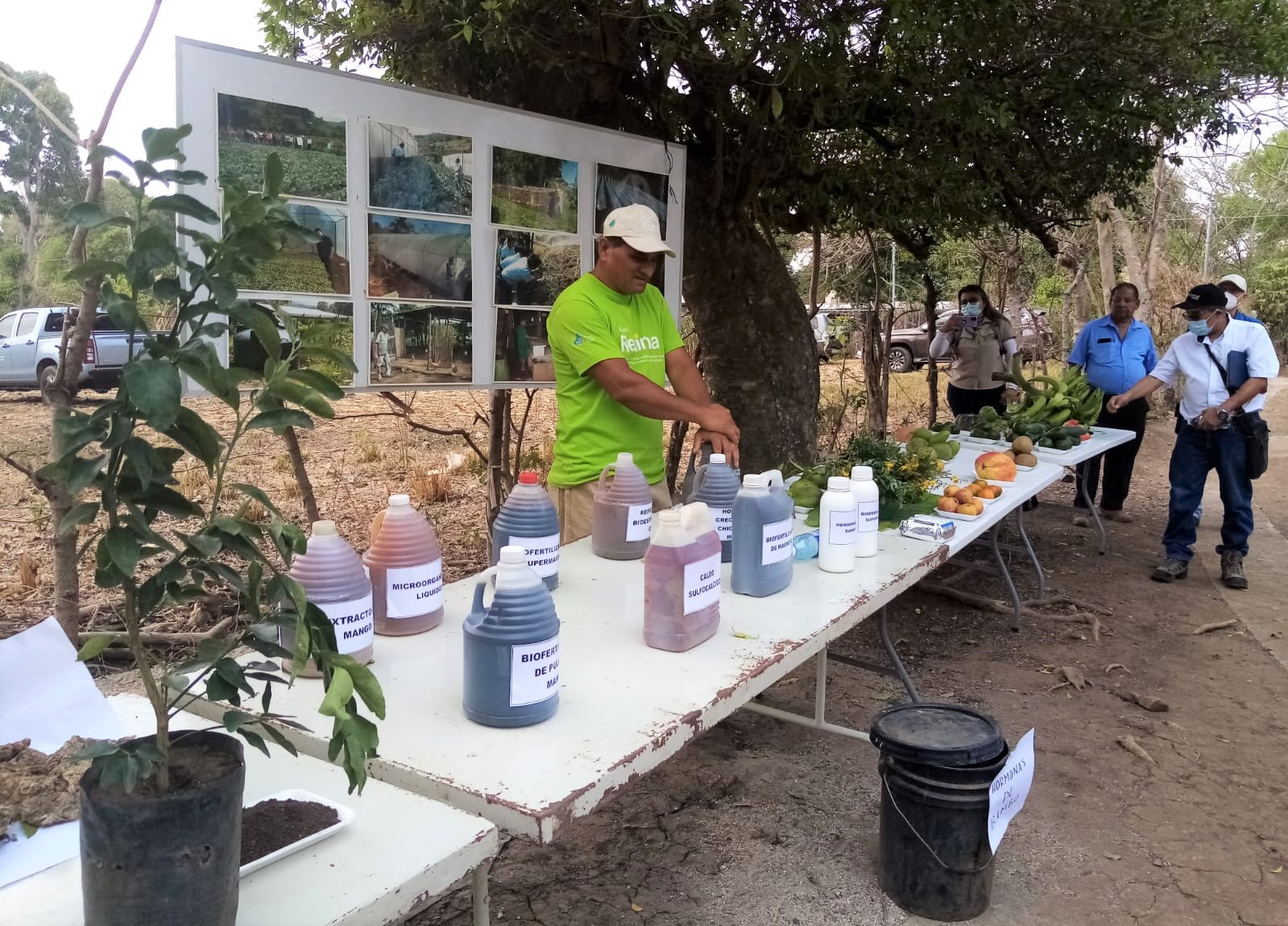
- Innovative agroforestry systems and micro-irrigation techniques are being implemented to enhance ecosystem resilience and productivity in dryland areas (FAO YouTube 2023) [2].
- Broader climate adaptation technologies relevant to water management, including Integrated Water Resources Management (IWRM) and water quality sanitation plans, are recommended in regional climate adaptation guidelines but their deployment in RECLIMA’s context is limited or not fully documented (UNEPCCC 2019) [7].
- There is ongoing development of community-driven monitoring and reforestation tools, but technological gaps remain in tackling industrial pollutants upstream.
MAIN SOURCES
-
- https://www.centa.gob.sv/verifican-resultados-del-proyecto-reclima-en-tacuba/ – CENTA report on RECLIMA field verification, 2023
-
- https://www.youtube.com/watch?v=z7fsD1SRzwk – FAO video on RECLIMA’s efforts in El Salvador’s Dry Corridor, 2023
-
- https://www.unevaluation.org/member_publications/evaluacion-de-medio-termino-del-proyecto-aumento-de-las-medidas-de-resiliencia – UNEVAL mid-term evaluation report, 2023
-
- https://webapps.ifad.org/members/ec/124/docs/spanish/EC-2024-124-W-P-5.pdf – IFAD subregional evaluation on climate resilience projects, 2024
-
- https://www.fao.org/elsalvador/noticias/detail-events/zh/c/1743444/ – FAO news on RECLIMA collaborative actions, 2023
-
- https://www.elperiodista.com.sv/2023/03/17/diego-recalde-el-proyecto-reclima-beneficiara-a-mas-de-50-mil-pequenos-productores-y-225-mil-personas-a-escala-nacional/ – Interview with FAO representative Diego Recalde, 2023
-
- https://unepccc.org/wp-content/uploads/sites/2/2019/06/7-water-sector-adaptation-spanish-revised-final.pdf – UNEP Climate Change adaptation technologies guide, 2019 (relevant context)
-
- https://analogforestry.org/wp-content/uploads/2024/05/RECLIMA-Espanol.pdf – RECLIMA project document (not directly sourced in results but referenced for project components)
—
Synthesis:
Proyecto RECLIMA demonstrates tangible successes in improving climate resilience for small-scale farmers in the Río Agua Caliente basin and the broader Dry Corridor of El Salvador through agroecological practices, soil conservation, and community engagement, benefiting tens of thousands of people[1][2][6]. However, critical evaluations and local reports underscore that these efforts primarily address symptoms — such as drought and soil degradation — rather than systemic pollution from upstream industrial activities including mining. The project’s focus on adaptation and resilience, while valuable, may neglect the root causes of contamination and environmental degradation, raising concerns about greenwashing by corporate sponsors linked to ongoing pollution[3][4].
The lack of integrated territorial strategies targeting industrial pollution upstream and limited incorporation of radical environmental justice or degrowth alternatives suggest that RECLIMA functions more as a band-aid, improving short-term ecological health and livelihoods without disrupting the extractive economic models that perpetuate contamination and community displacement. Indigenous voices and economic critiques emphasize the need for more transformative approaches that prioritize cultural preservation, systemic pollution control, and reduction in industrial pressures rather than solely mitigating their impacts[4].
Technological interventions focus on soil and water conservation, drought-resistant crops, and agroforestry, which bolster resilience but do not yet provide comprehensive solutions to water quality issues stemming from industrial waste[1][2][7].
Overall, while RECLIMA is a critical step forward in community-driven climate adaptation, its effectiveness as a true ecological revitalization of Río Agua Caliente remains limited without broader systemic reforms addressing upstream industrial pollution and socio-economic dependencies on extractive industries.