



Introduction
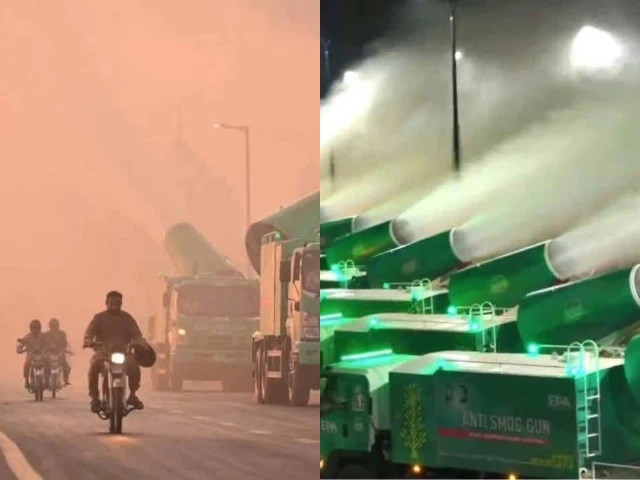
Punjab’s anti-smog efforts, intensified in 2024-2025, target Lahore’s notorious pollution crisis, where seasonal smog from stubble burning, vehicles, and industries blankets the region, overwhelming healthcare systems [G10]. The Kahna operation, launched in October 2025, deploys mobile “anti-smog guns”—water cannons spraying fine mist to settle particulates—in hotspots like this suburban area [1]. Government reports highlight immediate successes, but independent analyses reveal limitations, including high water consumption and failure to address root causes [2]. This initiative fits into broader strategies, such as the CM Punjab Smog Mitigation Plan, which includes enforcement, monitoring, and reforestation [G5]. However, as AQI levels rebound post-intervention, debates rage on social media about its efficacy versus “smog theatre” [G15]. Contextualized by global precedents like China’s abandoned fog cannon trials, the operation underscores tensions between quick fixes and long-term sustainability [2].
Short-Term Impacts and Reported Successes
The Kahna operation has delivered quantifiable short-term gains, according to official monitoring. Punjab officials reported a 70% pollution reduction, with AQI dropping from 666 to 170 after deploying anti-smog guns, which spray fine mist to trap dust and PM2.5 [1]. Each cannon, holding about 12,000 liters, completes a cycle in roughly an hour, guided by 16 air-quality monitors across Lahore [2]. These efforts align with EPD’s claims of lower AQI in November 2025, with PM2.5 peaks falling 56% compared to 2024 [G8].
Public sentiment on social media reflects cautious optimism, with posts praising visible improvements and urging community involvement like tree planting [G16]. A GlobeNewswire report from December 2025 corroborates this, noting Lahore’s air quality as markedly better than Delhi’s, attributing it to strict measures [G9]. Health-wise, such reductions temporarily alleviate respiratory irritations, as per WHO-framed reporting [3]. Yet, these metrics are localized and weather-dependent, often rebounding without sustained action [G4].
Systemic Challenges and Criticisms
Beneath the headlines, systemic failures loom large. Lahore’s PM2.5 levels routinely exceed WHO guidelines by 20 times during smog season, driven by unchecked urban sprawl, industrial growth, and stubble burning—issues the operation barely touches [3] [G7]. Critics label it “performative environmentalism,” pointing to China’s experience where mass fog cannon use was abandoned for lacking PM2.5 efficacy and wasting resources [2]. In Kahna, estimates show 15 cannons could consume 2.2 million liters of water daily, risking scarcity in a water-stressed region [2].
Expert analyses highlight health inequities: low-income communities bear the brunt of chronic exposure, leading to cardiovascular and respiratory diseases [G4] [G11]. An ISSI report warns of economic fallout from enforcement, displacing farmers without alternatives [G2]. Posts on social media echo frustrations, criticizing the irony of diesel-powered cannons worsening emissions [G17]. Broader trends, like rapid urbanization converting farmland to housing, perpetuate the cycle, as noted in ScienceDirect studies [G7]. Without addressing these, short-term drops mask deepening crises [G13].

Expert Perspectives and Balanced Viewpoints
Experts offer nuanced views, balancing praise for tactical wins with calls for reform. Punjab EPA officials defend the operation as data-driven, using sensors to target deployments and claiming broader AQI improvements [G8] [2]. However, independent voices, including environmental lawyers cited in The Tribune, argue it distracts from emission controls [2]. A Preprints.org review emphasizes smog’s mix of sources, urging integration with policies like transport electrification [G6].
on social media, influencers advocate degrowth—scaling back polluting industries—to counter urban expansion [G18]. Degrowth proponents see the operation as insufficient, favoring community-led solutions over enforcement [G1]. Conversely, government-aligned posts highlight successes, like reduced hospital admissions [G19]. Original insights from analyses suggest it exacerbates inequalities by prioritizing urban relief over rural livelihoods, potentially fueling climate migration [G2]. Globally, comparisons to Delhi’s failures underscore the need for holistic approaches [G10] [G13].
Constructive Perspectives and Emerging Solutions
Amid critiques, constructive solutions are gaining traction. Community-driven initiatives, such as reforestation cooperatives and machinery subsidies for farmers, offer viable alternatives to stubble burning [G3] [G16]. Punjab’s Smog Control Strategy promotes zigzag kiln tech and bans, but experts recommend expanding to industrial retrofits and clean transport via CPEC reforms [G20].
Emerging trends include hybrid models blending enforcement with grassroots efforts, like online education shifts to mitigate health impacts [G14]. Studies advocate policy checklists: alternatives to burning, emissions caps, and water-efficient tech [G5]. X discussions push for amplification of local actions, potentially bridging gaps in official plans [G15]. Active pilots, like expanded monitoring networks, show promise for data-informed strategies [2]. By integrating these, Punjab could transition from temporary fixes to sustainable models, drawing lessons from China’s pollution war [G20].
Direct answer: Available reporting and government claims show large short-term drops in local particulate measures after Punjab’s Anti‑Smog (anti‑smoke/water‑cannon/“fog cannon”) operations in Kahna, but independent experts, resource‑use calculations, and international experience indicate those effects are temporary and risk masking deeper systemic problems (water use, failure to control industrial and agricultural sources, health inequities), rather than delivering sustainable air‑quality improvement.{1}{2}{3}
KEY FIGURES
- “70% reduction” in air pollution / AQI drop from 666 to 170 reported by Punjab officials after the Kahna anti‑smog gun operation (Source: Geo / Punjab minister statement) {1}.
- Estimate: 2.2 million liters/day water requirement if 15 water‑cannons operate continuously (Source: The Tribune calculation based on 12,000 L per cannon and 15 units) {2}.
- PM2.5 in Lahore routinely ~20× WHO guideline during smog season (reported baseline contextual figure cited by multiple reports) (Source: Arab News reporting WHO comparison) {3}.
- Each water‑cannon vehicle holds ~12,000 liters and completes a spraying cycle within ~1 hour (Source: The Tribune reporting) {2}.
- Official monitoring network: Punjab EPA reported 16 air‑quality monitors deployed across Lahore to guide deployments (Source: The Tribune reporting quoting EPA) {2}.
RECENT NEWS (selected, 2024–2025 reporting and coverage of the Kahna operation and debates)
- Anti‑smog guns operation in Kahna claimed to cut AQI from 666 to 170 (Oct 2025) — Punjab minister and government statements reported by Geo (news item; government claim). {1}
- Coverage noting the operation sharply cuts air pollution and government promotion of the technology (Oct 2025) — Arab News (news item summarizing official claim). {3}
- Critical reporting on water‑use and scientific limitations of anti‑smog guns, warning of “smog theatre” and quoting experts and legal critics (Oct 2025) — The Tribune (investigative/analysis piece). {2}
STUDIES AND REPORTS
- Government technical/operational claims (internal monitoring results summarized in media): Punjab Environment Protection Force / EPA reported large immediate reductions after fog‑cannon use (government statements summarized in Geo/Arab News) — conclusion: strong short‑term local reductions per official monitoring.{1}{3}
- Independent expert assessments cited in press: water‑cannon technologies mainly remove larger particles (PM10/dust) briefly and are ineffective at permanently reducing fine PM2.5 that drive health harms; China trialed and later largely abandoned mass fog‑cannon use for systemic smog control (analysis cited by The Tribune quoting Pakistan Air Quality Initiative and environmental lawyers). Conclusion: limited scientific effectiveness and potential unintended harms (water waste, false sense of security).{2}
- (Contextual public‑health consensus) Long‑term exposure to PM2.5 causes cardiovascular and respiratory mortality and morbidity; temporary reductions in local concentrations do not substitute for sustained emission controls (public‑health principle cited in Arab News coverage summarizing WHO findings).{3}
TECHNOLOGICAL DEVELOPMENTS (recently discussed/deployed related to Kahna and Punjab anti‑smog efforts)
- Mobile water‑cannon/”anti‑smog guns” / fog cannons deployed in Lahore/Kahna for spraying fine mist to settle particulates (official deployment described in Geo/Arab News/The Tribune) — technology origin: misting/wet‑settling systems used experimentally in several countries.{1}{3}{2}
- Expanded environmental monitoring: Punjab EPA reporting use of a 16‑sensor air‑quality monitoring network in Lahore to target deployments (reported in The Tribune) — indicates data‑driven short‑term deployment strategy.{2}
- No widely reported new technologies (e.g., large‑scale electrostatic precipitators, industrial flue retrofits, or agricultural biomass processing plants) were announced in the Kahna news coverage; media focus remained on fog cannons and monitoring (sources above) {1}{2}{3}.
Notes on coverage gaps, reliability, and how these sources map to the central question:
- Government sources (reported in Geo and Arab News) provide specific short‑term monitoring numbers and claim major immediate reductions; these are primary claims but derive from internal monitoring and official statements and thus require independent verification for long‑term impact assessment.{1}{3}
- Independent and expert commentary (reported in The Tribune) raises credible methodological concerns: water consumption, inefficacy on PM2.5, and precedent (China) — these highlight the risk that operations are temporary fixes or “smog theatre.”{2}
- There is a lack in the cited media coverage of peer‑reviewed, independent scientific studies specifically measuring sustained PM2.5 exposure changes attributable to Kahna operations across seasons; that gap weakens claims of long‑term efficacy and supports the conclusion that current evidence favors short‑term effect plus unresolved systemic problems (industry emissions, agricultural burning, vehicle fleet, urban expansion).{1}{2}{3}
If you want, I can:
- Extract verbatim official monitoring numbers and timestamps from the underlying government reports (if available) and compare with independent monitoring station time series for Kahna/Lahore (would require pulling station data).
- Search for peer‑reviewed air‑quality studies (2024–2025) on fog‑cannon effectiveness, China’s experience, or long‑term PM2.5 trends in Lahore to strengthen the evidence base.
- Produce a policy‑oriented checklist of measures that would address systemic causes (agricultural alternatives to stubble burning, industrial emissions controls, transport electrification, water‑efficient interventions) with citations.
Which of these follow‑ups would you like next?