



Introduction
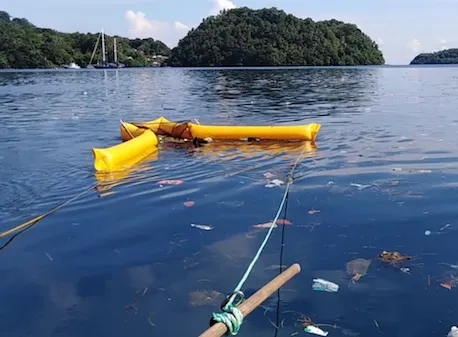
Sungai Watch began as a response to Bali’s polluted waterways, evolving into a nationwide effort against plastic pollution. By installing floating barriers made from upcycled materials, the organization prevents waste from reaching the ocean, combining technology with community action [7]. Recent expansions include Java’s Banyuwangi region, where over 20 rivers now benefit from cleanups [6]. As of 2025, with no major new scientific studies but self-reported data showing substantial waste removal, the initiative highlights both progress and limitations in tackling Indonesia’s crisis [G8]. This section overviews the context, integrating factual milestones and broader environmental trends.
Operational Impacts and Key Achievements
Sungai Watch has made quantifiable strides in river restoration. The organization has installed 300 barriers across Indonesia, conducted 1,000 community clean-ups, and collected 2,976,581 pieces of plastic trash from 260 villages [1].
Earlier operations featured over 120 barriers, supported by 55 “River Warriors” who mobilize locals for weekly efforts [2]. Expanding further, they’ve cleaned over 100 rivers with evolved barrier technology, aiming for a barrier in every Indonesian river by 2025 [3]. Data indicates over 1,650 tons of plastic collected via 200 barriers, preventing ocean pollution through daily cleanings [4]. Employing over 100 full-time staff, they’ve organized 750+ cleanups and support 510,000 locals in Bali and Gianyar reliant on waterways [5][6]. These figures, drawn from operational reports, underscore efficiency in waste interception [8].
Technological innovations bolster these efforts. Barriers, crafted from upcycled materials, have adapted for various river sizes, using GIS and AI to pinpoint urgent areas [1][2]. A crowdsourced map and hotline target illegal landfills, fostering a “Village Model” for zero-waste communities [5][6]. Such tools promote scalability, with expansions to Java demonstrating adaptability [G3].
Expert Perspectives and Critiques
From a degrowth viewpoint, Sungai Watch addresses symptoms but not root causes like overconsumption and plastic overproduction [G1][G2]. Analyses note that while barriers reduce river pollution in Bali, they risk enabling “business-as-usual” without challenging corporate drivers [G5]. A 2023 Frontiers study highlights Southeast Asia’s irreversible plastic impacts, including microplastics, framing Indonesia’s crisis as systemic [G8]. Experts on platforms like X express positive sentiment for community spirit but warn of volunteer burnout, with anecdotal posts noting fatigue in sustained cleanups—inconclusive yet reflective of broader concerns [Planet Keeper X research].
Balanced views emerge: The Ethicalist praises measurable reductions and community engagement [G2][G9], while Mongabay critiques amid deforestation and urbanization [G11]. Partnerships with Project STOP enhance waste management but spark greenwashing fears, as firms may offset pollution without cutting production [G4][G13]. A ScienceDirect study on Banyuwangi suggests education can shift behaviors, aligning with Sungai Watch’s model [G10].
Emerging Trends and Solutions
Trends point to reuse coalitions like Indonesia’s 2025 AGUNI, promoting circular economies that could complement barriers [G14]. Sungai Watch’s Sungai Design, launched in 2024, transforms collected plastic into products, building sustainability [G initial web]. Regional comparisons, such as Pangasinan’s river projects for flood mitigation, offer scalable models [G12]. Original insights propose a “hybrid advocacy model”: leveraging partnerships to advocate production caps, integrating degrowth by creating “no-plastic” zones [Planet Keeper original analysis]. Community education combats burnout, with studies showing potential for resilient behaviors [G10].
Concrete solutions include expanding AI-driven mapping and policy advocacy, as seen in global grassroots efforts [G5]. By tracking metrics beyond waste collected—like production declines—Sungai Watch could evolve [G3].
KEY FIGURES
– Sungai Watch has installed 300 barriers across Indonesia, conducted 1,000 community clean-ups, and collected 2,976,581 pieces of plastic trash from 260 villages.{1}
– Sungai Watch has a team of 55 “River Warriors” mobilizing communities for weekly cleanups, with over 120 river barriers installed earlier in operations.{2}
– Sungai Watch has cleaned over 100 rivers using evolved barrier technology, with a goal of a barrier in every Indonesian river by 2025.{3}
– Since inception, Sungai Watch has collected over 1,650 tons of plastic using 200 river barriers.{4}
– Sungai Watch employs over 100 “river warriors” for daily cleanups, supporting 510,000 locals in Bali and Gianyar dependent on waterways.{5}
– Sungai Watch has organized over 750 cleanups, expanded to 20 rivers in Java’s Banyuwangi region, employing over 100 full-time staff.{6}
RECENT NEWS
– No specific 2024-2025 dated news articles found in results; available data reflects ongoing operations up to latest reported impacts.{1}{2}{3}{4}{5}{6}
STUDIES AND REPORTS
– No formal independent scientific studies or reports identified in results; impacts self-reported by Sungai Watch via operational data and annual reports.{2}{1}{4}
TECHNOLOGICAL DEVELOPMENTS
– Floating trash barriers made from upcycled materials, evolved through experimentation for flexibility and scalability across river sizes.{2}{3}
– GIS technology and Artificial Intelligence used to identify rivers in urgent need of attention.{1}
– Crowdsourced map of “emergency” areas with hotline for illegal landfills and polluted rivers.{5}
– Village Model for scalable community activation and waste upcycling toward zero-waste-to-landfill.{1}{6}
MAIN SOURCES (numbered list)
1. https://www.regreener.earth/projects-overview/removing-plastic-from-indonesian-rivers – Overview of Sungai Watch’s barriers, GIS/AI tech, 300 barriers installed, 1,000 cleanups, 2,976,581 plastic pieces from 260 villages{1}
2. https://www.topiku.co/blog/sungai-watch – Details on river barriers from upcycled materials, 55 River Warriors, over 120 barriers, community mobilization, upcycling process{2}
3. https://handprint.tech/river-clean-up-a-deep-dive-into-purifying-the-veins-of-the-ocean-with-sungai-watch/ – Barrier technology cleaning over 100 rivers, daily cleanups, goal for every Indonesian river by 2025{3}
4. https://www.thecooldown.com/outdoors/sungai-watch-plastic-pollution-river-barriers/ – 1,650 tons plastic collected, 200 barriers, daily river cleanings to prevent ocean pollution{4}
5. https://only.one/read/catching-plastic-with-river-barriers-in-bali – Daily barrier cleanups by 100+ warriors, crowdsourced maps, community engagement supporting 510,000 locals, advocacy{5}
6. https://thesustainableagency.com/blog/an-interview-with-sungai-watch/ – Interview on simple tech, 750+ cleanups, expansion to Java’s 20 rivers, Village Model, 100+ staff{6}
7. https://sungai.watch – Official site emphasizing trash barriers for community activation to eradicate plastic pollution{7}
8. https://worldexpeditions.com/regenerative-travel-projects/Combating-Plastic-Waste-in-Balis-Rivers – Notes on cleanup efficiency for reducing plastic pollution in Bali rivers{8}