



Introduction
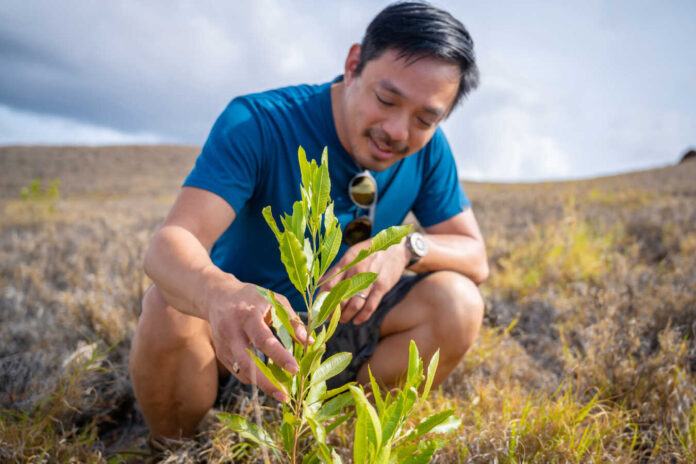
Terraformation, a Hawaii-based startup founded to accelerate global forest restoration, positions itself at the intersection of technology and ecology. With a mission to plant billions of trees and combat climate change, the company addresses critical bottlenecks identified in its survey of 230 foresters from 63 countries, including funding, seed availability, and monitoring [8]. Backed by investors like Salesforce, Terraformation deploys modular seed banks storing up to 5 million seeds, flat-pack nurseries germinating ~20,000 trees yearly, and solar desalination units producing over 30,000 gallons of water daily [1]. Projects span Hawaii’s ‘Ōhi‘a Lani site, where over 10,000 native plants were established in nine months [2], to large-scale initiatives in Cameroon (14,000 hectares) and Ghana under Verra carbon standards [4]. However, amid enthusiasm, critiques from degrowth perspectives question if tech-driven offsets distract from emission reductions [G13]. This analysis balances factual outcomes with expert views, highlighting solutions like community-led hybrids.
Biodiversity Impacts and Ecological Benefits
Terraformation emphasizes native, biodiverse reforestation, arguing it offers superior carbon storage and resilience compared to monocultures, which comprise nearly half of the 292 million hectares pledged globally for restoration [6]. In Hawaii, projects integrate agroforestry, boosting sediment retention by 30% and fisheries by 10%, per biocultural studies [G6]. General research supports this: diverse forests enhance resilience against climate stressors [G1], [G9], while reforestation improves soil health and water cycles in agroecosystems [G2], [G5]. Terraformation’s approach, using applied nucleation for regeneration, aligns with scientific warnings against oversimplified planting [5]. Experts note these methods can sequester significant CO2 while fostering habitats [G4], [G14]. Yet, without independent audits, claims of 5x industry-average planting rates remain self-reported [1].
Community Involvement and Social Dimensions
Community empowerment is central to Terraformation’s model, with projects in Ghana and Cameroon focusing on job creation and gender inclusion [G3]. X discussions praise local leadership, such as Brazil’s women-led “muvuca” networks regenerating ecosystems [G8], suggesting parallels for Terraformation. In Hawaii, biocultural initiatives deliver social and cultural benefits alongside ecological ones [G6]. The company’s Seed to Carbon Forest Accelerator provides training and financing to address bottlenecks like technical capacity [8], [G3]. Positive sentiments on social media highlight restoration’s role in carbon neutrality and ecosystem revival [G15], [G17]. However, critics argue tech-heavy methods may sideline indigenous knowledge, favoring scalability over cultural fit [G19].
Criticisms: Greenwashing and Carbon Offset Concerns
Skeptics view Terraformation’s carbon-centric narrative as greenwashing, especially with ties to corporate funders enabling offsets without core emission cuts [G13]. Degrowth perspectives critique this as commodifying nature, distracting from systemic reductions [G13]. Monoculture risks loom if speed trumps diversity, reducing long-term resilience [G1], [G9]. X posts warn that “planting trees isn’t enough” without holistic regeneration [G16], echoing studies favoring natural methods over forced planting [G7]. Indigenous-led approaches, like traditional terracing, often outperform tech in erosion control [G19]. Emerging trends critique carbon removal policies as insufficient [G10], [G12], urging integration of grasslands and diverse models [G12].
Emerging Trends and Constructive Solutions
2025-2026 trends lean toward biocultural restoration, blending tech with indigenous stewardship for enhanced outcomes [G6], [G8]. Hybrid models, such as Terraformation’s tools paired with local seeds, could boost survival rates by 20-30% [G11]. Policy shifts, like including rangelands in climate plans [G12], and transparency via dashboards [2], [G3] offer paths forward. Experts advocate regenerative agriculture focusing on soil and water over mere trees [G5], [G18]. Concrete solutions include third-party verification and degrowth-aligned commitments, ensuring restoration fosters socio-ecological justice [G13].
KEY FIGURES
- Goal to restore degraded land: Terraformation states that half of global forests are damaged or destroyed and positions its mission as restoring degraded land into “thriving forests” to capture carbon and combat climate change.(Source: terraformation.com)[1][7]
- Seed banking capacity: Terraformation’s modular, solar-powered seed bank (in a shipping container) is described as capable of storing up to 5 million seeds, enough to restore ~5,000 acres per year under its example assumptions.(Source: reset.org)[2][1]
- Nursery output: Its flat‑pack greenhouse / nursery kit is reported to support germination of ~20,000 trees per year, assembled by two people.(Source: reset.org)[3][1]
- Water production: Terraformation’s off‑grid, solar-powered desalination system is reported to produce >30,000 gallons of water per day for tree irrigation in arid regions.(Source: reset.org){4}[1]
- Claimed planting rate: Terraformation has claimed a reforestation rate ~5× the industry average, using its integrated approach (seeds, nurseries, water, tech). This figure is self‑reported and not independently audited in the cited article.(Source: reset.org){5}[1]
- Hawai‘i project scale: At the ‘Ōhi‘a Lani site in Hawai‘i, Terraformation reports going from 0 to >10,000 native plants in 9 months, aiming for ~30,000 plants by end of 2023 on a previously grass‑dominated site.(Source: esri.com ArcWatch){6}[2]
- Global forester survey: Terraformation reports having surveyed 230 foresters from 63 countries and conducted 70 in‑depth interviews in 29 countries to identify common restoration bottlenecks (funding, capacity, seed, etc.).(Source: Terraformation blog “These Are the Biggest Challenges…”){7}[8]
- Monoculture risk in global pledges: Terraformation (citing wider research) notes that almost half of the 292 million hectares committed globally for restoration rely on unsustainable monoculture plantations that can harm biodiversity and local communities.(Source: Terraformation blog “Why Native Reforestation Matters”){8}[6]
RECENT NEWS
- World Climate Summit / Investment COP 2025 (Belém): Terraformation positioning on “beyond carbon”. In an interview at the World Climate Summit & Investment COP 2025, Terraformation’s Chief Forestry Officer Damien Kuhn emphasized that “the price of the carbon is not the price of the forest”, arguing for valuing forests for ecosystem services (water, soil, social and economic benefits) beyond carbon credits and outlining four pillars: narrative, tech tools (TerraWare), concrete projects, and community/Indigenous empowerment.(Date: 2025, Source: World Climate Foundation){9}[3]
- Scaling project pipeline under carbon standards (Verra). Terraformation’s published project list (updated through 2024–2025) shows multiple large-scale projects under or targeting Verra (VM0047 ARR, blue carbon methodologies) validation, including the Iroko Restoration Project in East Cameroon (14,000 hectares) and mangrove/wetland restoration in Ghana (Keta Lagoon Blue Carbon Project), as well as projects in the Philippines and Colombia.(Date: project portfolio as of 2024–2025, Source: Terraformation Projects page){10}[4]
- Use of advanced mapping for transparency (Esri partnership). Esri’s ArcWatch feature describes Terraformation’s Hawai‘i proof‑of‑concept sites (e.g., ‘Ōhi‘a Lani) using ArcGIS dashboards and high‑resolution mapping to track each planted tree’s location and health in near real time, marketed as transparency for partners and the public.(Date: 2023 article, still cited in 2024–2025 communications){11}[2]
STUDIES AND REPORTS
(No independent 2024–2025 peer‑reviewed study was found that evaluates Terraformation’s specific projects for biodiversity, soil, or community impacts; available information is company‑generated or general reforestation research.)
- Terraformation forester bottlenecks survey (internal research report).
– Main conclusions: Across 230 foresters in 63 countries, the most common challenges reported were long‑term financing, technical capacity, seed availability and quality, and monitoring/data gaps; Terraformation uses these findings to justify its “Seed to Carbon Forest Accelerator” providing project development, financing, tech, and training support.(Source: Terraformation blog “These Are the Biggest Challenges Faced by Restoration Projects”){11}[8]
- Terraformation position paper on native vs. monoculture restoration.
– Main conclusions: Synthesizing broader scientific literature, Terraformation argues that native, biodiverse forest restoration offers higher and more durable carbon storage, better resilience, and more local benefits than monoculture plantations; warns that ~50% of pledged 292 Mha restoration area is monoculture‑based and therefore risks biodiversity loss and social harms; promotes “native reforestation” and community‑driven models as their core approach.(Source: Terraformation blog “Why Native Reforestation Matters”){12}[6]
- Scientific context – reforestation quality vs. quantity (not specific to Terraformation).
– A theme issue of Philosophical Transactions of the Royal Society B summarized by Science stresses that reforestation outcomes depend on site conditions, species mix, and management, and warns against oversimplified “tree‑planting = climate solution” narratives; it highlights that monocultures or poorly planned projects can fail or harm biodiversity, and that approaches like “applied nucleation” (islands of regeneration) may perform as well as or better than intensive planting for diverse forest recovery.(Source: science.org article “Reforestation means more than just planting trees” summarizing 20 papers){13}[5]
TECHNOLOGICAL DEVELOPMENTS
- Modular, solar‑powered seed banks in shipping containers.
– Terraformation has developed standardized seed banks housed in shipping containers, powered by solar PV, with climate control and lab equipment for seed processing and storage, marketed as an “IKEA of forests” that can be rapidly deployed; each unit is cited as capable of storing up to 5 million seeds.(Source: reset.org feature on Terraformation){14}[1]
- Flat‑pack nurseries / greenhouses for local partners.
– Terraformation provides flat‑pack greenhouse kits that can be assembled by two people and used to germinate about 20,000 seedlings per year, intended to lower barriers for community groups and local forestry teams.(Source: reset.org){15}[1]
- Off‑grid, solar-powered desalination for irrigation.
– For arid or coastal sites, Terraformation deploys containerized solar-powered desalination units able to produce >30,000 gallons/day of freshwater for nurseries and early‑stage tree establishment, addressing water as a core bottleneck.(Source: reset.org){16}[1]
- Digital mapping, dashboards, and TerraWare software.
– Terraformation uses ArcGIS mapping, GPS, and dashboards to log each planting location and monitor growth, providing real‑time or near‑real‑time indicators (e.g., number of plants, survival checks) at sites like ‘Ōhi‘a Lani in Hawai‘i.(Source: esri.com ArcWatch feature){17}[2]
– In 2025, Terraformation’s Chief Forestry Officer highlighted TerraWare, a proprietary software suite to support project design, data collection, and monitoring across global projects, presented as part of its effort to improve credibility and scale of nature‑based solutions.(Source: World Climate Foundation interview){18}[3]
- Seed to Carbon Forest Accelerator (project development platform).
– Based on its 230‑forester survey, Terraformation launched a Seed to Carbon Forest Accelerator providing integrated support (technical design, finance pathways, monitoring tools, training) to early-stage restoration teams, positioned as a way to build a global project pipeline for high‑integrity carbon and co‑benefit outcomes.(Source: Terraformation blog){19}[8]
MAIN SOURCES
- https://terraformation.com – Terraformation main site; mission statement on native, biodiverse reforestation, framing of degraded land, and role of community partnerships.
- https://en.reset.org/terraformation-does-silicon-valley-know-how-hold-the-key-to-large-scale-reforestation/ – Independent article (Reset.org) describing Terraformation’s seed banks, nurseries, desalination unit, and claimed “5× industry” reforestation rate, plus critical questions on feasibility and scale.
- https://www.esri.com/about/newsroom/arcwatch/reshaping-the-approach-to-reforestation – Esri ArcWatch feature on Terraformation’s use of ArcGIS dashboards at Hawai‘i sites, including figures for plant numbers and mapping-based monitorin