



Introduction to the Carbon Footprint
The carbon footprint is an essential tool for measuring the ecological impact of businesses and individuals. It is an inventory of the greenhouse gas (GHG) emissions generated by a given activity. GHG emissions are generally classified into three categories or “scopes,” according to their source. This classification allows for better targeting of emission reduction actions.
The Scopes: An Introduction
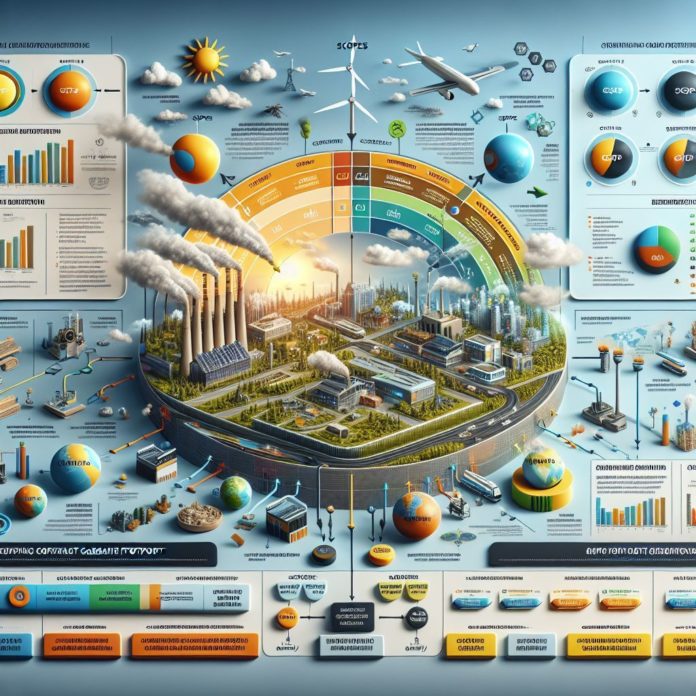
Scopes are a method of classifying GHG emissions invented by the GHG Protocol, a global standard for carbon accounting. They help structure and organize emission data to develop effective reduction strategies. Let’s look in detail at what each scope involves. ### Scope 1: Direct Emissions Scope 1 covers the direct GHG emissions from sources owned or controlled by the company. This includes, for example, emissions from company vehicles or gas boilers. These emissions are often the easiest to measure and reduce, as they are under the direct control of the company. ### Scope 2: Indirect Energy-related Emissions Scope 2 concerns indirect emissions generated by the consumption of purchased energy. This includes electricity, heat, or steam used by the company. Although these emissions are not directly generated by the company, they are a consequence of its energy consumption. Reducing scope 2 emissions can involve purchasing renewable energy or improving energy efficiency. ### Scope 3: Other Indirect Emissions Scope 3 is the broadest and most complex to assess. It encompasses all other indirect emissions occurring in the company’s value chain, including upstream and downstream emissions. This can include emissions related to purchased products, their transport, use, and end-of-life of sold products. Assessing scope 3 is crucial for a comprehensive approach to emission reduction, although it often requires close collaboration with suppliers and customers.
The Importance of Scopes in Environmental Strategy
Understanding and measuring emissions according to scopes is vital for any environmental strategy. This not only allows the quantification of the carbon footprint but also targets reduction actions where they will be most effective. Companies can thus prioritize investments in green technologies, energy efficiency, and sustainable production practices.
The Role of the GHG Protocol
The GHG Protocol provides a standardized framework for carbon accounting, including the definition of scopes. By following these standards, companies can ensure transparency and comparability of their GHG inventories. This is crucial to meet increasing regulatory requirements and stakeholder expectations.
Conclusion: Towards a Sustainable Future
Ultimately, understanding and managing carbon footprint scopes are essential for a sustainable future. Companies committed to this approach not only reduce their environmental impact but also strengthen their resilience to future climate challenges. By adopting sustainable practices, they can also enhance their brand image and competitiveness in the global market.


