

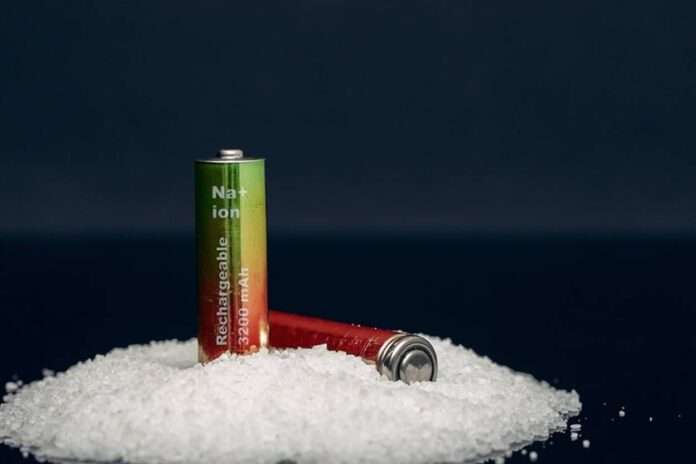


Sodium batteries: promise of abundance or new green smokescreen?
Sodium batteries are making headlines. In 2024, the global demand for batteries is exploding, driven by the electrification of transport and the boom in renewables. Lithium, the star metal of batteries, is becoming rare and expensive: according to the US Geological Survey, global demand has doubled in five years, with prices multiplied by 7 between 2020 and 2022. Behind this rush, open-pit mines are devouring the Andes, Australia or China. The consequences? Water pollution, ecosystem destruction, social tensions. For industrialists, sodium batteries appear as the miracle solution: sodium is a thousand times more abundant than lithium, extracted from sea salt or conventional mines, without the same geopolitical dependence.
But the technical reality tempers the euphoria. To date, sodium batteries offer an energy density of 150 to 160 Wh/kg, far from the 250-260 Wh/kg of the best lithium-ion. The result? They are heavier and bulkier to store the same energy. A major obstacle for the automotive industry. Yet, China is accelerating: CATL and HiNa Energy announce entry-level electric cars with sodium, capable of 250 km of autonomy… but at a low price. On the recycling side, sodium is non-toxic and easier to reprocess than lithium, a strong asset in the face of the urgency to reduce electronic waste.
My field experience makes me skeptical of the promise of a “one-size-fits-all solution”. We saw it with lithium: an innovation hailed as green ends up moving pollution elsewhere. The rush for sodium batteries could well reproduce this pattern if industrial frenzy is not accompanied by real reflection on sobriety and repairability.
Sodium batteries vs lithium: the technological state of play
Technically, sodium batteries and lithium-ion share the same principle: ions migrate between two electrodes via an electrolyte, generating an electric current. But sodium, larger and heavier, slows diffusion and limits energy density. According to pv magazine, current sodium-ion batteries are better suited to stationary storage than to smartphones or high-end cars [source]. Their life cycle remains inferior (1500-2000 cycles versus 3000 for lithium), but progress is rapid.
One undeniable strength: safety. Sodium batteries do not catch fire, withstand extreme temperatures better, and do not use cobalt or nickel, two metals synonymous with environmental and social scandals, particularly in the DRC. The cost per kWh is already lower for fixed applications, according to the MIT Technology Review ([source].
#### The pollution criterion: are sodium batteries really cleaner?
Sodium batteries do not require the extraction of rare metals, an advancement. But beware: their production remains energy-intensive, and the carbon footprint depends on the energy mix of the manufacturing country. China, the world leader, mainly uses coal. According to Greenly, the CO₂ impact of sodium batteries remains to be monitored during the industrial ramp-up ([source]. Another limit: performance drops if the design does not evolve, and the use of certain chemical additives is not always harmless.
Finally, the question of recycling deserves nuance. If sodium is easier to recover, the real challenge remains the massive collection and treatment, to prevent pollution from moving from mines to factories or landfills.
Sodium batteries: perspectives, solutions… and citizen vigilance
So, sodium batteries: real revolution or high-tech greenwashing? In the short term, they will not replace lithium in all uses. But they offer a credible alternative for stationary storage, urban vehicles with low autonomy, or industrial applications, where weight is not critical. Europe and India are also investing, seeking to diversify the offer and reduce dependence on strained supply chains.
To make the most of sodium batteries, three conditions are necessary:
1. **Limit consumerism**: produce less, repair more. A battery, even a clean one, is not a blank check for the overconsumption of disposable devices.
2. **Eco-design from the outset**: facilitate recycling, ban toxic or untraceable components, impose transparency on the value chain.
3. **Accompany the energy transition with real sobriety**: prioritize essential uses, create robust repair and collection sectors, and focus on educating citizens about the environmental impact of technologies.
Personally, after years of witnessing the invisible pollution that the race for innovation generates, I maintain a militant caution. Sodium batteries: yes, but not without rethinking our relationship to energy, to use, to the value of what we consume. The energy future will only be green if we accept to do less, but better.
—
Sources
https://greenly.earth/en-us/blog/industries/sodium-batteries-a-better-alterna…
https://physics.aps.org/articles/v17/73
https://www.pv-magazine.com/2024/03/22/sodium-ion-batteries-a-viable-alternat…
https://www.technologyreview.com/2023/04/24/1072397/sodium-ion-batteries-catl…
https://www.usgs.gov/centers/national-minerals-information-center/lithium-sta…
https://www.eea.europa.eu/fr/themes/waste/resource-efficiency-and-waste/recyc…
https://greenly.earth/en-us/blog/industries/sodium-batteries-a-better-alterna…
https://physics.aps.org/articles/v17/73
https://www.pv-magazine.com/2024/03/22/sodium-ion-batteries-a-viable-alternat…
https://www.technologyreview.com/2023/04/24/1072397/sodium-ion-batteries-catl…
https://www.usgs.gov/centers/national-minerals-information-center/lithium-sta…
https://www.eea.europa.eu/fr/themes/waste/resource-efficiency-and-waste/recyc…


