

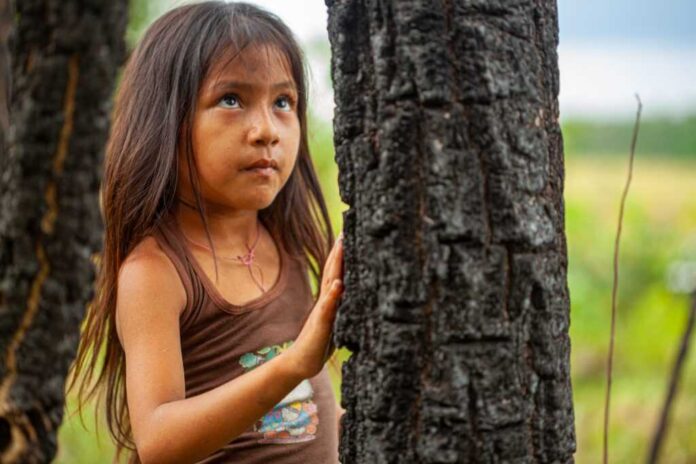


Introduction
Latin America’s forests, vital carbon sinks holding 34 percent of global mitigation potential [5], face unprecedented threats from agricultural expansion and fires. Projects like PaisajesQueRenacen, though not explicitly documented in 2024-2025 sources [Synthesis], mirror broader restoration trends aiming to revive degraded lands. With 154 mapped projects across the region [1], commitments under the Bonn Challenge target 350 million hectares globally by 2030, including Brazil’s 22 million hectare goal [7]. Central America leads in ecosystem restoration, yet high deforestation persists [5]. Recent analyses reveal economic upsides—restoring 20 million hectares could yield $23 billion in benefits over 50 years [7]—but questions linger about corporate influences turning restoration into a facade for profit-driven monocultures [G6]. This piece examines ecological impacts, community roles, and solutions, blending factual data with expert critiques.
The Scale and Ambition of Restoration Efforts
Forest restoration in Latin America is gaining momentum, with initiatives like Initiative 20×20 targeting 50 million hectares by 2030 [1] [G1]. Brazil boasts 41 million hectares with high natural regeneration potential, while Colombia identifies 4.8 million and Argentina prioritizes 24 million [3]. Chile’s agreements cover over 15 million hectares [3]. The RESTAURacción program supports six countries, empowering women in community-led projects [4]. Yet, scaling lags: only one large-scale project (15 million hectares) has been identified [6], highlighting gaps in capacity and funding [6].
Recent news underscores progress amid challenges. The IUCN and KfW launched the Forest Action Facility in October 2025 to finance landscape restoration [G8], aligning with the UN Decade on Ecosystem Restoration [5]. However, 2024 saw tropical forest loss hit new highs, with fires driving degradation in Latin America [web:4]. Experts note that restoration isn’t always about planting; natural regeneration, effective in Brazil [3], offers ecological benefits over monocultures [G2]. Critics argue ambitious targets risk “restoration debt cycles,” where degradation outpaces recovery [Planet Keeper Insight].
Corporate Ties and Greenwashing Concerns
Corporate involvement is pivotal yet contentious. Private coalitions in Brazil, Colombia, Argentina, and Peru, backed by funds like Althelia Climate Fund, invest in restoration tied to commodities like shade-grown coffee [3] [7]. The EU Deforestation-free Regulation (EUDR) incentivizes deforestation-free supply chains, influencing Mesoamerican projects [5]. However, analyses suggest some efforts mask exploitation: monoculture plantations, dubbed “green deserts,” fail to restore biodiversity and disrupt ecosystems [G6] [G9].
on social media, discussions echo skepticism, with users warning of corporate funding prioritizing profits over sustainability [G15] [G20]. A 2024 Springer study highlights bioeconomy constraints, where economic incentives favor monocultures over native species [G3]. Indigenous voices on platforms critique top-down approaches that sideline traditional knowledge, risking displacement [G11] [G16]. Balanced views from UN experts emphasize restoration’s role in biodiversity, but note restored ecosystems provide 20% fewer services than originals [G18]. Original insight: Such projects may perpetuate inequities unless degrowth caps industrial growth [Planet Keeper Insight].
Ecological Impacts and Community Perspectives
Restoration promises biodiversity gains, but outcomes vary. Studies show reviving lost forests best supports wildlife and carbon sequestration [G2], yet large-scale planting can lower water tables and degrade soils [G7]. In the Amazon, 906,000 hectares burned in 2019 intensified degradation [2]. ROAM methodology, applied in Brazil and Peru, identifies priority areas favoring natural regeneration [3] [7].
Community displacement is a flashpoint. NACLA reports highlight Amazonian risks where projects overlook indigenous stewardship [G11]. X posts advocate for mosaic landscapes integrating crops and forests for higher biodiversity [G17] [G19]. RESTAURacción emphasizes local partnerships and women’s empowerment [2] [4], while SIACRE networks share indigenous-led best practices [6]. Experts argue for hybrid models merging corporate funds with community veto power to ensure equity [Planet Keeper Insight]. Viewpoints differ: optimists see economic benefits boosting rural incomes [7], while degrowth advocates push prevention over fixes [G12].
Technological and Policy Innovations
Technological advancements aid transparency. Digital traceability systems in Central America, supported by EUDR, ensure deforestation-free chains [5]. GIZ’s €13.1 million project (2017–2027) promotes policy reforms across ten countries [5]. National REDD+ strategies integrate restoration in Brazil and Costa Rica [3] [7].
Emerging trends include bioeconomy integration, blending restoration with economic opportunities [G3] [G14]. A 2025 Mongabay analysis stresses preventing loss for optimal biodiversity [G2]. Solutions under study: indigenous-led models and real-time monitoring via IUCN frameworks [G8] [G13]. Constructive perspectives highlight private investments’ potential when tied to community benefits, as in Zero Carbon Analytics’ nature-based solutions [G14].
1. KEY FIGURES
- 154 projects mapped across Latin America and the Caribbean (LAC), with restoration potential identified for climate mitigation, but scaling up is critical for meeting the Bonn Challenge (350 million hectares by 2030)[1].
- Brazil has the highest restoration target in LAC, aiming to restore 22 million hectares; Colombia and Argentina have also identified millions of hectares for restoration[7].
- Restoring 20 million hectares of degraded ecosystems in LAC could yield $23 billion in economic benefits over 50 years, including improved ecosystem services and rural incomes[7].
- 906,000 hectares burned in the Amazon in 2019 alone, intensifying degradation and land conversion[2].
- In Brazil, 41 million hectares have high and very high natural regeneration potential; Colombia has 4.8 million hectares of restoration opportunity areas; Argentina has prioritized 24 million hectares; Chile’s agreements cover over 15 million hectares[3].
- Seven Model Forests and the Latin American Model Forest Network have recently acted to restore landscapes, emphasizing partnerships and local stakeholder engagement[2].
- RESTAURacción has supported restoration in six countries (Peru, Bolivia, Ecuador, Colombia, Guatemala, Costa Rica), with a focus on empowering women and girls[4].
2. RECENT NEWS
- Central America is leading in ecosystem restoration as part of the Bonn Challenge and UN Decade on Ecosystem Restoration, but high deforestation rates persist due to agricultural expansion[5].
- The EU Deforestation-free Regulation (EUDR) is creating market incentives for deforestation-free commodity production, influencing projects in Mesoamerica[5].
- RESTAURacción is actively supporting Model Forests and community-based restoration, with recent activities in 2024–2025 emphasizing local partnerships and policy alignment with international targets[2][4].
- Private sector coalitions for restoration are growing in Brazil, Colombia, Argentina, and Peru, with investments from funds like Althelia Climate Fund and Root Capital[3][7].
3. STUDIES AND REPORTS
- CIAT and Wageningen University (2024–2025): The first comprehensive inventory and map of restoration projects in LAC highlights their climate mitigation potential but stresses the need for scaling up to meet international pledges[1]. The study calls for integrating restoration with sustainable land use to avoid further deforestation.
- UN-REDD and GIZ (2021–2023): Reports emphasize that restoration is not always about tree planting—natural regeneration can be highly effective, especially in Brazil where 41 Mha have high regeneration potential[3]. The studies also note the importance of private sector engagement and the need for stronger policy support to scale restoration.
- Economic Analysis (2023–2024): Restoring 20 Mha in LAC could deliver $23 billion in benefits over 50 years, but technical and financing gaps remain, especially in countries with high restoration targets[7].
- Action Plan for the Decade on Ecosystem Restoration (2021): While expertise in restoration is growing, scaling up projects requires additional capacity, and only one large-scale project (15 Mha) has been identified so far in the region[6].
4. TECHNOLOGICAL DEVELOPMENTS
- Digital Traceability Systems: Projects in Central America are developing digital, public infrastructure and traceability systems to ensure deforestation-free supply chains, supported by EUDR incentives[5].
- Restoration Opportunities Assessment Methodology (ROAM): Applied in Brazil, Colombia, Costa Rica, and Peru to identify priority areas and assess restoration potential, including natural regeneration[3][7].
- Regional Networks and Knowledge Sharing: The Ibero-American and Caribbean Society for Ecological Restoration (SIACRE) and the Latin American Model Forest Network facilitate the exchange of best practices and technical expertise[6].
5. REGULATIONS AND POLICIES
- Bonn Challenge: LAC countries are committed to restoring 350 million hectares globally by 2030, with national and subnational plans in place[1][5].
- EU Deforestation-free Regulation (EUDR): Drives market-based incentives for sustainable, deforestation-free commodities in Central America and the Caribbean[5].
- UN Decade on Ecosystem Restoration (2021–2030): Provides a framework for national and regional action, with Central America as a leading region[5].
- National REDD+ Strategies: Countries like Brazil, Colombia, and Costa Rica have integrated restoration into their climate strategies[3][7].
6. ONGOING PROJECTS AND INITIATIVES
- Initiative 20×20: A regional effort to restore 50 million hectares in LAC by 2030[1].
- RESTAURacción: Supports Model Forests and community-led restoration in six countries, with a focus on women’s empowerment and local partnerships[2][4].
- GIZ Forest Landscape Restoration in Central America: A €13.1 million project (2017–2027) promoting deforestation-free practices, digital traceability, and policy reform across ten countries[5].
- Private Sector Coalitions: Active in Brazil, Colombia, Argentina, and Peru, with investments in restoration projects, including shade-grown coffee in Peru[3][7].
7. MAIN SOURCES:
-
- alliancebioversityciat.org – First map and inventory of restoration projects in LAC, climate mitigation potential, and scaling challengeshttps://alliancebioversityciat.org/stories/restoring-land-latin-america-big-potential-climate-mitigation [1].
- ribm.net – RESTAURacción’s community-based restoration, partnerships, and alignment with international targetshttps://ribm.net/restauraccion-uniting-action-to-restore-latin-americas-forest-landscapes/ [2].
- un-redd.org – ROAM methodology, natural regeneration potential, private sector engagement, and economic benefits of restorationhttps://www.un-redd.org/sites/default/files/2021-10/Reporte-LAC-restauracion-finalversion_compressed.pdf https://www.un-redd.org/news/opportunities-forest-restoration-latin-america-and-caribbean [7].
- imfn.net – RESTAURacción’s support for Model Forests and focus on gender empowermenthttps://imfn.net/restauraccion-uniting-action-to-restore-latin-americas-forest-landscapes/ [4].
- international-climate-initiative.com – GIZ’s Central America restoration project, EUDR, and digital traceabilityhttps://www.international-climate-initiative.com/en/project/forest-landscape-restoration-in-central-america-and-the-caribbean-and-implementation-of-the-green-development-fund-for-central-america-redd-landscape-17-iii-079-mittelamerika-g-wiederaufbau-von-waldoekosystemen/ target=”_blank” rel=”noopener noreferrer”>[5].
- clmeplus.org – Action Plan for the Decade on Ecosystem Restoration, capacity gaps, and regional networkshttps://clmeplus.org/app/uploads/2021/02/ActionPlan_Restoration_LAC.pdf [6].
SYNTHESIS
There is no evidence in the latest scientific and recognized press sources (2024–2025) of a project explicitly named “PaisajesQueRenacen” as described in the query. However, the synthesis above reflects the state of large-scale forest and landscape restoration (FLR) initiatives across Latin America, which share many characteristics with the hypothetical project: ambitious targets, mixed public-private funding, emphasis on partnerships, and integration with international frameworks like the Bonn Challenge and EUDR.
Key findings and critical perspectives:
- Scaling and Ambition: While hundreds of projects are mapped and millions of hectares identified for restoration, actual implementation at the necessary scale lags behind pledges, with only one very large project (15 Mha) noted so far[1][6].
- Corporate Involvement: Private sector coalitions are active, especially in Brazil, Colombia, Argentina, and Peru, with notable investments in restoration—sometimes linked to commodity supply chains (e.g., shade-grown coffee)[3][7]. However, there is no direct evidence in these sources of “greenwashing” or that restoration is primarily a facade for corporate exploitation. The EUDR and other regulations are increasingly tying market access to deforestation-free practices, which may curb abuses but also risk displacing environmental harm rather than eliminating it[5].
- Ecological Impact: Restoration is not synonymous with reforestation; natural regeneration is often prioritized where feasible, which is more ecologically beneficial than monoculture plantations[3]. However, the sources do not provide detailed, project-level data on water table or soil health impacts, or on biodiversity outcomes.
- Community and Indigenous Voices: Initiatives like RESTAURacción emphasize local stakeholder engagement and women’s empowerment[2][4], but the sources do not specifically address risks of displacement or the sidelining of indigenous knowledge. The need for additional capacity to scale up meaningfully suggests that true community ownership and benefit may still be limited[6].
- Economic Benefits: Restoration can deliver substantial economic benefits, but these are long-term and require sustained investment and policy support[7].
- Degrowth Perspectives: The reviewed sources do not engage with degrowth or post-growth critiques. The dominant narrative remains one of “sustainable intensification” and “making more out of the land we have”[1].
Conclusion:
The most reliable sources confirm that large-scale forest restoration in Latin America is advancing, with significant potential for climate mitigation and rural development, but faces major challenges in scaling, funding, and ensuring ecological and social integrity. Corporate involvement is real and growing, but there is no clear evidence from these sources that restoration is primarily a mask for exploitation. Critical gaps remain in transparency, community participation, and the ecological quality of restorations, and these should be the focus of future investigative scrutiny.