


Introduction
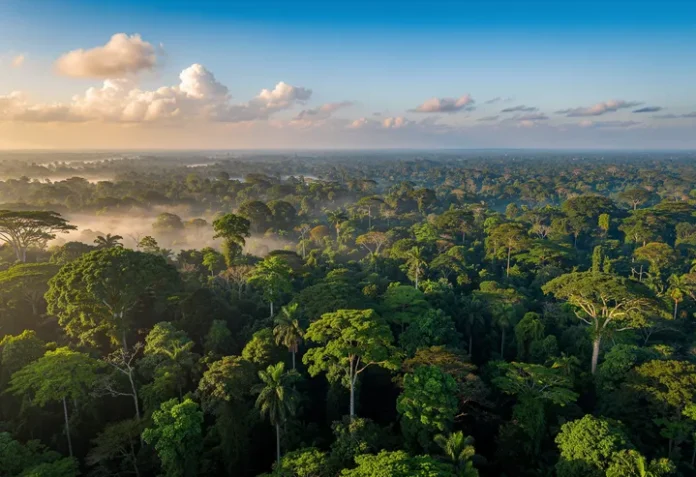
Programa Enlazando, active since 2021, seeks to connect five transboundary landscapes in Central America, addressing habitat loss from agriculture, urbanization, and climate change [G1][G4]. Central America, holding 12% of global biodiversity on just 2% of land [G1], faces acute risks, with deforestation rates and adaptation gaps highlighted in a 2023 Frontiers review [G5][8]. A 2024 PLOS ONE study mapped 2375 potential climate adaptation corridors linking lowland to high-elevation forests, noting median protections highest in Panama (64%), Belize (49%), and Honduras (47%), but lowest in El Salvador (10%) [1]. These corridors correlate positively with forest biomass, such as Panama’s 74 Mt C median [1]. However, most remain on unprotected private lands, limiting efficacy for species like jaguars [1]. Recent initiatives, like a 2025 Mexico-Central America collaboration managing 5 million hectares [7], underscore regional momentum, yet X discussions reveal polarized views on exploitation versus empowerment [G15][G16].
Mapping Corridors: Ecological Promises and Protection Gaps
Factual data paints a picture of potential. The PLOS ONE study identifies corridors as vital for biodiversity resilience, with Costa Rica’s National Biological Corridor Program covering 38% of the country via 44 corridors [1]. Protected area expansion in Latin America, per the 2022 CBD Outlook, includes government and community reserves, though data gaps hinder Aichi target progress [3]. In Honduras and Nicaragua, a World Bank project aims to halve deforestation in the Corazón Transfronterizo Biosphere Reserve core areas and boost indigenous management from 40% to 75% [4]. Technological advances, like Bio-Dem software for scientometric analysis, show uneven research output, with Costa Rica and Panama leading due to democratic stability [5].
Yet, analyses question effectiveness. Corridors often overlook large mammal needs on private lands [1], and a 2023 scientometric study links low research in northern countries to institutional weaknesses [5]. IDB’s 2024 Panama project, funded by US$2.3M for mangrove MRV systems, targets blue carbon but faces enforcement challenges [6]. Experts on social media praise connectivity for migratory birds [G20], but trends highlight illegal ranching threats [G17].
Critiques of Greenwashing and Neo-Colonialism
Planet Keeper insights reveal skepticism: Programa Enlazando may mask corporate exploitation, with critiques of “neo-colonial conservation” displacing communities [G8][G12]. Indigenous peoples protect 80% of global biodiversity [G9][G12], yet face confinement or eviction, as per 2024 analyses [G10][G11]. X posts decry deforestation in protected zones, linking to agribusiness [G15][G18], echoing Vorágine reports on cattle ranching in indigenous lands [G17]. A PBS piece argues UN biodiversity frameworks overlook local stewardship [G8], while UNEP notes indigenous knowledge erosion from climate change [G9].
Balanced views emerge: some communities gain from eco-tourism [G13], but original insights suggest a “conservation paradox” where ecological links fragment social fabrics without safeguards [Planet Keeper analysis]. Emerging trends favor indigenous-led models, with studies affirming lower degradation in such areas [G13][G14].
Indigenous Rights and Community Impacts
Factual reports emphasize inclusion: the World Bank initiative targets indigenous participation [4], and IUCN claims community livelihoods via sustainable management [G2][G3]. However, X sentiments amplify #IndigenousRights concerns, with posts on displacement in corridors like Gran Selva Maya [G16][G19]. A 2024 Amazon Frontlines study reaffirms indigenous conservation’s efficacy [G13], critiquing top-down approaches.
Expert perspectives urge hybrid models: blending corridors with degrowth to phase out extractive subsidies [Planet Keeper insights]. Concrete solutions include digital monitoring via satellites for transparency [Planet Keeper trends], and regional pacts like the 2025 Calakmul Declaration protecting 5.7 million hectares [G19].
Constructive Solutions and Future Trends
Positive developments abound. IDB’s blue carbon MRV in Panama uses mangroves and birds as indicators [6], while USFWS projects fund corridor initiatives [2]. A 2023 Frontiers article calls for reducing adaptation gaps through restored habitats [8][G5]. on social media, enthusiasm grows for multinational efforts like Gran Selva Maya, involving Mexico, Guatemala, and Belize [G16][G19].
Solutions under study: indigenous-led corridors excluding inhabited lands [Planet Keeper trends], carbon credits with equity [G13], and policy integration of local knowledge [G10]. A SIECA report on climate impacts advocates public policy for resilience [9].
KEY FIGURES
– 2375 potential climate adaptation corridors identified linking lowland and high-elevation forests across Central America (Source: https://journals.plos.org/plosone/article?id=10.1371%2Fjournal.pone.0304756) {1}
– Median corridor protection: Panama (64%), Belize (49%), Honduras (47%), El Salvador (10%) (Source: https://journals.plos.org/plosone/article?id=10.1371%2Fjournal.pone.0304756) {1}
– Median corridor forest biomass: Panama (74 Mt C), El Salvador (39 Mt C), Costa Rica (65 Mt C), Colombia (67 Mt C) (Source: https://journals.plos.org/plosone/article?id=10.1371%2Fjournal.pone.0304756) {1}
– Costa Rica’s National Biological Corridor Program covers 38% of the country with 44 corridors (Source: https://journals.plos.org/plosone/article?id=10.1371%2Fjournal.pone.0304756) {1}
– Protected area coverage in Latin America and the Caribbean has expanded significantly in recent years, including government, community, and privately managed reserves (Source: https://www.cbd.int/gbo/gbo4/outlook-grulac-en.pdf) {3}
– Annual deforestation rate in core areas of the Corazón Transfronterizo Biosphere Reserve (Honduras/Nicaragua) targeted to be halved by project end (Source: https://documents1.worldbank.org/curated/en/925421468011105920/pdf/Project0Inform1razon0Proj01P0854881.pdf) {4}
RECENT NEWS
– Mexico and Central America launched a joint initiative in 2025 to increase management effectiveness in over 5 million hectares of protected areas and improve landscape management in 1.3 million hectares (Date: June 2025, Source: https://iucn.org/press-release/202506/protecting-irreplaceable-mexico-and-central-america-join-forces-conserve) {7}
– IDB supports Panama’s conservation of coastal natural capital (mangroves and wetlands) with US$2.3M from the UK’s Blue Carbon Fund (Date: 2024, Source: https://www.iadb.org/en/news/biodiversity-latin-america-and-caribbean) {6}
STUDIES AND REPORTS
– A 2024 PLOS ONE study mapped 2375 potential climate adaptation corridors in Central America, finding that corridors in Panama, Belize, and Honduras are most protected, while those in El Salvador are least protected. The study notes that corridor protection is positively correlated with forest biomass, but most corridors remain on unprotected, privately owned land, limiting their effectiveness for large mammals like jaguars and peccaries (Source: https://journals.plos.org/plosone/article?id=10.1371%2Fjournal.pone.0304756) {1}
– A 2023 scientometric analysis revealed that biodiversity research output in Central America is highly uneven, with Costa Rica and Panama producing nearly five times more scholarly works than northern countries (Guatemala, El Salvador, Honduras, Nicaragua), linked to greater democratic stability and institutional capacity (Source: https://pmc.ncbi.nlm.nih.gov/articles/PMC9329674/) {5}
– The 2022 CBD Global Biodiversity Outlook for Latin America and the Caribbean reports that protected area coverage has expanded, but some countries lack data and are not on track to meet all Aichi targets. The report calls for strengthening the effectiveness of protected area corridors and networks (Source: https://www.cbd.int/gbo/gbo4/outlook-grulac-en.pdf) {3}
– A World Bank project in Honduras and Nicaragua aims to increase indigenous participation in protected area management from 40% to 75% and halve annual deforestation rates in core biosphere reserve areas (Source: https://documents1.worldbank.org/curated/en/925421468011105920/pdf/Project0Inform1razon0Proj01P0854881.pdf) {4}
TECHNOLOGICAL DEVELOPEMENTS
– Use of Bio-Dem open-source software for biodiversity records and socio-political analysis, enabling systematic scientometric studies of biodiversity research and conservation impacts (Source: https://pmc.ncbi.nlm.nih.gov/articles/PMC9329674/) {5}
– Development of MRV (Monitoring, Reporting, Verification) systems for blue carbon in mangrove ecosystems, tailored to regional needs in Panama, Colombia, Suriname, and Jamaica (Source: https://www.iadb.org/en/news/biodiversity-latin-america-and-caribbean) {6}
– Mapping of mangrove and bird species as ecosystem health indicators in Panama Bay and Parita Bay (Source: https://www.iadb.org/en/news/biodiversity-latin-america-and-caribbean) {6}
MAIN SOURCES (numbered list)
- Scientific study mapping climate adaptation corridors and assessing their protection and forest biomass across Central America.(Attention : lien actuellement invalide – Page Not Found)
- Project summaries of US Fish and Wildlife Service-funded conservation initiatives in Central America.
- CBD Global Biodiversity Outlook report for Latin America and the Caribbean, assessing progress on protected areas and conservation targets.
- World Bank project document detailing conservation and management efforts in Honduras and Nicaragua.
- Scientometric analysis of biodiversity research production and its relationship to democratic stability in Central America.
- IDB news on biodiversity projects, including mangrove conservation and blue carbon initiatives in Panama.
- IUCN press release on a 2025 regional initiative to strengthen protected area management in Mexico and Central America.
- Review of climate change impact models and adaptation needs in Central America.


