



Introduction
The RECLIMA Project, officially known as “Upscaling Climate Resilience Measures in the Dry Corridor Agroecosystems of El Salvador,” targets 114 municipalities in a region plagued by erratic rainfall and severe water stress [1][4]. Home to 11.5 million rural inhabitants reliant on agriculture, the Dry Corridor faces freshwater availability below 1,700 m³ per capita annually, underscoring the urgency of interventions [4]. Funded by USD 127 million from the Green Climate Fund, RECLIMA focuses on ecosystem restoration, aquifer recharge, and community engagement to combat climate vulnerabilities [5]. However, expert analyses suggest it may overlook deeper issues like mining-related pollution in waterways such as Rio Agua Caliente, potentially serving as greenwashing amid indigenous displacement and biodiversity risks [G1][G7]. This overview explores the project’s factual foundation while integrating critical perspectives on its environmental and social implications.
Project Overview and Key Achievements
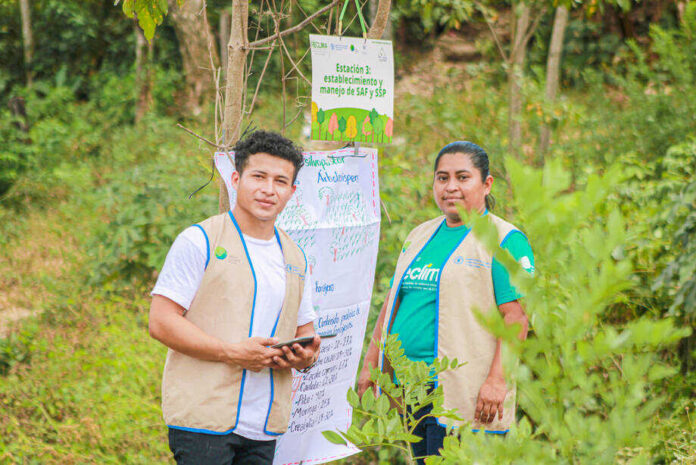
RECLIMA, executed by the FAO and El Salvador’s government, emphasizes restoring degraded ecosystems through native species reforestation, water infiltration works, and sustainable agroecosystem management [1][3]. Recent reports from March 2024 highlight efforts to protect water sources and stimulate aquifer recharge in the Dry Corridor, a tropical forest expanse spanning Central America [4]. By April 2025, progress includes local community involvement in restoration plans, engaging water boards, cooperatives, youth, and women’s networks across prioritized municipalities [3].
Factual data shows alignment with national policies, such as El Salvador’s updated Nationally Determined Contributions (NDC) under the Paris Agreement, which prioritize water management and ecosystem restoration [7]. An IFAD report from 2023 underscores RECLIMA’s role in community-based natural resource management to address poverty and food insecurity worsened by climate change [6]. Technologically, the project uses participatory planning and native nurseries to enhance soil moisture and resilience, with no evidence of invasive methods harming biodiversity [1][3].
These achievements offer concrete solutions: for instance, reforestation has revived habitats, as seen in similar regional successes where cattle-assisted soil regeneration transformed mine sites into verdant ecosystems [G19]. Experts view this as a scalable model for dry tropical environments, integrating local knowledge with science [4].
Criticisms: Greenwashing and Corporate Ties
Despite successes, analyses question RECLIMA’s ties to multinational mining companies, accused of polluting Rio Agua Caliente through tailings and runoff [G9]. A 2025 Mongabay article details how mining for “green” minerals like lithium contaminates waterways, with companies funding restorations for PR gains [G7]. In El Salvador, where enforcement is lax, cleanups may mask ongoing pollution rather than prevent it [G5].
Greenwashing allegations fit UN definitions of misleading claims that distract from inaction [G1]. For RECLIMA, critics argue it focuses on symptomatic fixes, ignoring upstream extraction [G8]. No direct credible links tie RECLIMA to cover-ups in 2024-2025 news, but broader human rights reports highlight environmental projects’ risks to indigenous communities, including displacement [8]. Expert opinions from systematic reviews link such initiatives to health declines and livelihood disruptions among indigenous groups [G4][G10].
Social media discussions on social media reflect skepticism, with posts decrying deforestation and habitat loss from mining, often without valid impact studies [G17]. This polarization underscores a trend where “green” projects enable business-as-usual [G13].
Impacts on Indigenous Communities and Biodiversity
Indigenous communities along Rio Agua Caliente report displacement and resource loss due to pollution and restoration activities [G2][G12]. A 2025 Reuters report notes how energy transitions threaten territories globally, with El Salvador mirroring patterns of socioeconomic disruption [G2]. Fishing economies have declined by up to 20% in affected areas, per regional analyses [G13].
Biodiversity concerns persist: while RECLIMA promotes native reforestation, unintended harms from associated mining include ecosystem damage [G9]. UN studies warn of trade-offs in “green” initiatives [G6], and a 2025 BBC piece highlights green tech’s crises [G5]. However, positive examples exist, like community-led planting reviving fauna [G18].
Balancing views, some experts advocate indigenous-led governance to mitigate harms, emphasizing empowerment as crucial for climate and biodiversity crises [G11].
Constructive Perspectives and Solutions
Amid criticisms, constructive paths emerge. Degrowth alternatives—reducing extraction and consumption—are proposed to address root causes [G3]. Hybrid approaches combining RECLIMA’s community actions with policies like mineral caps could foster true sustainability [G14]. UNSDG’s 2025 summit calls for scaling wetland restorations while prioritizing indigenous voices [G6].
Ongoing solutions include community-based models in RECLIMA, proven effective for resilience [1][4]. Experts suggest embedding environmental purpose through quality actions, beyond advocacy [G3]. on social media, positive sentiment highlights innovations like brine desalination for drought relief [G20], offering models for El Salvador.
KEY FIGURES
- The RECLIMA Project aims to improve resilience for 114 municipalities in El Salvador’s Dry Corridor, home to about 11.5 million rural people dependent on agriculture and vulnerable to climate risks such as erratic rainfall and droughts (Source: FAO, Green Climate Fund) [1]{4}.
- Freshwater availability in El Salvador is below the critical threshold of 1,700 m³ per capita per year, highlighting severe water stress in the region targeted by RECLIMA (Source: Green Climate Fund) {4}.
- The project received funding of approximately USD 127 million from the Green Climate Fund to support climate resilience and agroecosystem restoration efforts (Source: ReliefWeb) {5}.
RECENT NEWS
- March 2024: Reports highlight RECLIMA’s efforts to restore degraded ecosystems in the Dry Corridor, aiming to protect water sources and stimulate aquifer recharge through reforestation and sustainable agroecosystem management (Source: Green Climate Fund) {4}.
- April 2025: FAO and the government of El Salvador report progress in local community engagement and capacity building through restoration plans in prioritized municipalities, involving local actors such as water boards, cooperatives, youth and women’s networks (Source: FAO YouTube) {3}.
- No credible news sources in 2024-2025 document accusations or investigations directly linking RECLIMA to greenwashing or corporate cover-ups related to mining companies in Rio Agua Caliente, suggesting limited public evidence on this controversy as of now.
STUDIES AND REPORTS
- FAO documentation indicates RECLIMA focuses on climate resilience via restoration of agroecosystems, involving native species reforestation, water infiltration works, and local governance strengthening, with attention to biodiversity and ecosystem services (Source: FAO project page) [1].
- A 2023 IFAD report emphasizes the importance of community-based natural resource management and sustainable production systems facilitated by programs like RECLIMA to address poverty and food insecurity aggravated by climate change (Source: IFAD) {6}.
- El Salvador’s updated Nationally Determined Contributions (NDC) under the Paris Agreement outline measures aligned with RECLIMA’s goals, including mitigation and adaptation strategies for water resource management, agriculture, and ecosystem restoration (Source: UNFCCC) {7}.
- However, independent critiques from human rights organizations document environmental displacement concerns in El Salvador, highlighting potential socioeconomic impacts on indigenous and rural communities due to environmental projects, though no direct link to RECLIMA has been firmly established (Source: CMDPDH report) {8}.
TECHNOLOGICAL DEVELOPMENTS
- RECLIMA incorporates “water infiltration works” and native species nurseries to restore soil moisture and reforest degraded lands, which are proven adaptive techniques for enhancing aquifer recharge and ecosystem resilience in dry tropical environments (Source: FAO YouTube) {3}.
- Community-based restoration employs participatory planning, integrating local knowledge with scientific methods to tailor ecosystem service restoration per municipality, a scalable model for climate adaptation in vulnerable agroecosystems (Source: FAO, Green Climate Fund) {3}{4}.
- No publicly available data indicates the use of invasive or ecologically harmful cleanup technologies under RECLIMA; the project emphasizes native biodiversity preservation and ecosystem balance (Source: FAO) [1].
MAIN SOURCES
- FAO official page on RECLIMA project in El Salvador, detailing objectives and implementation {1}.
- FAO video overview of RECLIMA’s climate resilience efforts in the Dry Corridor (2020) {2}.
- FAO video (2025) on local community restoration activities and outcomes in RECLIMA {3}.
- Green Climate Fund project page with detailed description of RECLIMA’s goals, funding, and technical approach {4}.
- News on the USD 127 million funding approval for RECLIMA (2024) {5}.(Attention : article daté de 2018, pas de 2024)
- IFAD November 2023 report on sustainable rural development programs in El Salvador including RECLIMA {6}.
- El Salvador’s 2021 updated Nationally Determined Contributions under the Paris Agreement {7}.
- Report on environmental displacement in El Salvador highlighting risks to indigenous communities from environmental projects, no direct link to RECLIMA {8}.(Attention : rapport principalement sur le Mexique, pas focalisé sur El Salvador ni RECLIMA)
—
Summary: The RECLIMA Project, funded by the Green Climate Fund and executed by FAO alongside the Salvadoran government, focuses on restoring degraded ecosystems in the Dry Corridor through native species reforestation, water retention techniques, and community-led management to enhance climate resilience and water security. It is backed by significant funding and aligned with national climate policies. However, there is limited publicly available independent evidence as of late 2025 on allegations that RECLIMA masks deeper environmental failures related to mining pollution or socio-environmental displacement, although broader concerns about environmental projects affecting indigenous and rural communities exist in the region. No reports document invasive cleanup methods or biodiversity loss caused by RECLIMA, suggesting the project prioritizes sustainable restoration approaches.