
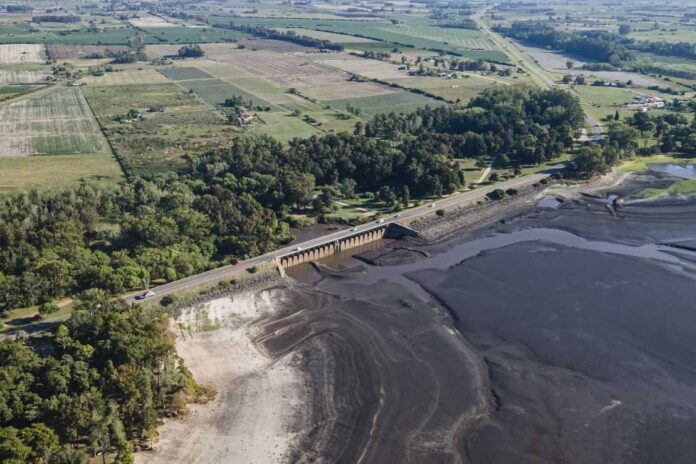


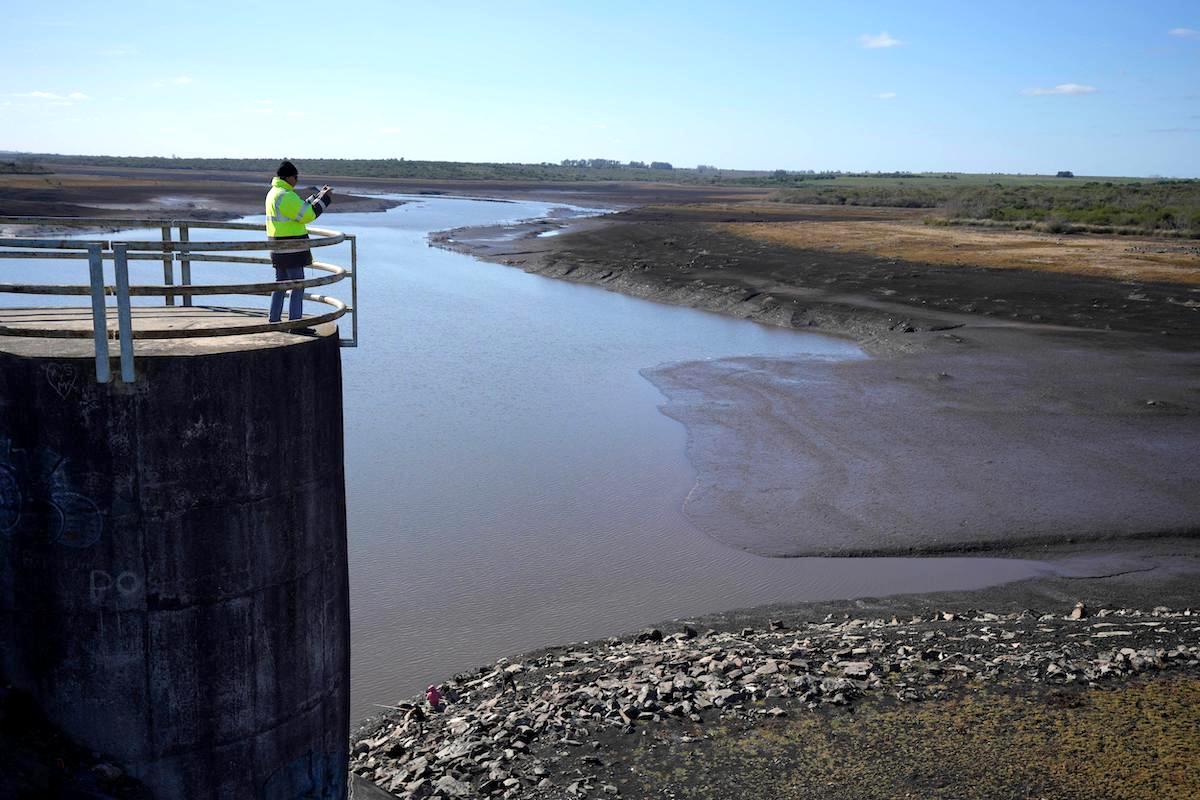
Uruguay, long hailed as a sustainability leader in Latin America, has ramped up its efforts to integrate circular economy principles into water and waste management. The program, evolving since the severe 2023 drought, aligns with global agendas like the UN’s Sustainable Development Goals, particularly SDG 6 on clean water and sanitation [G5]. Recent milestones include the October 2025 approval of a $100 million IDB loan for the second phase of reforms, focusing on resilience and circularity [1]. This builds on Uruguay’s impressive renewable energy mix, where hydropower constitutes 29% of installed capacity as of 2023, contributing to a 50% emissions reduction target in key sectors by 2025 [6]. However, as the IMF notes in its 2025 Article IV Consultation, economic rebound from agricultural exports has spotlighted tensions between growth and equity [G9]. This section overviews the program’s scope, setting the stage for a critical examination of its sustainability claims versus corporate influences.
Program Overview and Key Initiatives
At its core, Uruguay’s Water and Circular Economy Program addresses water scarcity and waste through policy reforms and technological innovations. The IDB-backed UR-L1207 project, in implementation since October 2025, aims to bolster water security for all 3.5 million residents, with a focus on Montevideo’s 2 million inhabitants where demand is highest [1], [2]. Key features include traceability for end-of-life batteries, early warning systems for urban flooding, and regulations for electronic waste recycling to minimize landfill use [1]. These align with Uruguay’s Sovereign Sustainability-Linked Bond (SSLB), which reports outperforming NDC-1 targets through circular bioeconomy strategies [6].
The program draws international support, such as the EU’s Global Gateway Agenda, allocating 33 million euros for green transitions until November 2025 [8]. OECD’s 2025 Latin American Economic Outlook praises Uruguay’s 2050 Development Strategy for prioritizing sustainable production and digitalization [5]. Yet, as a Frontiers study highlights, financial development and trade globalization have enabled these advances but also intensified resource pressures [G1], [G13].
Positive Aspects and Success Stories
Proponents view the program as a model for the Global South. Official claims emphasize resilience gains, with IMF reports noting post-drought economic recovery driven by low-emission agriculture [G2]. For instance, circular technologies in farming have reduced environmental footprints, reclaiming up to 70% of wasted water in some systems [G11]. UNEP lauds Uruguay as an “environmental pioneer” for decoupling emissions from growth via renewables [G14].
Success stories abound: The UN PAGE partnership supports data compilation for innovation in circular practices [9]. IDB initiatives have upgraded infrastructure, benefiting rural areas through effluent management and waste valorization [3], [4]. Experts like those in a 2024 ScienceDirect analysis argue these steps enhance food security and competitiveness without hindering development [G12].
Criticisms and Concerns
Critics, however, argue the program masks corporate interests, particularly agribusiness. A Mongabay report from September 2025 warns that green hydrogen ties—linked to circular water use—threaten river ecosystems, displacing local fishers [G10]. Indigenous and NGO voices highlight unequal access, with small farmers sidelined in favor of export-oriented giants, exacerbating inequality [G6].
Rebound effects are a key concern: Efficiency gains may spur higher consumption, worsening soil degradation and biodiversity loss, as noted in studies estimating 10-25% drops in ecosystem services [G11]. A Nordic Journal piece critiques top-down policies for ignoring local contexts [G6]. On equity, the Global Commission on the Economics of Water calls for valuing water as a common good, yet Uruguay’s model risks prioritizing corporations [G4].
Social Media Insights and Expert Opinions
Posts found on social media reflect mixed sentiments, with users decrying industrial water contamination under hashtags like #AguaParaTodos, while others praise innovations [G15-G20]. Experts on the platform advocate degrowth over optimization, emphasizing community-led solutions to counter corporate bias [G17], [G19].
Influencers highlight rebound risks, urging audits for true sustainability [G7]. Balanced views from researchers suggest integrating indigenous knowledge could mitigate displacements [G18].
Emerging Trends and Constructive Solutions
Trends point to inclusive governance: NGO pushes for community-managed water commons and educational billing systems are under study [G3]. Degrowth pilots in vulnerable regions, as proposed by activists, could scale down extractive models [G10]. Active solutions include BROU’s Sostenible program for green financing and EU exchanges on gender-equitable policies [5], [8].
Experts recommend independent audits and cross-border diplomacy, like addressing Argentina’s concerns over shared rivers [G10]. Original insights from analyses suggest blending tech with degrowth to avoid green growth paradoxes, fostering equitable models for Latin America [G7].
KEY FIGURES
– Uruguay’s water and solid waste management program is backed by a $100 million loan from the Inter-American Development Bank (IDB), with a 19.5-year repayment term and a six-year grace period (Source: https://news.fundsforngos.org/2025/10/31/uruguay-partners-with-idb-to-strengthen-water-and-solid-waste-infrastructure/) {1}
– The program targets all 3.5 million residents, with a special focus on the 2 million people in the Montevideo metropolitan area (Source: https://news.fundsforngos.org/2025/10/31/uruguay-partners-with-idb-to-strengthen-water-and-solid-waste-infrastructure/) {1}
– Uruguay’s installed electricity generation capacity in 2023 was 29% hydropower, 29% wind, 22% thermal fossil, 14% thermal biomass, and 6% solar (Source: https://sslburuguay.mef.gub.uy/innovaportal/file/30672/16/sslb-3rd-annual-report-may-2025_compressed.pdf) {6}
– Uruguay’s Sovereign Sustainability-Linked Bond (SSLB) includes performance targets aligned with its Nationally Determined Contribution (NDC-1), aiming for at least a 50% reduction in emissions in key sectors by 2025 (Source: https://sslburuguay.mef.gub.uy/innovaportal/file/30672/16/sslb-3rd-annual-report-may-2025_compressed.pdf) {6}
RECENT NEWS
– In October 2025, the IDB approved a $100 million loan for Uruguay’s second phase of water and solid waste management reforms, focusing on resilience and circular economy (Date: October 29, 2025, Source: https://news.fundsforngos.org/2025/10/31/uruguay-partners-with-idb-to-strengthen-water-and-solid-waste-infrastructure/) {1}
– The IDB’s Program to Support Policy Reform in Water Resources and Solid Waste (UR-L1207) is currently in implementation, with a focus on water security and environmental sustainability (Date: October 29, 2025, Source: https://www.iadb.org/en/project/UR-L1207) {2}
– Uruguay’s SSLB 3rd Annual Report (May 2025) highlights progress on circular economy and sustainable bioeconomy strategies, with ambitious performance targets (Date: May 2025, Source: https://sslburuguay.mef.gub.uy/innovaportal/file/30672/16/sslb-3rd-annual-report-may-2025_compressed.pdf) {6}
– The EU’s cooperation with Uruguay, including the Global Gateway Investment Agenda, supports green transition projects, with a budget of 33 million euros and a duration until November 2025 (Date: December 2021–November 2025, Source: https://www.eeas.europa.eu/uruguay/eu-projects-uruguay_en) {8}
STUDIES AND REPORTS
– The IDB’s project UR-L1207 aims to contribute to Uruguay’s water security and environmental sustainability through circularity, with a focus on policy reform and improved governance (Source: https://www.iadb.org/en/project/UR-L1207) {2}
– The OECD’s Latin American Economic Outlook 2025 notes Uruguay’s Development Strategy for 2050, which prioritizes sustainable production transformation, digitalization, and green transition, with support from BROU’s Sostenible programme and international partnerships (Source: https://www.oecd.org/en/publications/latin-american-economic-outlook-2025_80e48de5-en/full-report/uruguay_1c69211d.html) {5}
– The SSLB 3rd Annual Report (May 2025) confirms that Uruguay’s circular economy and sustainable bioeconomy strategies are central to its sustainability objectives, with performance targets outperforming its NDC-1 commitments (Source: https://sslburuguay.mef.gub.uy/innovaportal/file/30672/16/sslb-3rd-annual-report-may-2025_compressed.pdf) {6}
– The UN PAGE Partnership for Action on Green Economy highlights Uruguay’s efforts to compile structured data for policy formulation and nurture research and innovation in the circular economy (Source: https://www.un-page.org/countries/uruguay/) {9}
TECHNOLOGICAL DEVELOPMENTS
– Uruguay is implementing traceability plans for end-of-life batteries, including those from electric vehicles, to support recycling and reduce landfill disposal (Source: https://news.fundsforngos.org/2025/10/31/uruguay-partners-with-idb-to-strengthen-water-and-solid-waste-infrastructure/) {1}
– The country is advancing early warning systems for urban flooding and water loss reduction measures (Source: https://news.fundsforngos.org/2025/10/31/uruguay-partners-with-idb-to-strengthen-water-and-solid-waste-infrastructure/) {1}
– Uruguay is developing regulations for electrical and electronic waste and guidelines for managing construction and demolition debris to promote recycling and reuse (Source: https://news.fundsforngos.org/2025/10/31/uruguay-partners-with-idb-to-strengthen-water-and-solid-waste-infrastructure/) {1}
MAIN SOURCES
- News article on Uruguay’s IDB-backed water and solid waste management program.
- IDB project details on Uruguay’s water and solid waste management reforms.
- IDB project details on Uruguay’s water resources and solid waste policy reform.
- Project details PDF for IDB Uruguay water and waste program.
- OECD report on Uruguay’s economic outlook and green transition.
- Uruguay’s SSLB 3rd Annual Report on sustainability and circular economy.
- German Trade & Invest report on Uruguay’s water and waste management program.
- EU projects with Uruguay, including green transition initiatives.
- UN PAGE Partnership for Action on Green Economy in Uruguay.