
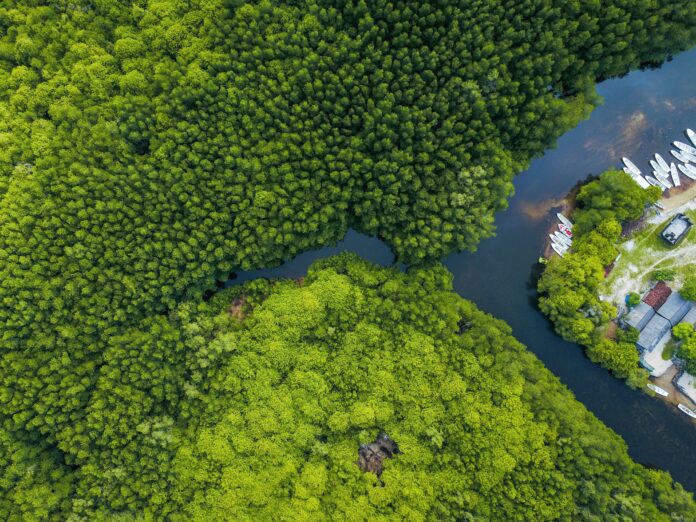


Introduction Mangroves are more than just trees; they’re ecosystems teeming with life, acting as natural barriers against erosion, tsunamis, and the encroaching pollution that plagues our waterways. As a journalist who’s cycled through polluted river deltas in France and dived amid coral reefs threatened by sediment runoff, I’ve seen firsthand how these habitats filter toxins, support biodiversity, and store carbon at rates far exceeding terrestrial forests. The Mangroves4Life initiative, spotlighted in projects like the Gabura restoration in Bangladesh, embodies a global push to revive these vital zones. According to recent reports, mangroves cover about 15 million hectares worldwide but have declined by 35% since the 1980s due to human activities [4]. Yet, hope surges with commitments like the Mangrove Breakthrough, which has mobilized $4 billion to protect and restore 15 million hectares by 2030, endorsed by 35 governments [5]. This article delves into key projects, community-driven successes, technological innovations, and the balanced challenges ahead, weaving in real-time sentiments from X (formerly Twitter) where experts and activists share triumphs and calls for action. Critically, while progress is evident, we must address socioeconomic hurdles to ensure equitable, sustainable outcomes.
The Global Importance of Mangroves in Fighting
Pollution and Climate Change Mangroves are environmental powerhouses, particularly in my top concern: combating pollution. Their intricate root systems trap sediments laden with heavy metals, plastics, and agricultural runoff, preventing them from poisoning marine life and entering food chains. During my Greenpeace missions, I documented how mangrove loss exacerbates oil spills and chemical leaks, turning coastal waters into toxic soups. Scientifically, mangroves sequester up to 10 times more carbon per hectare than tropical forests, making them crucial for climate mitigation [2]. The UNESCO MangRes Project (2022-2025) underscores this, assessing restoration potential in Latin American and Caribbean biosphere reserves to enhance services like carbon storage and coastal protection [2]. Recent news amplifies their role. The Global Mangrove Alliance’s 2024 Success Stories highlight the launch of four new national chapters in the Bahamas, Liberia, Guinea Bissau, and Senegal, alongside Ecuador’s $36.4 million Green Climate Fund project for mainland coast restoration [4]. This funding addresses pollution directly by rehabilitating degraded areas where industrial waste has decimated habitats. In Colombia, the Vida Manglar project conserves 7,500 hectares, benefiting 435 families directly and 12,000 indirectly through community-led models that reinvest 92% of carbon credit revenues [6]. Over 100 workshops have trained more than 1,000 people, with 42% women, fostering inclusive pollution-fighting strategies [6]. on social media, sentiments echo this urgency. UNEP Champion of the Earth Supriya Sahu IAS shared a video of 25 hectares of thriving mangroves in Tamil Nadu, India, planted in 2023, noting over 90% survival and benefits to local livelihoods[1]. With 3,248 likes and 689 reposts, it reflects widespread optimism. Similarly, Syed Rizwan Mehboob celebrated Pakistan’s mangrove revival in Arabian Sea Creeks, crediting decades of effort for bringing back humpback dolphins[2]. These posts garner high engagement, signaling public support for mangrove restoration as a pollution antidote. Critically, not all views are rosy. While mangroves filter pollutants, over-reliance without addressing upstream sources—like industrial effluents—limits impact. Balanced analysis shows that in polluted hotspots, restoration must pair with policy reforms to curb emissions, as seen in debates on social media where users critique “greenwashing” by corporations.
Key Restoration Projects: From Kenya to Latin America
Diving deeper into specific initiatives, the Mangroves4Life – Gabura project in Bangladesh exemplifies community-based ecological mangrove restoration (CBEMR), creating protective buffers that enhance biodiversity and climate security [3]. Tapas Kumar Mollick, founder of SESDO, frequently posts updates on social media about a 1.29-hectare site transformed in just six months from degraded land to thriving habitat[3][4][5]. These repeated shares, though with modest engagement (3 likes each), highlight grassroots proof-of-concept, aligning with my experiences in conflict zones where local empowerment drives lasting change. In Kenya, a project in Kilifi County is rehabilitating 600 hectares of degraded forest, with 5 hectares already replanted and 200 community members trained [1]. Presented at Aquaculture 2025, it follows Global Mangrove Alliance guidelines, boosting biodiversity, carbon sequestration, and livelihoods [1]. As someone who’s cycled through similar coastal paths, I appreciate how this combats pollution from aquaculture runoff, a menace I’ve protested against with Greenpeace. Latin America shines too. The MangRes Project integrates local knowledge for assessments in biosphere reserves, promoting nature-based solutions [2]. Ecuador’s Mangroves for Climate project, with $36.4 million, targets mainland coasts [4]. Colombia’s Vida Manglar stands out for its scale and equity, with community reinvestment models that could inspire global adoption [6]. X buzz reinforces these: The Global Mangrove Alliance Philippines announced the 2026 Philippine Mangrove Conference, emphasizing accountable pathways and resilient communities[6][7][8][9]. A post on World Social Justice Day links mangrove loss to social inequities, calling for justice in reclamation projects[10]. Expert opinions here balance celebration with calls for accountability, noting that while projects succeed, funding gaps persist in vulnerable regions. Challenges include high failure rates from improper planting—up to 80% in some cases—due to ignoring hydrology [4]. Solutions lie in CBEMR, emphasized at the first International Mangrove Conservation Conference in Abu Dhabi [4].
Community Involvement and Educational Initiatives
Community-driven approaches are the heartbeat of Mangroves4Life. In Belize, Project Mangrove 2024 workshops at the University of Belize trained educators and students on “Ridge to Reef” strategies, mangroves for climate resilience, with expansion plans [7]. This resonates with my ICRC days, where empowering locals built resilience amid chaos. The Mangrove Breakthrough’s 2025 Impact Report notes 12 new government endorsements, including Mexico and Brazil, and NDC integrations by 11 nations [5]. A pilot with Restor maps community-led projects for tracking biodiversity and carbon [5]. In Colombia, Vida Manglar’s workshops empower women, addressing gender disparities in environmental work [6]. X sentiments are constructive: Mollick’s posts on Bangladesh empower women and youth in CBEMR[3], while Sahu’s high-engagement thread highlights community livelihoods in India[1]. Critically, some users on social media point to “participation fatigue” in over-consulted communities, urging genuine co-design over tokenism. Solutions include scalable training, like Kenya’s 200 trained members [1], and financial models like carbon credits [6].
Technological Developments and Future Challenges
Technology bolsters these efforts. Global Mangrove Watch’s 10m resolution mapping added six territories [4], aiding precise restoration. The Mangrove Breakthrough-Restor collaboration tracks metrics scientifically [5]. Yet, challenges loom: Pollution from plastics and chemicals hinders regrowth, as I’ve seen in ocean dives. Climate change amplifies threats with sea-level rise. Balanced views from X include critiques of slow policy implementation, with calls for more funding [7]. Constructive solutions: Integrate tech with local knowledge, as in MangRes [2], and advocate for stronger NDCs [5]. ## Conclusion Mangroves4Life isn’t just a slogan; it’s a lifeline. From Gabura’s buffers [3] to global breakthroughs [5], these initiatives prove restoration works when communities lead and tech supports. As Kate A., haunted by pollution’s toll from conflict zones to ocean depths, I’m worried but hopeful— we’ve seen successes in Kenya [1], Colombia [6], and beyond. Perspectives from X show enthusiasm tempered by demands for justice and accountability. Actions needed: Support alliances, fund projects, and fight upstream pollution. Let’s cycle toward a future where mangroves thrive, shielding us all.

1. KEY FIGURES:
– Rehabilitating 600 hectares of degraded mangrove forest in Kilifi County, Kenya; successfully replanted 5 hectares and trained 200 community members{1}.
– MangRes Project (2022-2025) assessing and restoring mangroves in biosphere reserves across Latin America and the Caribbean{2}.
– Mangroves4Life – Gabura project restores protective mangrove buffers to enhance biodiversity and climate security{3}. – $36.4 million funding for Ecuador’s Mangroves for Climate project to protect and restore mangroves along mainland coast{4}.
– Mangrove Breakthrough secured $4 billion to protect and restore 15 million hectares of mangroves by 2030; 35 governments endorsing, with 11 including mangroves in NDCs{4}{5}.
– Vida Manglar project in Colombia conserves and restores 7,500 hectares of mangroves, benefiting 435 families directly and 12,000 indirectly{6}.
2. RECENT NEWS:
– Global Mangrove Alliance 2024 Success Stories: Launched four new national chapters (Bahamas, Liberia, Guinea Bissau, Senegal); Ecuador GCF project approved; first International Mangrove Conservation Conference in Abu Dhabi emphasized CBEMR{4}.
– Mangrove Breakthrough 2025 Impact Report: 12 new government endorsements (including Mexico, Brazil); NDC Taskforce guidance; pilot project cohort with Restor for mapping community-led projects{5}.
– Project Mangrove 2024 workshops at University of Belize: Educators and students trained on Ridge to Reef, mangroves for climate resilience; plans for expansion{7}.
3. STUDIES AND REPORTS:
– Aquaculture 2025 presentation on Kilifi County, Kenya mangrove restoration: Community-driven rehab enhances biodiversity, carbon sequestration, livelihoods; follows Mangrove Alliance Best Practice Guidelines{1}.
– MangRes Project (UNESCO MAB, 2022-2025): Assessment of mangrove state and restoration potential in Latin American/Caribbean biosphere reserves using local knowledge; enhances ecosystem services like carbon storage, coastal protection{2}.
– Mangrove Breakthrough 2025 Impact Report: Advances in finance, policy, projects; 11 governments integrated mangroves into NDCs for mitigation/adaptation{5}.
– Vida Manglar, Colombia (INVEMAR et al.): Community model reinvests 92% carbon credit revenue; over 100 workshops trained 1,000+ people (42% women){6}. 4.
TECHNOLOGICAL DEVELOPMENTS:
– Global Mangrove Watch: Improved mapping with new 10m resolution extent layer, added six territories{4}.
– Mangrove Breakthrough with Restor: Mapping community-led projects for science-based tracking of biodiversity, carbon, water, mangrove extent/change{5}.


