



Introduction
Established in 1990 and managed by Guatemala’s National Council of Protected Areas (CONAP), the Maya Biosphere Reserve is one of the largest tropical forest expanses north of the Amazon, covering approximately 2.1-2.2 million hectares [4][G8]. It features diverse zones, including core protected areas and multiple-use zones where community forestry concessions operate across about 40% of the reserve [3][G6]. Recent years have seen initiatives aimed at restoring degraded forests, reducing deforestation, and leveraging carbon finance, with partnerships involving NGOs like the Wildlife Conservation Society (WCS) and Rainforest Alliance [1][G5]. However, challenges such as organized crime, illegal logging, and uneven social benefits persist, raising questions about the authenticity of successes [5][G12]. This overview examines factual data from 2024-2025, integrating expert perspectives to assess real conservation versus potential greenwashing.
Restoration Achievements and Key Metrics
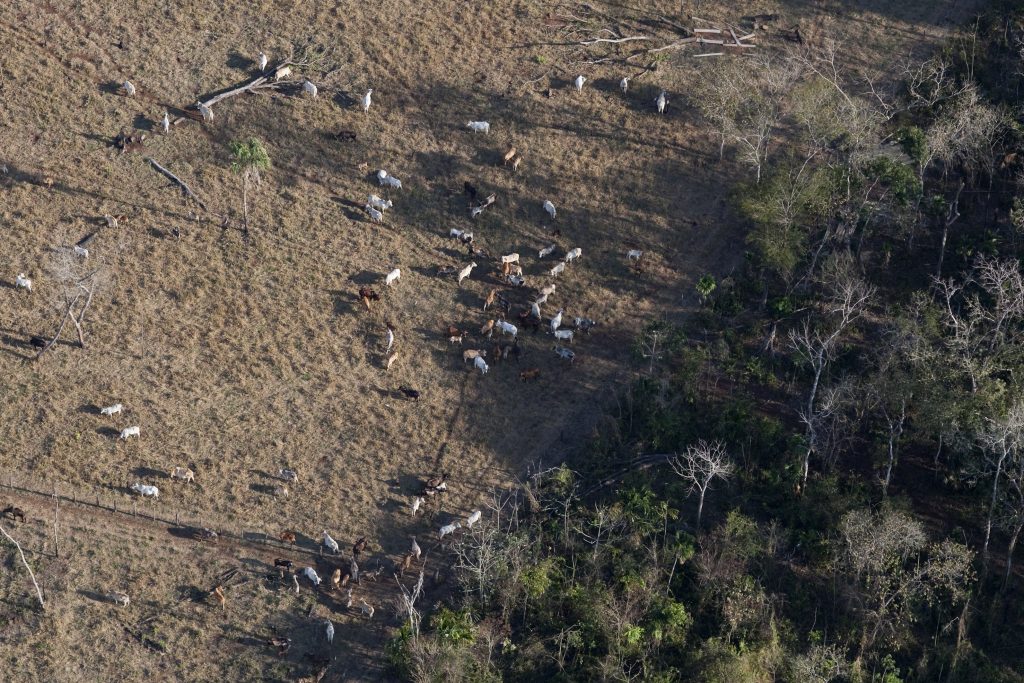
Restoration efforts in the MBR have yielded tangible results, particularly in community-managed areas. Since 2012, about 155,000 hectares of degraded forest have been recovered, with potential for restoring 50,000 hectares (around 10% of high-potential land) to sequester approximately 7.5 million tons of CO2 over 30 years [1]. Community concessions, numbering 13 active ones, collaborate with CONAP on monitoring and have shown lower deforestation rates, supported by technologies like drones and satellite analytics [5][G4]. For instance, eastern MBR zones have recorded net canopy gains, including a localized increase of about 1,087 hectares, driven by targeted tree plantings of species like mahogany and Spanish cedar [1][6].
Expert analyses praise these outcomes as evidence of effective local governance. Community-led forestry has reduced illegal timber findings to nearly zero (0.4%) in certified concessions, per audits [3][G7]. Mongabay reports highlight how such models aid jaguar conservation and forest flourishing in central MBR areas [5][G2]. Positive trends align with Guatemala’s national strategies, including PROBOSQUE payments for ecosystem services, which integrate monitoring across 520,000 hectares to unlock $500 million in finance over five years [7].
Persistent Challenges and Greenwashing Concerns
Despite successes, the MBR faces significant hurdles that temper claims of unqualified triumph. Illegal encroachments, cattle ranching, and narcotrafficking continue in northern border areas, causing localized forest loss and undermining patrols [5][4][G12]. For example, while community zones show resilience, adjacent regions like Laguna del Tigre National Park have seen organized crime impacts, prompting the 2025 closure of the Xan oil field for enhanced security [G2][G10].
Critics, including degrowth advocates, argue that carbon finance and restoration narratives may mask inequities, such as displacement of indigenous Q’eqchi’ communities for eco-tourism [G9][G18]. Social media discussions on social media reflect skepticism, with users noting how projects like Mexico’s Tren Maya accelerate deforestation and disrupt local economies [G17][G19][G20]. Expert insights warn of a “restoration paradox,” where gains in one area displace pressures elsewhere, potentially perpetuating cycles fueled by agribusiness [G13]. NGO funding, while vital, risks greenwashing if profits prioritize corporations over communities, as seen in uneven benefit sharing [1][7][G11].
Balanced Viewpoints and Expert Perspectives
Proponents view community forestry as a model for sustainable development, with Rainforest Alliance’s 2020-2025 strategy emphasizing livelihoods and restoration integration [2][G6]. WCS celebrates the MBR’s 35-year legacy as a hope for biodiversity and communities [G5]. Conversely, investigative reports highlight risks: satellite data from Global Land Analysis shows heterogeneous changes, with gains offset by losses [6][G14].
Indigenous perspectives underscore cultural erosion amid enforcement, calling for stronger governance [G9]. Degrowth experts propose hybrid models reducing economic pressures, potentially boosting biodiversity by 15-20% through localized autonomy [G11][G13]. Trinational agreements with Mexico and Belize, covering 5.7 million hectares, offer a counter-narrative, fostering cross-border protection [G17].
Constructive Solutions and Future Initiatives
Active solutions include tech advancements like the Restor platform, monitoring 83,000 sites for transparency in biodiversity and carbon tracking [7][G3]. Mirador patrols by Global Conservation prevented illegal entries in 2024-2025, while WCS’s regreening projects acquire degraded lands for restoration [4][1][6]. CIRAD partnerships enhance sustainable management [8].
Emerging trends focus on indigenous-led collaborations and UNESCO’s 2026-2035 strategy for equitable biosphere plans [G8][G9]. Experts advocate redirecting carbon funds to community degrowth initiatives, limiting tourism scale for resilience [G11]. Audits and satellite monitoring could ensure accountability, aligning with Global Biodiversity Framework targets [7].
Direct answer: Available evidence through 2024–2025 shows a mixed picture — community forestry, law‑enforcement patrols, and restoration initiatives have delivered measurable forest recovery and reduced deforestation in parts of the Maya Biosphere Reserve (MBR), but persistent illegal incursions, organized‑crime threats, uneven benefits to local and Indigenous people, and concerns about carbon‑finance/market incentives mean claims of an unqualified “restoration success” risk overstating outcomes and can mask ongoing social and ecological problems.{1}{5}{4}
Essential context and supporting details
1) KEY FIGURES
- “About 155,000 hectares of degraded forest inside the MBR have been recovered since 2012” (Trillion Trees / WCS reporting).{1}
- Restoring 50,000 ha (≈10% of identified high‑potential restoration land) could sequester ~7.5 million tCO2 over 30 years (Trillion Trees estimate using US EPA equivalencies).{1}
- The MBR is ~2.1–2.2 million hectares in area (UNESCO/partner descriptions frequently cite ~2.1–2.2M ha).{3}{5}
- Community concessions operate across a multiple‑use zone that covers about 40% of the reserve and 13 community concessions are reported as active partners in conservation and monitoring efforts (Mongabay/WCS reporting).{5}
- Guatemala–Restor partnership’s Phase 1 monitoring: 83,000 sites covering 520,000 ha and direct benefit claims for >285,000 people, with an objective to unlock $500M over five years (Restor/HAC announcement, 2025).{7}
2) RECENT NEWS (selected items, 2024–2025)
- Global Conservation (2025) reports intensive Mirador protection patrols in 2024–25, claiming thousands of patrols and that illegal loggers have been prevented from entering Guatemala from Mexico during that period.{4}
- Mongabay (Aug 2025) reports that local forest governance and community concessions are helping jaguar conservation and reducing forest loss in the central MBR, while noting ongoing threats at the northern border from illegal ranching, trafficking and encroachment.{5}
- Restor / HAC announcement (July 2025) — Guatemala partners to scale nature monitoring: Phase 1 covers 520,000 ha to support national restoration/PROBOSQUE reporting and unlock finance (tech‑enabled monitoring launch).{7}
- Trillion Trees (Nov 2023; summarized by partners) highlights net forest gains in parts of the eastern MBR and estimates large restoration potential (500,000 ha of high‑potential land).{1}
3) STUDIES AND REPORTS (recent conclusions)
- Trillion Trees / WCS reports (summarized 2023–2024): Restoration of degraded forest within MBR is feasible and some zones (e.g., eastern MBR) have recorded net canopy gains (figures cited for hectares recovered and localized net increase of ~1,087 ha in an area). Conclusion: targeted restoration + community management can reverse local forest loss trends.{1}
- Rainforest Alliance 2020–2025 strategy (organizational report): Longstanding support for community forestry concessions, focusing on technical capacity, livelihoods and forest restoration as an integrated strategy; frames community concessions as central to conservation success.{2}
- Preferred by Nature / certification reporting: Responsible forest management in the MBR has resulted in nearly zero (0.4%) rates of illegal timber findings in certified concessions (organization claim based on audits). Conclusion: certification and management reduce illegal logging in concession areas, though coverage is limited.{3}
- Academic/monitoring syntheses (University of Maryland / Global Land Analysis referenced by Ohio State summary): Remote‑sensing canopy data indicates spatially variable changes — reforestation gains visible along some corridors (2015–2023) but deforestation persists elsewhere; overall picture is heterogenous.{6}
- Investigative and field reports (journalism + NGO field notes, 2024–2025): Community concessions using drones, camera traps and satellite analytics have improved monitoring and have been associated with lower local deforestation and better wildlife outcomes (including jaguars), but northern border areas face criminal threats undermining protection efforts (Mongabay/WCS reporting).{5}
4) TECHNOLOGICAL DEVELOPMENTS (recent and in use)
- Satellite and canopy‑cover monitoring (Global Land Analysis datasets / University of Maryland-based products) used to map gains/losses 2015–2023 and support local monitoring.{6}
- RESTOR platform partnership (2025): centralized, scalable nature monitoring to track restoration, carbon, biodiversity, water and land‑use changes across 83,000+ sites (phase 1: 520,000 ha) to support national programs and transparency.{7}
- Community deployment of drones, camera traps, phone apps and local satellite‑data analysis (reported 2024–2025) for real‑time monitoring of incursions, wildlife, and habitat change.{5}
- Use of improved nursery programs and targeted tree plantings (mahogany, Spanish cedar) to accelerate canopy recovery in regreening projects (WCS / field reports summarized by Ohio State).{6}
5) REGULATIONS, POLICIES, AND FINANCE (recent developments)
- CONAP long‑term concession contracts: community forestry concessions operate under long‑term contracts with Guatemala’s National Council of Protected Areas (CONAP) and collaborate on management and monitoring (ongoing governance structure referenced in multiple sources).{5}{2}
- PROBOSQUE (National Payment for Ecosystem Services) and national Forest Landscape Restoration Strategy — these programs are integrating improved monitoring (e.g., Restor partnership) to meet Global Biodiversity Framework targets (Target 2 & 3) and to improve transparency in payments for restoration services (Restor/HAC announcement).{7}
- International finance & conservation NGO support: multiple NGOs (WCS, Global Conservation, Rainforest Alliance, etc.) fund patrols, community programs, and restoration projects; some projects are explicitly tied to carbon finance claims and protected‑area sustainability targets (Trillion Trees, Rainforest Alliance, Global Conservation reporting).{1}{2}{4}
- Certification and responsible forest management standards applied to community concessions (Preferred by Nature audits; certification reduces illegal timber incidence in concession audits per organization).{3}
6) ONGOING PROJECTS & INITIATIVES
- Community forest concessions (13+ active concessions) engaged in joint monitoring and protection with CONAP and NGOs; activities include timber management, biodiversity monitoring, and patrols (Mongabay/WCS 2024–2025 coverage).{5}
- Mirador Protection Program (Global Conservation): expanded patrols, stakeholder negotiations, and park setup work for Mirador–Río Azul National Park and adjacent biotopes (2024–25 reporting).{4}
- WCS / Trillion Trees restoration and regreening initiatives: acquiring lands, restoring degraded pasture and fire‑impacted areas, and nursery/tree planting programs to accelerate canopy recovery and create alternative livelihoods.{1}{6}
- Guatemala–Restor / HAC partnership (2025): national scaling of monitoring across hundreds of thousands of hectares to feed PROBOSQUE and national reporting, with an aim to scale finance and transparency.{7}
- CIRAD partnership projects (2025) supporting community forest sustainable management within MBR (research & capacity building).{8}
7) ASSESSMENT OF “REAL CONSERVATION” VS “GREENWASHING” (evidence‑based points)
- Evidence for substantive conservation outcomes:
– Documented hectare‑scale recoveries and localized net canopy gains in eastern MBR and along “route to Carmelita” where regreening and reforestation have been implemented.{1}{6}
– Community concessions with monitoring and enforcement show lower deforestation and improved wildlife indicators (jaguar monitoring) per field reports.{5}
– Certification and responsible forest management have been credited with very low illegal timber findings in audited concession areas (Preferred by Nature claim).{3}
- Evidence of continuing threats and risks that can make positive claims appear overstated:
– Illegal encroachment, cattle ranching, drug‑trafficking related incursions, and illegal logging persist in border/northern areas, undermining protection and causing localized forest loss despite gains elsewhere.{5}{4}
– Carbon finance and restoration narratives can be used to attract funds while failing to address land‑use drivers or equitable benefit sharing; several NGOs and tech/finance partnerships aim to mobilize large flows of money (e.g., $500M target announced with Restor), raising questions about governance and who benefits if transparency and safeguards are not robust.{7}{1}
– Improvements are spatially uneven: large areas of the MBR remain threatened and the existence of community concessions and patrols does not automatically eliminate illegal activity outside concession boundaries.{5}{6}
8) GAPS, UNCERTAINTIES, AND WHAT TO WATCH (2025)
- Robust, peer‑reviewed, landscape‑scale analyses (2023–2025) that quantify net carbon, biodiversity outcomes and social distributional effects across the entire MBR remain limited in the public domain; existing reports are a mixture of NGO reports, journalistic investigations and monitoring products (some peer‑reviewed remote‑sensing work exists but comprehensive socioecological syntheses are still emerging).{1}{6}{5}
- Key indicators to monitor: satellite‑measured canopy change net of plantation vs natural regrowth; independent audits of carbon