


Introduction
The plastic pollution crisis has escalated into a planetary emergency, with over 430 million tonnes produced annually, much of it destined for landfills, oceans, or microplastic dispersal [G3]. According to the UNEP’s 2023 annual report, a circular economy roadmap could reduce pollution by 80% by 2040 through strategies like reducing production, promoting reuse, and enhancing recycling [2]. However, as global waste is set to triple by 2060, questions arise about the efficacy of these approaches amid challenges like corporate greenwashing and inadequate infrastructure [G3]. This article integrates key figures from exhaustive research, including Pew Charitable Trusts’ projections, with expert perspectives from recent analyses, to assess circular solutions’ potential while highlighting pitfalls and constructive paths forward [4][G2].
The Scale of the Plastic Pollution Crisis
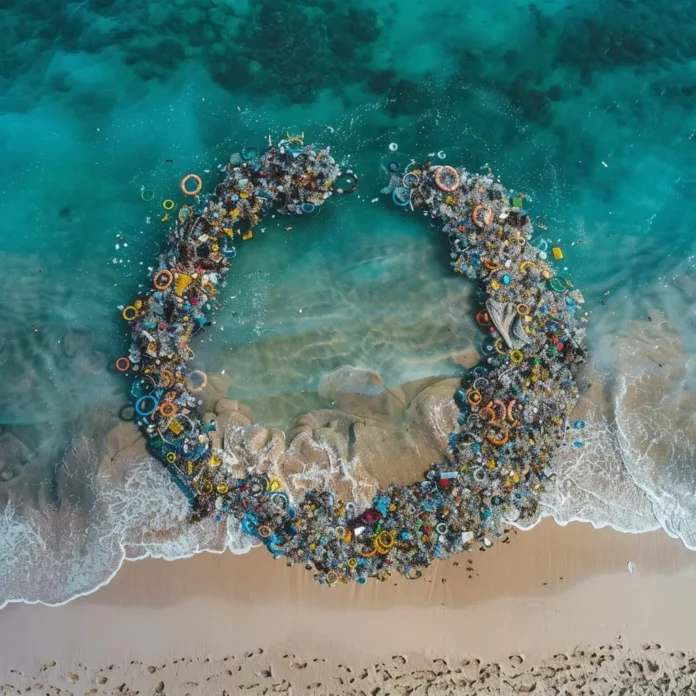
Global plastic production has surged, with 79% of all plastics ever made ending up in landfills or dumps, and 8 million metric tons entering oceans yearly [6]. Under business-as-usual, ocean leakage is projected to triple to 29 million tonnes by 2040, exacerbating environmental and health impacts [4][G2]. Microplastics, fragments less than 5mm, permeate ecosystems, linking to accelerated global warming by disrupting ocean carbon cycles—an “overlooked link” as recent discoveries reveal [G12]. Expert analyses underscore this urgency: a 2026 Washington Post summary notes microplastics’ ubiquity and ties to health issues, while Standard Health reports plastics’ role in the triple crisis of climate change, biodiversity loss, and pollution [G9][G13]. on social media, sentiments from environmental groups like UNEP highlight millions dying from related antimicrobial resistance, urging pollution reduction at source [G15]. These figures paint a dire picture, but circular models offer a counter-narrative by aiming to eliminate waste through systemic redesign [5][G7].
Circular Economy Approaches: Promises and Strategies
Circular economy strategies focus on closing loops via mechanical and chemical recycling, bio-based plastics, extended producer responsibility (EPR), and deposit-refund systems (DRS). Countries like Germany and Sweden achieve over 90% recycling rates for PET bottles through DRS, demonstrating practical success [2]. The Ellen MacArthur Foundation envisions 100% reusable or recyclable plastics, eliminating unnecessary items and promoting reuse models [5][G7]. Technological advancements bolster this: chemical recycling enables closed-loop recovery, while bio-based alternatives like edible ice cream cups replace single-use plastics [6][G1]. Recent progress includes digital waste management for efficient collection and innovations like phenylpropanoids for durable yet decomposable polymers [G4]. Expert views, such as those in a 2025 Recent Progress in Materials overview, praise chemical recycling’s potential for true circularity, competing with fossil-based options [G1]. ASEAN’s 2026 initiatives exemplify multi-stakeholder collaboration, advancing circularity through capacity-building and regional projects [G11]. These approaches, per UNEP’s roadmap, could save $70 billion by 2040 while reducing ocean plastics by over 80% [2][G15].
Challenges and Pitfalls in Implementation
Despite promises, circular solutions face significant hurdles. Mechanical recycling often leads to downcycling, and recycled materials like polyester can generate 55% more microplastics, worsening pollution [G10]. In developing economies, poor infrastructure causes leakage, as noted in a 2024 ScienceDirect review and a 2021 MDPI study on rural areas [G4][G5]. Corporate greenwashing and economic incentives favoring production over sustainability are criticized; X discussions point to industry blocking polymer standardization since 2003 [G19]. A 2026 Springer article argues recycling is insufficient against ecosystem saturation, demanding a paradigm shift [G14]. Planet Keeper analyses highlight “pollution debt” from microplastics in recycled goods, with experts like Sarah McAnulty warning that “compostable” plastics still harm wildlife if mismanaged [G18]. Balancing viewpoints, while UNEP posts on social media express optimism for circular models [G15], critics advocate degrowth to cap production, addressing root causes like overconsumption [G16][G20].
Real-World Impacts and Emerging Trends
Plastic pollution’s impacts are profound, contaminating food chains and contributing to climate change [G13]. In oceans, microplastics accelerate warming, per 2026 Cooldown reports [G12], while soil leaching affects agriculture [G16]. Community initiatives offer hope: Rhinoshield’s drone-based cleanups recycle debris into products, and ASEAN efforts foster inclusive strategies [G11]. Emerging trends integrate tech with degrowth, such as biomass conversion for “net negative” materials [G20]. Original insights from analyses suggest hybrid models—enforcing production quotas based on planetary boundaries—could reboot circularity beyond recycling illusions [Planet Keeper Executive Summary]. Policy shifts, like the U.S. SAVE OUR SEAS 2.0 Act prioritizing microplastic research, signal progress [4]. X trends reflect calls for regenerative approaches, with influencers promoting alternatives like seaweed-based materials [G17].
KEY FIGURES
– Global plastic pollution could be reduced by 80% by 2040 through circular strategies like reducing production, promoting reuse, improving recycling, and EPR schemes{2}.
– Plastic leaking into oceans projected to triple from 11 million tonnes in 2016 to 29 million tonnes by 2040 under business-as-usual{4}.
– 79% of all plastics produced have ended up in landfills and dumps{6}.
– 8 million metric tons of plastic enter the ocean each year{6}.
– Countries with deposit-refund systems (DRS) like Germany and Sweden achieve over 90% recycling rates for PET bottles{2}.
RECENT NEWS
– UNEP 2023 annual report outlines roadmap for 80% plastic pollution reduction by 2040 via circular strategies{2}.
– U.S. SAVE OUR SEAS 2.0 Act prioritizes research on microplastics, innovation prizes, and international negotiations on plastic pollution{4}.
STUDIES AND REPORTS
– Breaking the Plastic Wave (Pew Charitable Trusts and SYSTEMIQ, 2020): Business-as-usual doubles plastic consumption and triples ocean leakage to 29M tonnes by 2040; circular solutions can break the wave{4}.
– UNEP 2023 Annual Report: Frames plastic as planetary crisis; roadmap combines reduce, reuse, recycle, EPR for 80% reduction by 2040, emphasizing equity and global cooperation{2}.
– Overview of Circular Economy Approaches for Plastics (Lidsen, recent): Mechanical/chemical recycling, bio-based/biodegradable plastics, EPR, DRS, design for circularity show promise but face implementation challenges{2}.
TECHNOLOGICAL DEVELOPMENTS
– Chemical and mechanical recycling integrated into closed-loop systems to recover and reintegrate plastics{1}{2}.
– Bio-based and biodegradable plastics enabling biodegradation/composting alongside 3Rs{2}.
– Digital and smart waste management for improved collection and efficiency{2}.
– Edible alternatives like ice cream cups, coffee lids, spoons replacing plastic{6}.
– Biobased polymers for composting/recycling, plus research on nano/microplastics health impacts{6}.
MAIN SOURCES (numbered list)
1. https://www.aiu.edu/innovative/the-power-of-circular-economy-to-tackle-plastic-waste/ – Overview of circular economy shift for plastic waste via redesign, recycling tech, closed-loop supply chains{1}.
2. https://www.lidsen.com/journals/rpm/rpm-07-03-011 – Comprehensive review of CE approaches (recycling, EPR, DRS, bio-plastics) with stats on 90% recycling rates and UNEP roadmap{2}.
3. https://www.sciencepolicyjournal.org/article_1038126_jspg240107.html – Policy options for CE roadmap, UNEP-led global agenda to standardize plastic management{3}.
4. https://oceanblueproject.org/can-a-circular-economy-solve-the-problem-of-plastic-pollution/ – Analysis of Pew study projections, U.S. policy on microplastics and innovation{4}.
5. https://www.ellenmacarthurfoundation.org/plastics-and-the-circular-economy-deep-dive – Vision for 100% reusable/recyclable plastics, eliminate unnecessary items, reuse models{5}.
6. https://www.rti.org/insights/circular-economy-solutions-plastic-climate-change – Stats on plastic waste (79% landfilled, 8M tonnes ocean), projects like edible alternatives, SWM improvements{6}.
7. https://pmc.ncbi.nlm.nih.gov/articles/PMC9857911/ – CE approach to marine plastic pollution mitigation{7}.
8. https://repositories.lib.utexas.edu/bitstreams/5706a8c6-6330-4217-8526-3a66903e1f20/download – Evaluation of physical, chemical, biodegradation solutions effectiveness{8}.