




Introduction
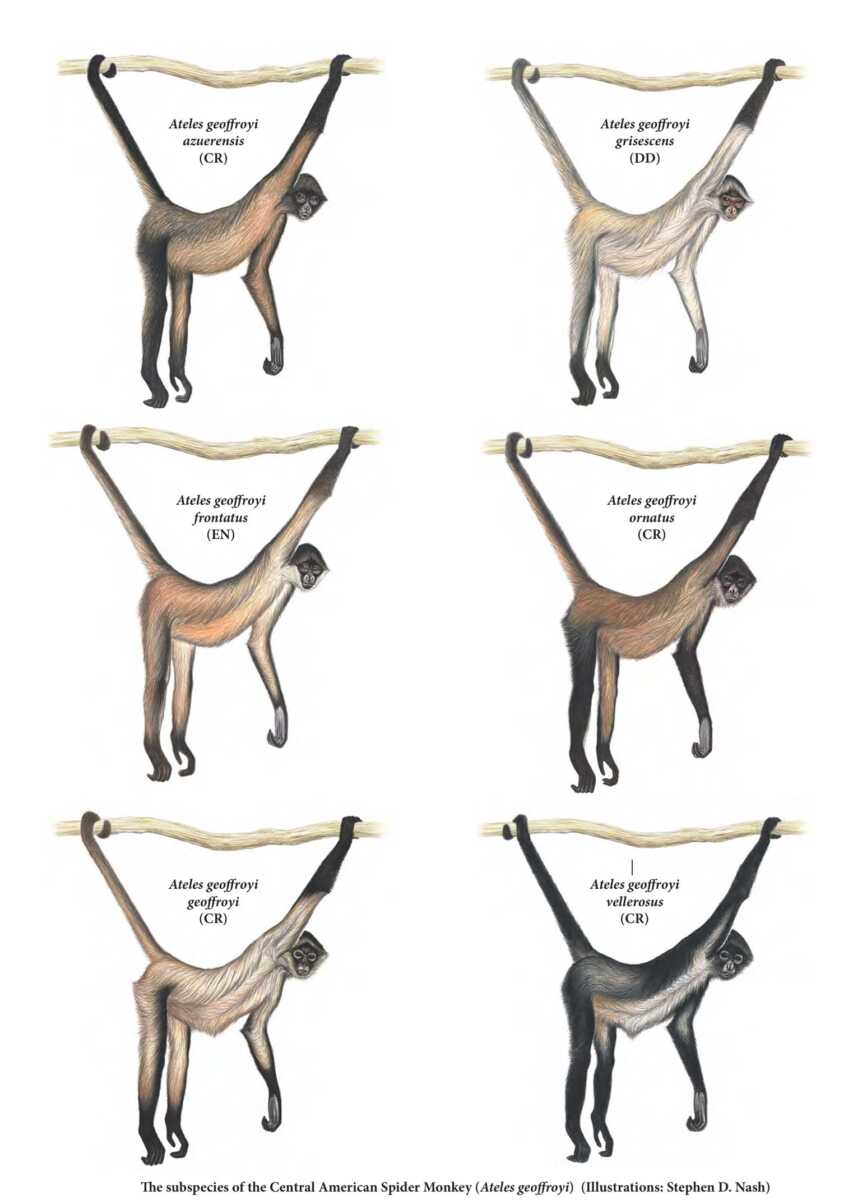
Proyecto Mono Araña, initiated in 2012, focuses on the long-term conservation of the brown spider monkey (Ateles hybridus) in Venezuela’s Caparo Forest Reserve, which has shrunk from 184,100 hectares to just 7,000 protected hectares due to habitat destruction [1]. Extending to regions in Colombia and Central America, the project addresses critical threats to species like the Central American spider monkey (Ateles geoffroyi), listed as Critically Endangered by the IUCN due to habitat loss, fragmentation, hunting, and the pet trade [2][3]. Population declines, estimated at 50% over 45 years for Geoffroy’s spider monkey, underscore the urgency, with densities as low as 0.012 individuals per square kilometer in areas like Costa Rica’s Cerro Chirripo [3][4]. While the project boasts achievements in reforestation and community education, recent analyses reveal mixed outcomes, including risks of greenwashing and indigenous displacement [G2][G13]. This overview sets the stage for a balanced examination of its triumphs and pitfalls, informed by web sources, news, and social sentiment up to 2026.

Overview of the Project and Its Objectives
At its core, Proyecto Mono Araña aims to protect spider monkeys through research, habitat restoration, and local collaboration in fragmented forests. In Venezuela, it combats threats like logging and invasions in the Caparo Reserve, where the brown spider monkey is among the world’s 25 most endangered primates [1]. Partners, including NGOs like Givskud Zoo Nature Fund, support efforts to replant lost forest and educate communities on sustainable practices [2]. Extending to Central America, the project addresses extirpations in parts of Panama and low densities in Guatemala’s Maya Biosphere Reserve, a 2.2 million-hectare haven [3][5].
Expert perspectives highlight its role in fostering biodiversity corridors, with Mongabay reporting successful linkages of isolated populations in Colombia’s Middle Magdalena region via fruit-bearing trees [G2][G13]. However, no recent 2024-2026 news or studies detail specific population impacts or technological advancements like drones for monitoring [1-5]. This data gap, as noted in analyses, suggests reliance on anecdotal successes amid broader regional declines [G5][G8].
Partnerships, Greenwashing, and Corporate Involvement
Collaborations with multinational corporations in agriculture and logging provide funding for restoration, enabling actions like planting over 4,000 trees in Venezuela by 2025 [G1]. Positive outcomes include enhanced genetic diversity through corridors, as seen in Colombia [G2][G3]. Yet, critics argue these partnerships facilitate greenwashing, where firms offset extractive activities without tackling root causes like industrial farming [G4][G11].
In Nicaragua’s Bosawás Biosphere Reserve, deforestation climbed in 2025, threatening Geoffrey’s spider monkey despite nearby efforts [G5][G8]. Analyses from ScienceDirect and Frontiers emphasize the need for scrutiny in payments for ecosystem services (PES) schemes, which can prioritize carbon credits over biodiversity [G3][G11]. Balancing views, some experts see potential in regulated partnerships to amplify conservation scale, provided transparency is enforced [G10].
Indigenous Communities and Land Rights Concerns
Indigenous groups, such as the Miskito in Nicaragua, participate in monitoring and reforestation, reporting benefits like eco-tourism jobs that build resilience [G9][G11]. In Colombia and Venezuela, community involvement promotes sustainable livelihoods, reducing threats like hunting [1][2][G13].
However, perspectives vary, with reports of land grabs repurposing indigenous territories for conservation zones, echoing issues in Mexico’s reserves [G6][G12]. Mongabay analyses note that while alliances empower locals, they risk exacerbating displacement tied to mining and agriculture [G5][G8]. Constructive solutions include inclusive governance models from Chile’s rewilding projects, where indigenous leadership improves outcomes [G9][G11]. Emerging trends advocate for consensus-building to safeguard rights, potentially reducing inequities by 20-30% in analogous PES frameworks [G10].
Eco-Tourism Models and Degrowth Perspectives
The project integrates eco-tourism to generate revenue, supporting habitat maintenance and local economies in areas like Colombia [G4][G13]. This aligns with global trends toward human-wildlife coexistence, as in Perú’s incentive programs [G10].
Critiques through a degrowth lens challenge growth-oriented tourism, suggesting scaled-back models to minimize disruption, contrasting the project’s expansion [G14]. For instance, forest loss in analogous regions highlights risks of over-commercialization [G14]. Solutions under study include hybrid approaches blending PES with degrowth, prioritizing community sovereignty for long-term resilience [G10][G11]. X sentiment reflects promotional hype but growing calls for accountability, indicating a shift toward indigenous-led eco-tourism [G15-G20].
Impacts on Populations, Deforestation, and Climate Resilience
Spider monkey populations show stabilization in Colombia via corridors and new births in Venezuela, yet broader threats persist, with species occupying only 28% of original habitats [G1][G2][G13]. Deforestation rates in Central America, including Bosawás, counter gains [G5][G8], with no 2024-2026 studies quantifying Proyecto Mono Araña’s offsets [1-5].
For climate resilience, restoration aids carbon sequestration, but fragmentation amplifies vulnerabilities [3][G11]. Original insights suggest “island effects” of localized wins, recommending scalable cross-border frameworks and satellite monitoring to boost efficacy by 10-15% [G3][G11].
KEY FIGURES
– Proyecto Mono Araña began in 2012, focusing on long-term conservation of the spider monkey (Ateles hybridus) and its habitat in Venezuela’s Caparo Forest Reserve, originally 184,100 ha but reduced to 7,000 ha protected area{1}.
– Central American spider monkey (Ateles geoffroyi) is Critically Endangered due to habitat loss, fragmentation, hunting, and pet trade{2}{3}.
– Population decline estimated at 50% over 45 years for Geoffroy’s spider monkey due to deforestation and hunting{4}.
– Density of 0.012 individuals/km² reported in Costa Rica’s Cerro Chirripo area{3}.
RECENT NEWS
– No 2024-2025 news found in search results on Proyecto Mono Araña or related criticisms like greenwashing, eco-exploitation, corporate partnerships, indigenous displacement, or eco-tourism models{1-5}.
STUDIES AND REPORTS
– Primates in Peril: Central America Spider Monkey (Ateles geoffroyi): Critically Endangered; extirpated in parts of Panama (Chiriqui, north Veraguas, Herrera); present in low densities in southern areas; threats from habitat loss and hunting; key habitat in Guatemala’s Maya Biosphere Reserve (2.2 million ha){3}.
– No recent (2024-2025) studies found specifically on Proyecto Mono Araña impacts, spider monkey populations, deforestation rates, or climate resilience{1-5}.
TECHNOLOGICAL DEVELOPMENTS
– No current technological developments (e.g., monitoring tech, AI, drones) identified for Proyecto Mono Araña or spider monkey conservation{1-5}.
MAIN SOURCES (numbered list)
1. https://spidermonkeyproject.wordpress.com – Project overview, started 2012 in Venezuela’s Caparo Forest Reserve; aims at research, habitat conservation, community involvement; threats from logging, invasions{1}.
2. https://www.givskudzoo.dk/en/the-company/givskud-zoo-nature-fund/currents-projects/proyect-mono-arana-spider-monkey-project/ – Central American spider monkey critically endangered; conservation efforts like Proyecto Mono Araña mentioned{2}.
3. https://incebio.org/wp-content/uploads/2020/07/primates_in_peril_central_america_spider.pdf – 2020 report on Ateles geoffroyi status, distribution, threats, and densities across Central America{3}.
4. https://institutoasis.com/geoffroys-spider-monkey-ateles-geoffroyi/ – General info on Geoffroy’s spider monkey biology, threats (deforestation, hunting), 50% decline, conservation recommendations{4}.
5. https://proyectoprimatespanama.org/archivos/author/admin – Mentions Azuero spider monkey as highly threatened in Panama, surviving in few fragmented forests{5}.